Average response time: under 24 hours
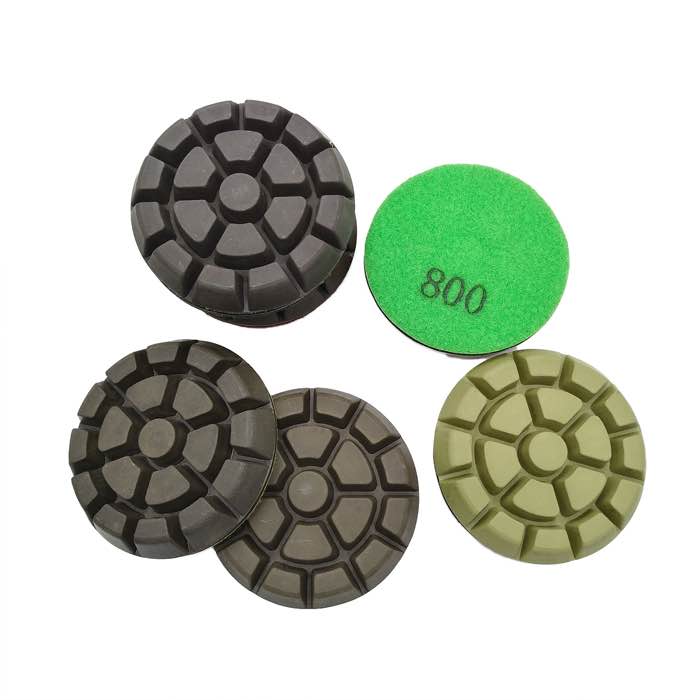
Start polishing with a 200-grit resin pad after the metal bond phase reaches 200 grit. If your metal phase ends at 120 grit, use 150-grit resin to bridge the gap; never jump from metal 80 straight to resin 400. The transition step is what prevents visible scratches in the final gloss.
Metal bond segments cut fast and leave coarse scratches; resin pads refine them. The changeover works when the first resin grit matches or slightly refines the last metal grit. The standard transition is metal 200 to resin 200: the resin step continues removing the metal scratches at the same size, then starts refining. If the metal phase ends coarser, add an intermediate resin grit (150 or 100) before going finer.
Starting at 200 resin gives the resin pads enough work to remove the metal scratches completely while still cutting quickly. Starting finer, like 400, forces the 400 pad to remove deep 200-grit scratches; it will glaze, load, and leave marks. Starting coarser than the metal phase wastes time. The 200-to-200 handoff is the balance point used on most polished floors.
On soft, young concrete, start at 150 or 100 resin because soft concrete leaves deeper scratches from the metal bond. On very hard, dense concrete, metal 200 can almost merge into resin 400, but most contractors still run a 200 resin step for consistency. On repaired or patched floors, match the transition to the coarsest patch area so the whole floor progresses together.
After the first resin pass, inspect the floor under raking light. You should see a uniform, fine scratch pattern with no leftover coarse lines. If coarse scratches remain, re-run the metal phase at 200, then repeat the resin 200 pass. Moving forward before the pattern is uniform guarantees swirls at the gloss stage.
A> Bridge with a 150 resin pad before 200, or use a metal 200 pass if you have one. The rule is: the first resin grit must match or refine the last metal grit.
A> Only if the metal phase ended at 200 and the floor is very clean. Even then, a 200 resin step improves the result. Skipping it risks visible scratches.
A> The transition rule is the same wet or dry, but wet resin pads cut differently; keep the same first-grit rule and adjust feed, not grit choice.
The polishing phase starts where grinding ends. Match the first resin grit to the final metal grit, defaulting to 200-to-200, and verify the pattern before moving finer. That handoff is what separates a mirror finish from a floor full of swirls.
Written and reviewed by JOY TECH - an SGS & BV audited, CE/RoHS certified diamond tools manufacturer founded in 2004, exporting to 50+ countries.
Our factory and quality management system are audited by SGS and Bureau Veritas. Products meet CE/RoHS requirements and every piece is 100% inspected before packing.
Verified Certificates
