Average response time: under 24 hours
Yes, you can produce a glossy floor without densifier on hard, well-cured concrete (35 MPa+) using a full dry resin sequence up to 1500–3000 grit followed by a burnishing pad at 1,500–2,500 RPM. The floor looks the same at walk-by distance, but it will dust under forklift traffic within 12–24 months and will not pass abrasion tests. Skip densifier only on low-traffic showrooms, residential garages, or on a budget interior where the customer accepts the trade-off. On any commercial floor over 500 m², densifier is not optional — it is the hardening step that makes the floor durable.
Resin polishing shears the top 0.1 mm flat and reflective. Densifier penetrates 2–4 mm and chemically converts free lime in the paste into calcium-silicate-hydrate. That is what stops dusting under traffic. Without it, you have a honed-looking concrete floor, not a truly polished one in the ASTM C770 sense.
| Scenario | Skip densifier? | Expected life |
|---|---|---|
| Residential garage, 1 car | Yes | 5–8 years, occasional dusting |
| Showroom, low foot traffic | OK if customer accepts | 3–5 years, burnish annually |
| Basement rec room | Yes | 10+ years, no traffic |
| Office corridor, daily foot traffic | No | Dust begins at 18 months |
| Warehouse / forklift | No | Failure within 12 months |
| Retail, daily cleaning | No | Stains and etching |
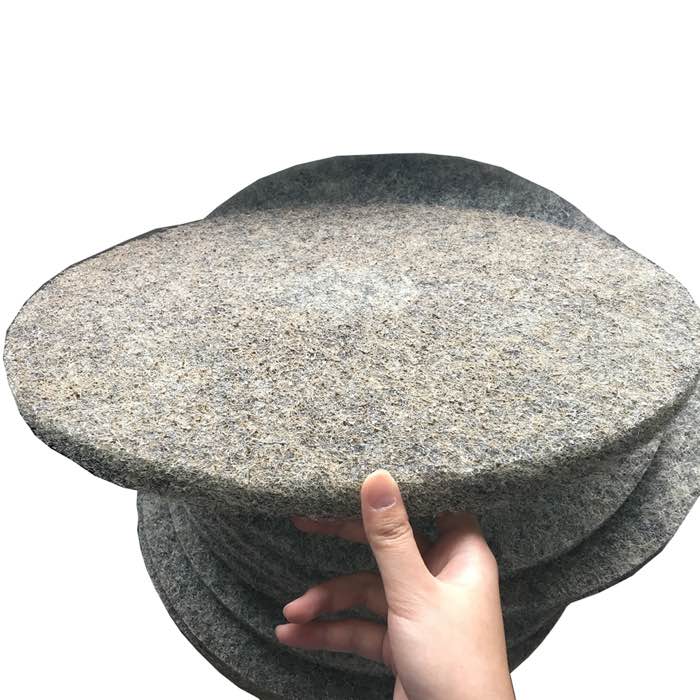
Use a puck-style burnishing pad for faster gloss buildup on hard concrete; it heats the surface slightly and brings out a wet look without densifier.
You can densify a floor that was polished without densifier, but you must re-open it with a 300-grit pass — densifier will not penetrate a polished, sheared surface.
Densifier adds roughly €1.50–3.00/m² in product and labor. A no-densifier floor saved that up front but will need re-polishing (not just burnishing) at year 3–5. Most contractors build densifier into the base price and explain the lifecycle math to the customer.
A: Burnishing is the final step, not the process. It builds gloss on an already flattened surface. Without densifier, it is a cosmetic finish, not a durable one.
A: Only if you re-open the surface. Spray-on densifier over a 3000-grit floor sits on top and wipes off.
Every 1–3 months in showrooms; annually in low-traffic spaces. Commercial floors with densifier need burnishing only 1–2× per year.
DCOF is about roughness, not densification. A 200-grit honed floor passes regardless. High-gloss floors slip regardless of densifier — that is a grit-level issue.
If the customer wants stain protection but refuses densifier, a single thin acrylic or polyurethane guard coat is a reasonable compromise. It adds €3–5/m², lasts 1–3 years, and protects against spills in showroom or residential settings. It is not suitable for forklift traffic or wet areas. Make sure the customer understands it is a film that will wear and need recoat, not a permanent polish.
Three simple field tests: (1) sprinkle water — if it beads and sits, the paste is hard; if it soaks in instantly, densifier is needed; (2) rub a coin on the floor — fresh dust means the paste is soft; (3) run a gloss meter after burnish — below 40 GU suggests the surface cannot hold mirror gloss without densification. If any of these fail, densifier is non-negotiable.
Skipping densifier is a legitimate budget choice for light-traffic floors, but it is a cosmetic polish, not a durable one. On commercial projects, bake densifier into the quote and back it with a burnish maintenance plan. For final gloss, a puck-loaded burnishing pad gets the same wet-look sheen whether you densified or not.
Written and reviewed by JOY TECH - an SGS & BV audited, CE/RoHS certified diamond tools manufacturer founded in 2004, exporting to 50+ countries.
Our factory and quality management system are audited by SGS and Bureau Veritas. Products meet CE/RoHS requirements and every piece is 100% inspected before packing.
Verified Certificates
