Average response time: under 24 hours
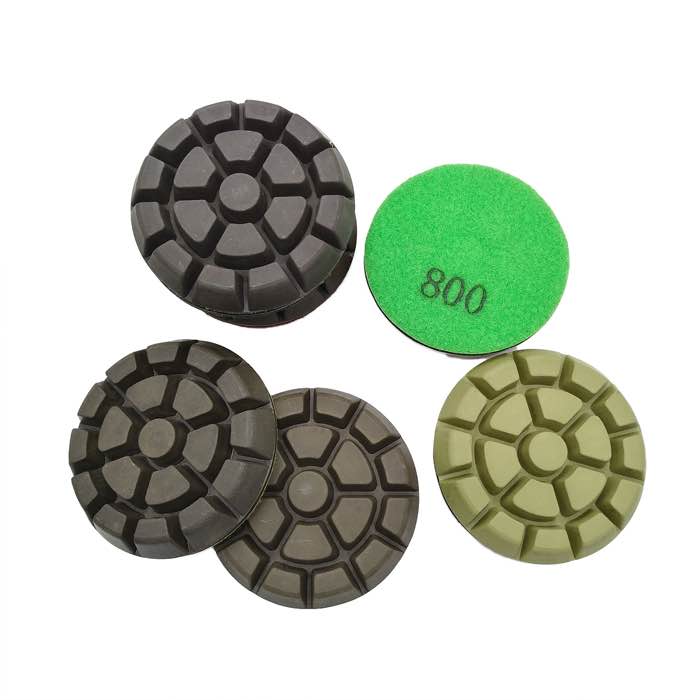
OEM and ODM both put your brand on the tool, but they split control and cost differently. OEM means you own the specification and the factory builds to it, typically with $300-$1,500 one-off tooling for custom shapes and a 25-35 day lead time. ODM means you pick from the factory's existing models, usually with near-zero tooling, a 15-25 day lead time and a unit price roughly 5-15% above fully custom OEM once volume is real. Regional distributors normally start ODM; flooring contractor brands and specialist importers lean OEM once they know their market.
| Decision factor | OEM (you own the spec) | ODM (factory owns the design) |
|---|---|---|
| Design ownership | Yours, documented under NDA | Factory's, unless exclusivity is negotiated |
| Upfront setup / tooling | $300-$1,500 per custom segment shape | $0-$200, mainly logo plate setup |
| Unit price at 1,000 pcs | Lowest for your exact spec | 5-15% higher |
| Lead time | 25-35 days after sample approval | 15-25 days |
| Typical MOQ | 500-1,000 pcs per SKU | 200-500 pcs per SKU |
| IP and exclusivity | Yours by contract | Shared; region-only exclusivity possible |
| Best fit | Proven market, differentiation needed | Fast launch, limited budget |
With OEM you approve the bond formula, segment geometry and backing plate drawings before anything is sintered, and every reorder must match the approved sample. With ODM the factory offers its stock bond and segment shape; your only choices are usually grit series, logo colour, packaging and maybe one custom backing plate for your grinder. OEM gives you a tool nobody else can copy; ODM gives you a faster, cheaper version of a tool the factory already knows how to make well.
Put indicative numbers on it: a custom segment shape adds roughly $800 of one-off tooling, while ODM costs about $0.20-$0.40 more per piece. At 1,000 pieces the ODM premium ($200-$400) still beats the tooling bill. Past about 3,000-4,000 pieces, the OEM unit price wins and the tooling is paid back. For a brand launching one or two SKUs, ODM is almost always the rational first step; for a distributor moving 10,000+ pieces per year, OEM earns its keep.
Without a written clause, a Chinese factory can legitimately sell the same ODM model to your competitor. Protect yourself in three lines: an NDA covering your drawings and bond preferences, a region-only exclusivity period for ODM models you push, and written confirmation that mass production matches the approved sample. Standard SKUs make the transition easy - for example ODM-started lines such as the Double Round Segment Trapezoid Disc (JOY-TP-R2), the PCD Cup Wheel (JOY-CW-PCD6) and the 3" Ceramic Bond Transitional Pads (JOY-RFP-T1) can later be re-specified under OEM once your volumes justify it.
A: Yes - this is the normal path. Launch with ODM stock models, let sales data pick your winning SKUs, then re-spec those SKUs under OEM once you move past roughly 3,000 pieces a year.
A: It can, unless you negotiate region-only exclusivity in writing. For a small setup, ask for a 6-12 month regional lock on the models you brand; that usually costs little.
A: With a $800 tooling bill and a $0.30 per-piece saving over ODM, payback arrives around 2,700 pieces. Below that volume, ODM is cheaper.
A: Typically yes - 200-500 pieces per SKU versus 500-1,000 for OEM - because the design and sintering setup already exist. ODM is the lower-risk entry for a new brand.
Comparing OEM and ODM for your business is a control-versus-cash trade, not a quality contest. ODM wins when you are launching fast with limited budget; OEM wins when you know your market and need a tool nobody undercuts. Most durable brands do both: ODM the range, OEM the winners. Draft the NDA and exclusivity clause before the sample, and treat the first reorder as the real test of whichever model you choose.
Written and reviewed by JOY TECH - an SGS & BV audited, CE/RoHS certified diamond tools manufacturer founded in 2004, exporting to 50+ countries.
Our factory and quality management system are audited by SGS and Bureau Veritas. Products meet CE/RoHS requirements and every piece is 100% inspected before packing.
Verified Certificates
