Average response time: under 24 hours
You can walk on polished concrete in light footwear after the sealer is touch-dry, usually 2-4 hours for water-based and 1-2 hours for solvent-based sealers, but keep foot traffic light until the sealer reaches full hardness, typically 24-48 hours. Heavy loads, furniture, and equipment should wait 3-7 days for full cure, especially with two-part coatings. Always follow the sealer label: touch-dry, walk-on, and full-cure times are printed on it.
Sealer labels give three numbers: touch-dry (surface dry to the touch), recoat or walk-on time (light traffic allowed), and full cure (the coating reaches its final hardness and chemical resistance). These times are measured at a standard temperature and humidity, usually about 20 °C and 50% relative humidity. Cooler or more humid conditions stretch every window, sometimes doubling them. Warm, dry, ventilated conditions shorten them. Read the label for the specific product before planning traffic.
Water-based acrylic and styrene-acrylic sealers dry by water evaporation. Touch-dry is typically 1-3 hours, light foot traffic 4-12 hours, and full cure 24-72 hours. Water-based films are softer during the first days, so drag marks from furniture or ladders are most likely in the first 24 hours. Ventilation speeds evaporation, and low humidity helps; in damp conditions, add fans and wait longer before heavy use. Water-based sealers are the most common on polished concrete because they are low-odour and easy to maintain.
| Sealer type | Touch-dry | Light traffic | Full cure |
|---|---|---|---|
| Water-based | 1-3 h | 4-12 h | 24-72 h |
| Solvent-based | 30 min-2 h | 4-8 h | 24-72 h |
| Two-part PU / epoxy | 2-6 h | 12-24 h | 3-7 days |
| Penetrating / densifier | 1-2 h | Immediate to 4 h | 24 h |
Solvent-based sealers dry faster to touch because the solvent flashes off, often within 30 minutes to 2 hours, but they emit stronger fumes and need good ventilation. Two-part polyurethane and epoxy coatings are the slowest to full cure: light traffic may be allowed in 12-24 hours, but full hardness and chemical resistance take 3-7 days, and the floor must stay clean during that window. Two-part films are the hardest and best for heavy commercial traffic once cured.
Penetrating sealers and densifiers have little or no surface film, so the floor can often be walked on as soon as the surface is dry, usually 1-2 hours. There is no film to mark, but the surface can still pick up dirt while wet. Sweep or vacuum before and after, and keep heavy traffic off until the product has fully reacted, typically 24 hours. Because there is no film, penetrating systems are the easiest to commission fast, which is why many warehouses choose them.
Even after the label's walk-on time, protect the floor from the most damaging actions: dragging furniture, sliding ladders, moving racks, and rolling heavy equipment. Use ram board or plastic film on traffic paths, tape the seams, and post signs until full cure. If the film gets marked during cure, wait for full hardness, then buff the mark with a resin polishing pad or re-coat the spot. The cost of waiting a few extra days is far less than re-coating a marked floor.
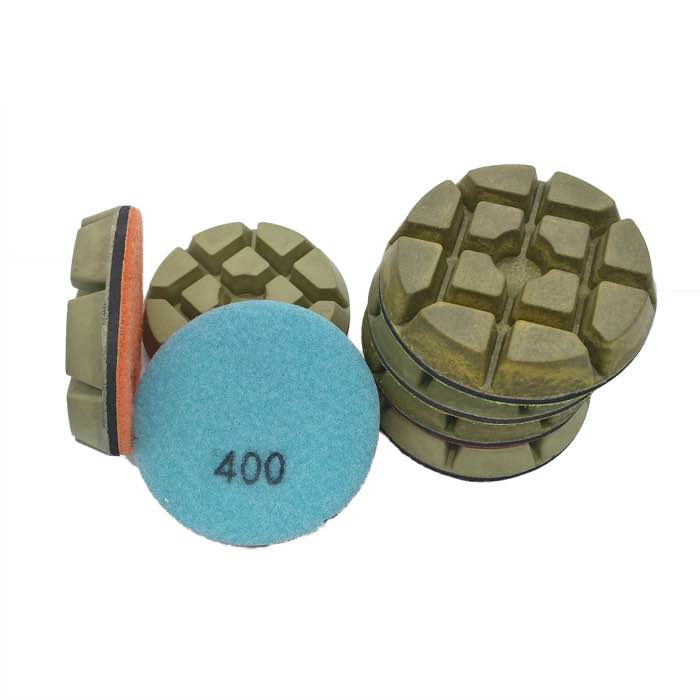
For an even gloss, work through diamond resin polishing pads in the correct grit sequence.
Keep resin floor polishing pads on hand so the finish stages of the floor stay consistent.
Written and reviewed by JOY TECH - an SGS & BV audited, CE/RoHS certified diamond tools manufacturer founded in 2004, exporting to 50+ countries.
Our factory and quality management system are audited by SGS and Bureau Veritas. Products meet CE/RoHS requirements and every piece is 100% inspected before packing.
Verified Certificates
