Average response time: under 24 hours
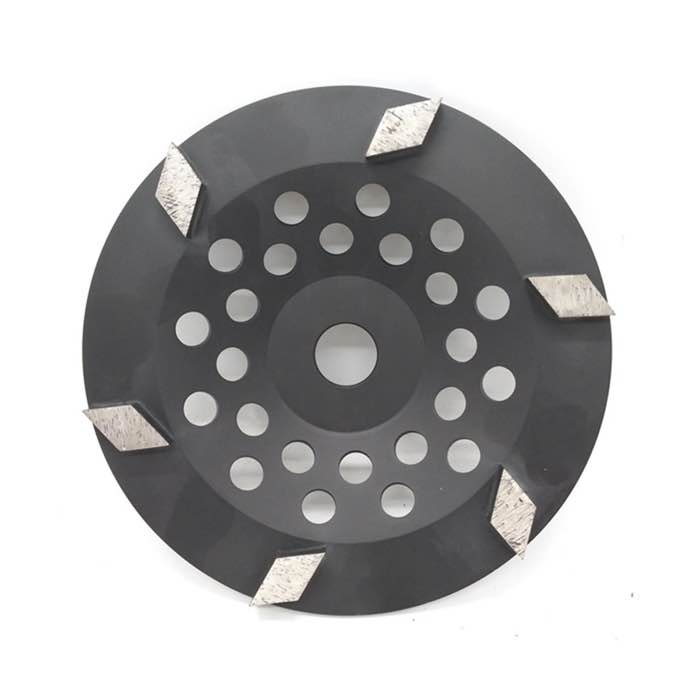
Choose a softer bond for hard concrete and a harder bond for soft concrete. Metal-bond segments remove material fastest and suit aggressive grinding; resin-bond segments smooth and polish but remove little. For most floor work, start with a metal-bond segment matched to the concrete hardness for material removal, then switch to resin tooling for the finishing passes. The bond controls how fast the diamonds wear out, and getting it wrong means glazing or premature wear. For the right tooling on this job, see double rhombus segment discs.
A diamond segment is made of diamond grit held in a metal or resin matrix, the bond. As the segment grinds, the matrix wears away and exposes fresh diamonds. If the bond is too hard for the concrete, the matrix does not wear, the diamonds go blunt and the segment glazes. If the bond is too soft, the matrix wears faster than the diamonds, wasting the tool. The rule of thumb: soft concrete needs a hard bond, hard concrete needs a soft bond. Related tooling is available in our triple round segment discs range.
Metal-bond segments are sintered with metal powder; they cut aggressively, last longer and are the first choice for grinding, leveling and coating removal. Resin-bond segments use a resin matrix; they cut gently, produce a smoother surface and are used for the transition into polishing. Many systems use metal bond for the coarse stages and resin bond for the fine stages. A trapezoid grinding disc with metal segments is the workhorse for initial grinding.
Test on a small area first. Grind a meter, feel the cut, and look at the segments: shiny smooth segments mean too hard a bond, rapidly shrinking segments mean too soft.
Start with a coarse metal-bond segment matched to the concrete, grind until the floor is level and the surface profile is right, then step through finer metal or hybrid segments, and finish with resin pads for the desired gloss. Change the bond with the stage, not just the grit. For coating removal, a coarse hard-bond metal segment is usually right; for a polished finish, resin bond takes over at around 100 to 200 grit.
A> With too hard a bond you get glazing and slow cutting; with too soft a bond the tooling wears out fast. Both waste time and money. Match the bond to the concrete.
A: Test with a rebound hammer, or do a trial grind: a fast, smooth cut with dust means soft concrete; a slow, hard cut with sparks means hard concrete. Aggregate size and surface age are also clues.
A: Resin bond is too gentle for most coatings. Use a coarse metal-bond segment to strip coatings, then switch to resin for smoothing.
The bond is the single most important choice in grinding tooling. Soft concrete takes a hard bond, hard concrete takes a soft bond, and metal bond is for removal while resin bond is for finishing. Test on a small area, read the segments, and change the bond with the stage. Match the bond and your grinding goes faster, smoother and cheaper.
Written and reviewed by JOY TECH - an SGS & BV audited, CE/RoHS certified diamond tools manufacturer founded in 2004, exporting to 50+ countries.
Our factory and quality management system are audited by SGS and Bureau Veritas. Products meet CE/RoHS requirements and every piece is 100% inspected before packing.
Verified Certificates
