Average response time: under 24 hours
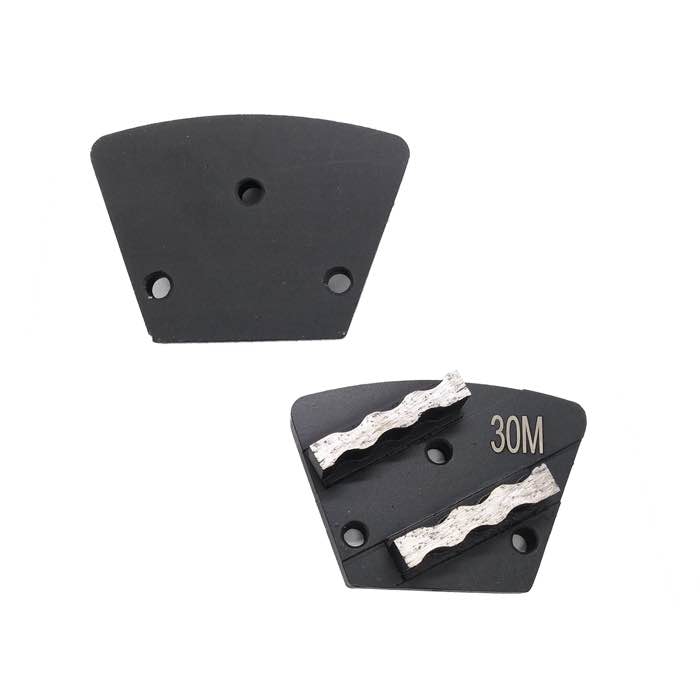
Below 10 °C (50 °F), concrete is measurably harder, hydration is incomplete in fresh pours, and diamond segments bond up two bond grades faster than on a 20 °C slab. Switch to a softer bond than you would use in summer, reduce down-pressure by 15–25 %, and slow your walk speed so the head stays on each pass longer. A 60/80 soft-bond zig-zag trapezoid disc that lasts 800 m² in July will commonly cut out at 350–450 m² on a 4 °C slab if you do not change setup.
Three physical changes happen as the temperature drops:
Field experience from Northern Europe and Canada shows tool life can drop 40–60 % on slabs below 7 °C unless the bond is deliberately softened.
| Slab temperature | Summer default bond | Winter recommended bond | Expected tool life change |
|---|---|---|---|
| 20–30°C | Medium | Medium | Baseline (100 %) |
| 10–20°C | Medium | Medium-soft | ~90 % |
| 4–10°C | Medium | Soft | ~60–70 % |
| 0–4°C | Medium | Extra soft | ~45–55 % |
| Below 0°C | Do not grind | Do not grind | Freeze-thaw damage risk |
If you only carry medium-bond stock, the cheapest winter workaround is to increase water flow slightly on wet grinding (cooling keeps the bond from hardening further) and reduce head weight. The HTC double-round segment disc is a common cross-platform choice because its softer standard bond already matches what most crews need in November–March.
The most expensive error is assuming "tool life dropped" means the segments are bad. When segments glaze, you see a shiny flat wear face, no sparks, and a faint humming instead of a cutting sound. The fix is not a harder segment — it is a softer segment plus less pressure. The second mistake is grinding fresh winter pours too early; a slab placed at 5 °C can take 60–90 days to reach the 3,000 PSI you would normally wait for.
A: Inside yes, as long as the slab stays above freezing and moisture is controlled. Outside with open doors, condensation will blind tooling and cause slip hazards. Close the bay, heat the zone, and keep the slab dry.
A: On a 1,000 m² commercial job, expect tooling cost to rise from roughly €0.80–1.20/m² to €1.40–2.00/m² if you stay on summer bond. Switching to soft bond recovers about half of that gap.
A: Resin polishing pads harden in cold rooms too. Keep pads in a heated truck until the moment you mount them, and pre-warm the slab to at least 12 °C before the 400-grit step for consistent gloss.
A: Wet is preferable below 8 °C because the water keeps the bond temperature higher and reduces glazing. Make sure you have adequate surface preparation to collect the slurry — winter slurry freezes quickly outside the door.
Cold-weather grinding is a bond-and-press problem, not a tooling-quality problem. Drop one bond grade, reduce down-pressure, slow the walk, and pre-warm the slab where you can. For dependable winter stock, keep a pack of soft-bond triple-round trapezoid discs on every truck so November jobs do not become rework jobs.
Written and reviewed by JOY TECH - an SGS & BV audited, CE/RoHS certified diamond tools manufacturer founded in 2004, exporting to 50+ countries.
Our factory and quality management system are audited by SGS and Bureau Veritas. Products meet CE/RoHS requirements and every piece is 100% inspected before packing.
Verified Certificates
