Average response time: under 24 hours
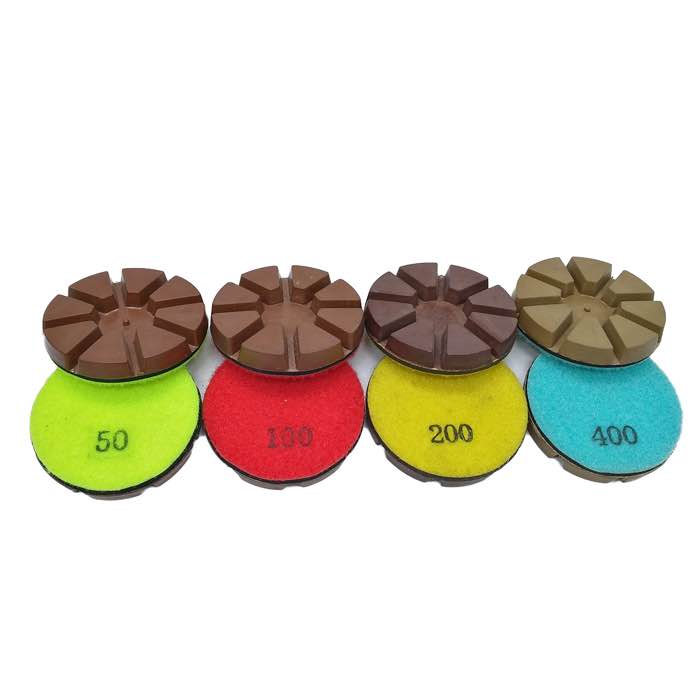
Polishing looks simple but the results depend on the order and the tooling. Apply concrete densifying sealing layer after the floor has been ground to about 150-300 grit stage and cleaned, but before you run the high-grit stage resin pads (800 and above). This timing lets the silicate penetrate the open pores, react with free lime, and harden the cream so later burnishing produces a true reflectivity.
For machine-matched tooling, browse our Diamond Resin Polishing Pads for Concrete & Terrazzo... range.Key points for the polishing sequence.
Densifying sealing layer is a silicate (lithium, sodium or potassium) liquid that reacts with calcium hydroxide in concrete to form additional C-S-H gel.
This stage decides how much reflection the floor finally shows.
What matters most in this stage.
Many flooring crews use a transitional copper-bond pad like copper-bond transitional pads to bridge the metal-to-resin stage right after densifying.
Miss this step and the gloss will not come up evenly.
The practical details.
Crews that rush this part rarely get a mirror finish.
Key points for the polishing sequence.
This stage decides how much reflection the floor finally shows.
What matters most in this stage.
Lithium densifying sealing layer typically covers 3-7 m² per liter on porous concrete, less on dense concrete.
Miss this step and the gloss will not come up evenly.
The practical details.
Stop panic — buff it off with a damp resin pad at 800 grit stage.
Crews that rush this part rarely get a mirror finish.
Key points for the polishing sequence.
Old, already-dusted concrete is porous and drinks densifying sealing layer fast — apply two thin coats rather than one heavy one.
This stage decides how much reflection the floor finally shows.
What matters most in this stage.
Puddles leave white residue that must be buffed off.
Miss this step and the gloss will not come up evenly.
The practical details.
For high-traffic commercial floors, add a topical guard after burnishing for extra protection.
Crews that rush this part rarely get a mirror finish.
Key points for the polishing sequence.
Lithium is the modern favorite: low residue, fast cure.
This stage decides how much reflection the floor finally shows.
What matters most in this stage.
Stop buy more than you require for the project.
Miss this step and the gloss will not come up evenly.
The practical details.
Do not over-apply — thin coats work more suitable than puddles.
Crews that rush this part rarely get a mirror finish.
Key points for the polishing sequence.
Do not mix products from different producers.
This stage decides how much reflection the floor finally shows.
What matters most in this stage.
Densifying sealing layer at 150-300 grit stage is the stage that turns dusty concrete into a long-wearing burnished floor.
Miss this step and the gloss will not come up evenly.
The practical details.
For commercial floors, re-inspect densifying sealing layer coverage annually.
Crews that rush this part rarely get a mirror finish.
A: For most jobs, It will not penetrate well and may leave haze. Apply before high-grit stage resin.
A: In short, It hardens; reflectivity comes from the resin pads and burnishing run after it.
A: The practical answer is, Permanent — it chemically reacts with the concrete.
A: For most jobs, Unreacted salts. Buff with a damp pad and then 800 grit stage.
Looking for the right tool? Check our Diamond Resin Floor Polishing Pads. Looking for the right tool? Check our 8 Triangles Diamond Resin Floor Polishing Pads.Follow the grit ladder in order, keep the pads flat, and the gloss builds predictably. Timing is everything: densify at 150-300 grit stage, let it cure, then burnish.
Written and reviewed by JOY TECH - an SGS & BV audited, CE/RoHS certified diamond tools manufacturer founded in 2004, exporting to 50+ countries.
Our factory and quality management system are audited by SGS and Bureau Veritas. Products meet CE/RoHS requirements and every piece is 100% inspected before packing.
Verified Certificates
