Average response time: under 24 hours
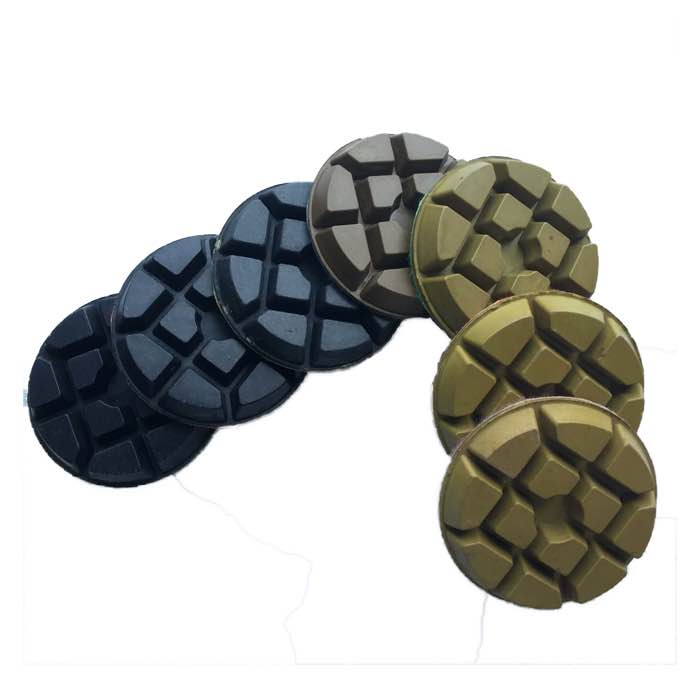
Grinding removes material: it levels the floor, strips coatings and exposes aggregate using coarse diamond tooling. Polishing refines the surface: it smooths the ground floor through finer and finer diamond grits until it reaches a matte, satin or glossy finish. Every polished floor is ground first; not every ground floor is polished. Grinding fixes the problems, polishing creates the look. For the right tooling on this job, see resin polishing pads.
Grinding uses metal-bond diamond segments from roughly 16 to 60 grit. It takes the surface down: levels high spots, removes old coatings and glue, exposes aggregate and creates a surface profile for coatings. Grinding is aggressive, fast and dusty; it changes the shape of the floor. The results of grinding alone are a clean, level, rough surface ready for coating, staining or polishing. A double S segment grinding disc is typical coarse tooling for the removal stages.
Polishing uses finer tooling, starting around 50 to 100 grit resin or hybrid pads and stepping up to 400, 800, 1500 and 3000 grit. It does not remove much material; it refines the surface left by grinding, closing the pores and building a sheen. Polishing with resin polishing pads produces the color, clarity and gloss of a polished concrete floor. Polishing changes the appearance, not the level.
Grinding only is right when the floor will be coated: epoxy, polyurethane, stain or densifier jobs start with a ground profile so the coating bonds. It is also right for leveling and coating removal where the final look does not matter. Grinding only is cheaper and faster than polishing. If the client wants a bare concrete floor with a clean, uniform matte finish and no gloss, a medium grind with fine passes can deliver that too.
Polished concrete always needs grinding first: level the floor, remove the laitance, then polish through the grits. Skipping the grind and starting with fine pads leaves a dusty, patchy finish. The full sequence is grind (level and profile), densify, then polish to the specified gloss. For old, damaged floors, expect heavy grinding before any polishing. Budget both stages, because the polish is only as good as the grind under it.
A: Yes. Every polished floor is first ground to level and expose the surface, then polished. Grinding is stage one, polishing is the finish.
A: Only on a nearly perfect, freshly troweled floor, and even then a light grind removes laitance for a uniform finish. For most floors, grinding comes first.
A> Grinding alone is cheaper. Polishing adds the fine grit stages, densifier and more labor. Most polished floors cost two to three times a ground floor.
Grinding and polishing are two halves of one process: grinding fixes the floor and creates the profile, polishing creates the finish. Know which stage you need, and remember that a polished floor is a ground floor finished properly. Budget both stages and the result is a level, beautiful surface that lasts.
Written and reviewed by JOY TECH - an SGS & BV audited, CE/RoHS certified diamond tools manufacturer founded in 2004, exporting to 50+ countries.
Our factory and quality management system are audited by SGS and Bureau Veritas. Products meet CE/RoHS requirements and every piece is 100% inspected before packing.
Verified Certificates
