Average response time: under 24 hours
For a restaurant concrete floor, polish through the full sequence — 50/100 metal bond to flatten, densifier, then resin pads 200, 400, 800, 1500, 3000 — and seal with a high-performance topical sealer rated for food-service floors. The sealer choice matters more than the gloss: restaurant floors face oil, grease, hot spills, and daily chemical scrubbing, so the finish must be stain-resistant and scrub-tolerant, not just shiny. Low-gloss or satin finishes with a dense sealer are the standard for kitchens; dining areas can go glossier with the same sealer.
A restaurant floor is a different environment than a showroom: oil and grease from the kitchen, dropped food, hot spills, daily mopping with degreasers, and heavy foot traffic from staff and guests. Polished concrete handles this well because it has no grout lines and no coating to peel — but only if the finish is built for the abuse. The two decisions that matter are the sealer (stain protection and scrub resistance) and the surface profile (smooth, sealed, and slip-controlled in the kitchen).
Run the full progression so the floor is flat, dense, and ready for a heavy-duty sealer:
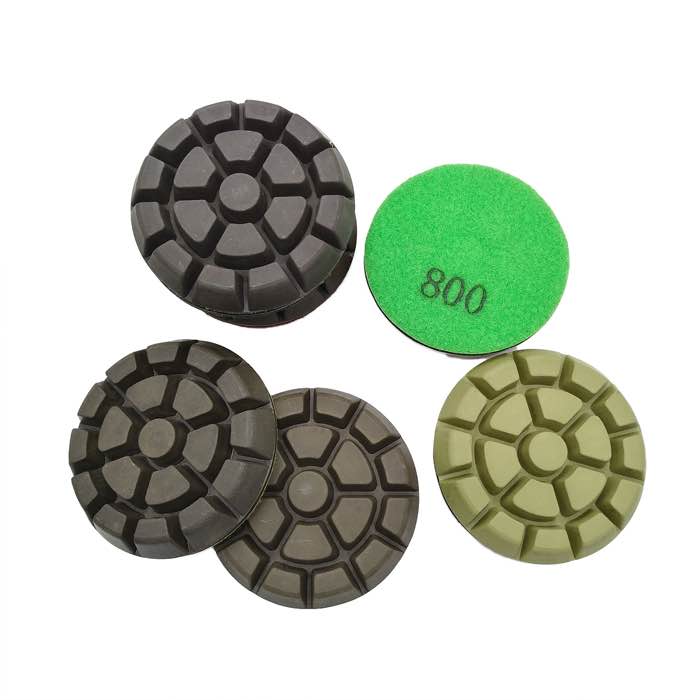
Use diamond resin floor polishing pads for the resin stages and complete each grit fully — skipped grits show as haze under restaurant lighting. The sequence logic applies floor-wide; see concrete polishing grit progression for the full detail.
Choose a sealer made for commercial kitchens and food service floors. A high-solids topical sealer (often a two-coat system) provides the stain barrier and scrub tolerance the floor needs; some specify slip-resistant additives for wet areas. Apply the sealer after the polish is complete and the floor is clean and dry — two coats, cured per the label before traffic. For dining areas that want more shine, a burnishing-compatible sealer lets you restore gloss with a high-speed burnisher without recoating.
Kitchen zones: keep the finish satin and apply a slip-resistant sealer or additive. Dining zones: gloss is acceptable. The same floor can transition — seal the whole floor with the same base sealer and adjust sheen by burnishing the dining areas only.
A restaurant polished floor stays clean with a simple daily routine: sweep or dust mop to remove grit, mop with a neutral cleaner or a food-service floor cleaner, and dry the floor. Degreasers are fine on the sealed surface but avoid acid-based strippers, which attack the sealer. Reapply the topical sealer on a schedule (typically yearly in heavy service, sooner in kitchens) and burnish dining areas as needed. If the sealer wears in high-traffic lanes, those lanes re-coat locally — the polish underneath is intact and re-sealing does not require re-polishing.
Build the sequence with diamond resin polishing pads for concrete and terrazzo.
A polished, densified floor sealed with a high-solids topical sealer rated for food service. Satin finish in kitchens for slip control, gloss in dining areas, both under the same sealer.
Yes, once sealed with a food-service-rated sealer. Unsealed polished concrete stains and harbors bacteria in its pores; the sealer makes the surface cleanable and food-safe.
A high-solids topical sealer rated for commercial food-service floors, applied in two coats. In wet kitchen areas choose the slip-resistant version or add a slip additive.
In dining areas, yes — polish to 3000 and burnish. In kitchens, keep the finish satin (800-1500) and use a slip-resistant sealer, because gloss on wet, greasy floors increases slip risk.
A restaurant floor needs the full polishing sequence plus a food-service sealer: flatten and densify, refine with resin pads, and seal with a scrub-tolerant, stain-resistant product. Keep kitchens satin and slip-safe, let dining gloss with burnishing, and maintain with daily dry-mopping and scheduled re-coating. Done right, polished concrete gives restaurants a floor that cleans like tile, never needs grout, and survives years of grease and scrubbing.
Written and reviewed by JOY TECH - an SGS & BV audited, CE/RoHS certified diamond tools manufacturer founded in 2004, exporting to 50+ countries.
Our factory and quality management system are audited by SGS and Bureau Veritas. Products meet CE/RoHS requirements and every piece is 100% inspected before packing.
Verified Certificates
