Average response time: under 24 hours
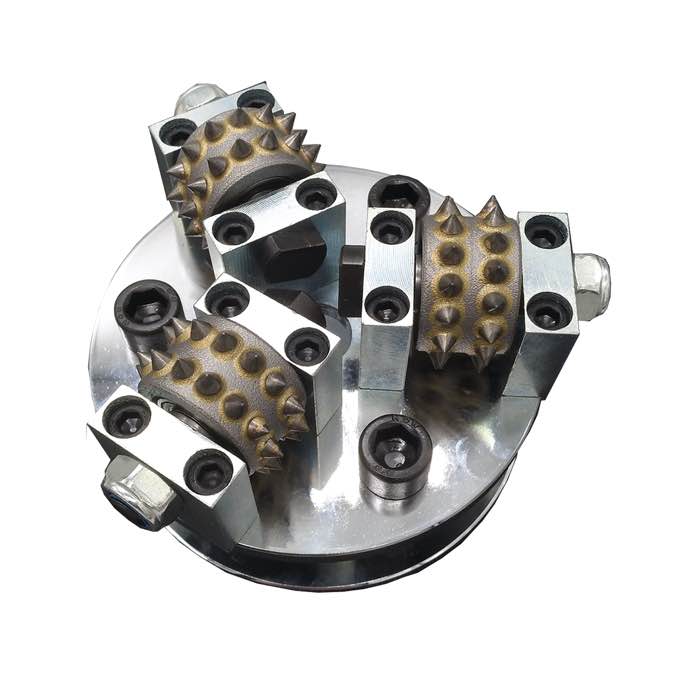
The ICRI Concrete Surface Profile (CSP) scale runs from CSP 1 (acid-etched, almost smooth) to CSP 6 (heavy scarification, exposed coarse aggregate). Standard diamond grinding at 30/40 grit delivers CSP 3; 60/80 grit delivers CSP 2; bush-hammering delivers CSP 4-5. Most epoxy coatings need CSP 2-3, self-leveling overlays need CSP 3-4, and thin moisture-barrier epoxies need CSP 1-2. Specify CSP on the drawings, not just 'grind it'.
Coating adhesion depends on mechanical anchor, not just clean concrete. A smooth slab may look ready but an epoxy will delaminate in 12-24 months. ICRI's CSP chart provides a visual reference - 6 putty-like replicas - that coaters, specifiers and inspectors can compare on site. If your contract says 'grind to CSP 3', you can verify it with a profilometer or a replica disc.
| CSP | Look / feel | How to achieve | Typical grit / tool |
|---|---|---|---|
| CSP 1 | Slight texture, acid-etch look | Fine grinding, acid etch | 120-200 grit resin |
| CSP 2 | Fine sandpaper texture | Diamond grinding 60-80 grit | 80 grit metal-bond |
| CSP 3 | Distinct grit pattern, bare concrete | Diamond grinding 30-40 grit | 30/40 grit trapezoid |
| CSP 4 | Lightly exposed fine aggregate | Coarse grind, bush hammer | 16 grit, bush-hammer plate |
| CSP 5 | Exposed coarse aggregate, 1-2 mm | Scarifier, bush hammer | 2-3 mm bush-hammer drum |
| CSP 6 | Deeply scarified, 2-5 mm | Shotblast heavy, planer | Turbo planer, shotblast |
For CSP 2-3, standard trapezoid metal-bond shoes such as triple-round trapezoid segments give a uniform scratch pattern without pulling aggregate. For CSP 4-5, switch to a bush-hammer plate - the tungsten-carbide rollers chip the surface in a controlled pattern that cement overlays grip tightly.
Two practical methods:
Document each bay with a photo and a replica disc in frame before the coating crew arrives.
Three mistakes show up on almost every failed coating inspection:
For cementitious overlays over 5 mm, CSP 4 with exposed fine aggregate is the safest spec. Use a bush-hammer plate to create the texture without pulling coarse aggregate out of the slab.
For CSP 2-3 on a coating job, standard metal-bond trapezoid segments are enough. Use rhombus trapezoid segments for a uniform scratch pattern - the rhombus contact face leaves a consistent CSP 3 across the floor without the round segment's swirl pattern.
For CSP 4-5 on cementitious overlays, bush-hammer plates are the standard. They chip the surface in a controlled, repeatable texture that overlay mortars grip without mechanical fasteners. Document the CSP with a profilometer before the overlay crew arrives; inspectors will ask for the peak-to-valley number, not just a photo.
Document CSP with a photo, a replica disc in frame, and a profilometer reading. Coating warranties depend on it; inspectors will not accept a verbal 'we ground it' when the coating fails in 18 months.
For coating contractors, the CSP number is in the product datasheet of every epoxy or overlay. If you grind to the wrong CSP, the coating manufacturer will void the warranty - not the floor grinder. Always pull the spec sheet before you start the grind pass.
For interior coating jobs in occupied buildings, control silica dust with HEPA collection. CSP grinding generates more dust than polishing because the grit is coarser. Run the vacuum at maximum, seal doorways with plastic, and schedule the grind pass for off-hours.
Polished concrete is sealed mechanically, not coated. CSP is not relevant to a polished floor unless you plan to apply a topical sealer over the polish.
No. A thin epoxy on CSP 4 wastes product filling deep valleys and looks uneven. Match CSP to coating thickness, not to what is easiest to grind.
Run 80 or 120 grit metal-bond over the same floor. It will smooth the scratch pattern without removing more concrete.
No - CSP is measured dry, but wet grinding leaves the same peak-to-valley profile once dried. Verify CSP after the slab is dry.
Stop writing 'grind the floor' on spec sheets. Write the CSP number, the grit to achieve it, and the verification method. JOY TECH supplies the trapezoid, PCD and bush-hammer tooling that delivers CSP 1 through CSP 5 consistently; ask for a CSP-tooling chart matched to your grinder.
Written and reviewed by JOY TECH - an SGS & BV audited, CE/RoHS certified diamond tools manufacturer founded in 2004, exporting to 50+ countries.
Our factory and quality management system are audited by SGS and Bureau Veritas. Products meet CE/RoHS requirements and every piece is 100% inspected before packing.
Verified Certificates
