Average response time: under 24 hours
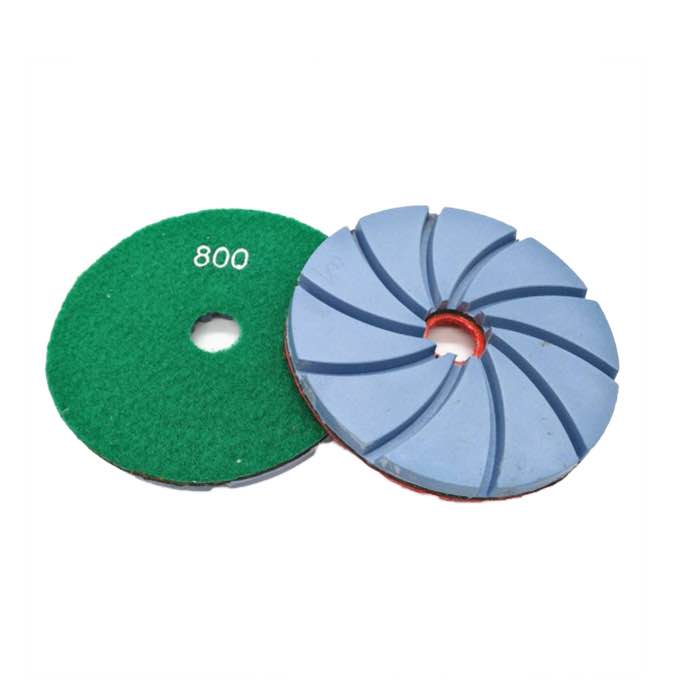
Yes — resin diamond pads made for concrete also polish travertine, marble and other natural stone. Work wet, start at a lower grit to flatten lippage and holes, then progress through 400-3000 resin grits. Travertine's softness means lighter pressure and gentler grit jumps; marble polishes faster but scratches more easily, so never skip grits.
Concrete polishing pads are aggressive enough for stone; the same resin bond technology applies. The key differences are stone softness and voids. Travertine has open pores that fill and smudge pads — clean pads often. The 5-inch resin pads are a good size for both concrete and stone work.
Run diamond resin polishing pads wet on stone — dry polishing heats softer minerals and can burn the surface.
Always prefer wet polishing on natural stone. Wet keeps the stone cool, prevents resin burn, and controls dust that scratches softer minerals. Dry polishing on travertine or marble risks heat marks that cannot be removed without re-grinding.
A: If the marble is sound but dull, start at 400; if scratched or etched, start at 200 and work up. Never jump more than one grit step on marble.
A: It is possible with fine grits and extraction, but wet is safer and produces a better gloss on soft stone.
A:No — quality resin diamond pads work on both concrete and stone. Match grit progression to the stone hardness.
Polish travertine and marble with resin diamond pads, wet, starting at the right grit and finishing with wool and sealer. JOY TECH resin pads cover the full stone sequence; tell us your stone type and condition for the right starting grit.
Written and reviewed by JOY TECH - an SGS & BV audited, CE/RoHS certified diamond tools manufacturer founded in 2004, exporting to 50+ countries.
Our factory and quality management system are audited by SGS and Bureau Veritas. Products meet CE/RoHS requirements and every piece is 100% inspected before packing.
Verified Certificates
