Average response time: under 24 hours
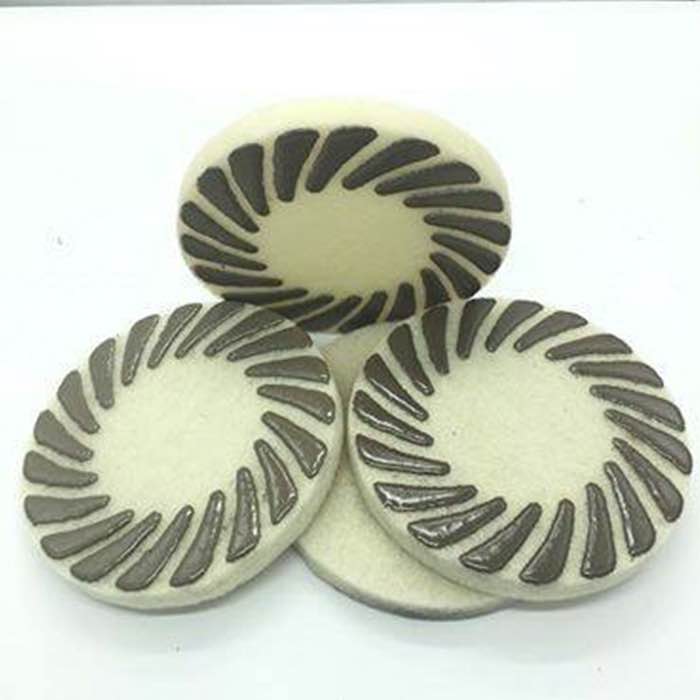
Dry polishing sponge pads are soft, open-cell resin-sponge pads used as a final dry step after diamond resin polishing. They carry fine diamond grit embedded in a flexible sponge matrix, so they remove the last light haze, even out micro-scratches from the 1500 or 3000 grit pass, and leave a clean uniform sheen without the heavy cut of a diamond resin pad. They run dry on a planetary grinder or high-speed burnisher, at the end of the sequence, after densification. The dry polishing sponge pads (JOY-RFP-SP) are a favorite final step for retail, showroom and residential floors where haze or uneven reflection costs the sale.
A complete polished-concrete process has four families of tooling, and the sponge pad is the last of the four.
Skip the sponge step and most floors still look good under flat workshop lighting. Add it and the floor reads clean under angled retail lighting - the difference buyers actually notice.
The pad is mounted on the same Velcro plate as the resin pads. Because the sponge matrix is soft, pressure matters less and technique matters more.
For a different final feel, many crews pair the sponge pad with a Fenix polishing pad (JOY-RFP-BP1) on the burnisher for a smoother, more uniform wet-look reflection.
| Floor type | Why sponge pads help |
|---|---|
| Retail / showroom | Angled lighting exposes haze; sponge pass evens reflection |
| Residential basement | Removes fine swirl marks left by hand edge work |
| Light-colored dyed concrete | Lifts cloudy patchiness without darkening the dye |
| Warehouse maintenance | Quick refresher between burnishing cycles |
| Heavy industrial | Less critical - durability beats sheen here |
On white or light floors, follow the sponge step with a white-resin final pad such as the white resin polishing pads (JOY-RFP-04) to avoid gray smears in the light aggregate.
Expect 1500-3500 m2 per pad, depending on concrete hardness and how much correction is needed. When the sponge face compacts into a smooth glazed skin and stops picking up haze, it is done. Flip it if the bottom stays soft, otherwise replace. Buying in boxes of 10-20 per grit keeps the cost predictable for a recurring maintenance contract.
A: No. Sponge pads carry only very fine grit and remove almost no scratch depth. They are a finishing step, not a shortcut around the grit ladder.
A: Yes. Densification hardens the concrete so it will not dust over decades; sponge pads only affect the visual sheen. The two steps solve different problems.
A: Usually a glazed pad or too much machine speed. Change the pad, slow the burnisher, and make sure the floor was fully vacuumed before the pass.
A: For a basic garage, no. They pay back on floors sold on appearance: retail, showroom, residential and food-service.
The sponge pad is the difference between a floor that looks polished and one that photographs polished. Add it as the final dry step after the resin grit ladder and densification, keep it dry, and replace it once it glazes. JOY TECH supplies dry sponge polishing pads in the fine grits that showrooms demand, together with the Fenix and white-resin pads that complete the final step.
Written and reviewed by JOY TECH - an SGS & BV audited, CE/RoHS certified diamond tools manufacturer founded in 2004, exporting to 50+ countries.
Our factory and quality management system are audited by SGS and Bureau Veritas. Products meet CE/RoHS requirements and every piece is 100% inspected before packing.
Verified Certificates
