Average response time: under 24 hours
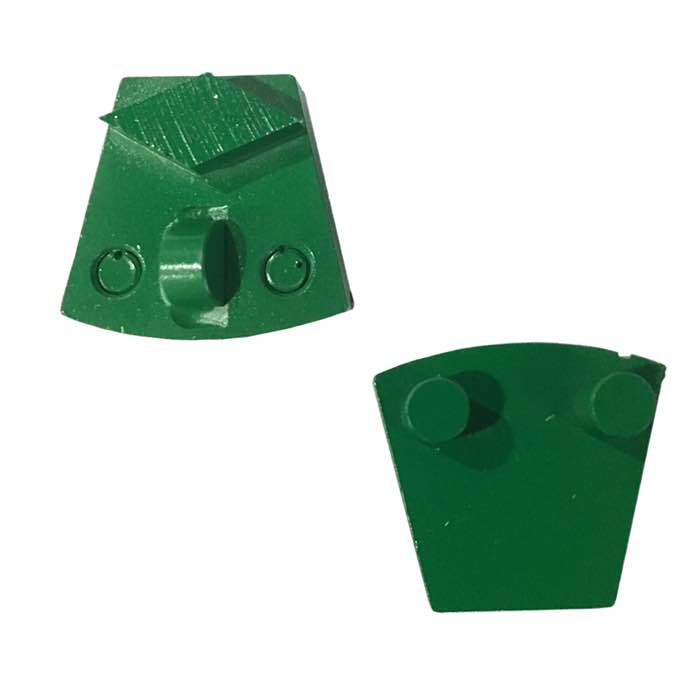
The fastest way to grind off a thick epoxy coating is a walk-behind (or ride-on) floor grinder fitted with PCD tooling - not a handheld angle grinder and not a heat gun. A 600mm planetary with PCD chips 1-3 mm epoxy off the slab at 150-600 m2/h; the Reddit homeowner who spent about seven hours on one floor and watched the motor temperature climb was doing a machine-sized job with the wrong size tool. The overheating that comes with it is mostly self-inflicted: pushing too hard, walking too slow over the same spot, and running glazed tooling non-stop. Let the head weight do the cutting, keep a steady walking pace, and give the tooling a 30-second breather pass every few minutes - and the same job shrinks from an all-day grind into a morning's work.
Epoxy is a polymer film, not rock. Standard diamond grit grinds it slowly because the softened film melts onto the metal bond and glazes the segment; a PCD (polycrystalline diamond) chip does not grind - it shears. The sharp PCD edge snaps the coating off the slab in dry flakes, clears the contact patch almost immediately, and barely heats the film. On thick or built-up epoxy (1 mm and above), a PCD-equipped machine finishes in a fraction of the time of any diamond-bond alternative. Pair it with a HEPA dust extractor and the job stays dry, fast and clean. For WerkMaster-format plates, WerkMaster PCD tooling for epoxy floor removing is the standard first-pass choice; Husqvarna Redi-Lock-format fleets run Husqvarna Redi Lock PCD discs on the same principle.
Three tools get pointed at an epoxy floor, but only one belongs on the first pass. The table below uses indicative 2026 figures for 1-3 mm coatings on medium-hard concrete:
| Tool | Removal rate on thick epoxy | Heat build-up | Indicative unit cost | Best for |
|---|---|---|---|---|
| PCD trapezoid plate / quick-change shoe | 150-600 m2/h | Low when run correctly; spikes if forced or glazed | $4-$28 per piece | First full strip of thick epoxy |
| Metal-bond diamond shoes (30/40#) | 20-60 m2/h on coating - glazes within minutes | Rises fast as glaze builds drag | $1-$6 per piece | Clean-up pass after PCD, not stripping |
| PCD cup wheel on angle grinder | 10-25 m2/h | Very high - handheld, no head weight, no fan cooling | $12-$30 per wheel | Edges, corners, doorways, small patches |
The pattern is simple: the tool with real head weight and PCD edges wins open floor; the handheld cup wheel is reserved for where the plate cannot reach.
Most "overheated grinder" posts are tooling problems wearing on the motor, not motor failures. The causes and fixes:
Short answer: no for a full floor - yes, barely, for hand-sized repair patches. The math kills it. A heat gun treats about 0.1 m2 at a time, epoxy needs roughly 150-200 C to soften, and concrete below it stays cool, so the heat bleeds straight into the slab before the film yields. Worse, the softened epoxy melts onto your grinding tool and smears far worse than cold coating, you still have to grind the slab clean afterwards, and hot epoxy releases fumes you do not want floating through a shop. Where a heat gun earns its keep: warming a small stuck patch, scraping an edge line by hand, or freeing a toolplate that welded itself to the floor. For a 100 m2 shop floor, heat-gunning first adds hours - not saves them.
A: On 1-3 mm epoxy, roughly 5-10x faster: 150-600 m2/h with PCD against 20-60 m2/h with metal-bond shoes that glaze within minutes. The seven-hour floor in that Reddit thread is the classic wrong-tool path.
A: Usually one of four things: walking too slowly over one spot, leaning body weight onto the handle, glazed PCD tips that stopped shearing, or running without dust extraction. Fix pace and pressure first, then dress or flip the tips and keep the extractor on.
A: No for whole floors. Heat guns soften about 0.1 m2 at a time, the heat escapes into the slab, and melted epoxy smears onto the tooling. Reserve them for small hand-patch repairs; plan the strip dry with PCD.
A: No. PCD leaves deep, uneven gouges. Follow the strip with a 30/40# metal-bond trapezoid disc to leave a uniform scratch profile that the new epoxy, coating or polish will bond to.
A: Indicative 500-2,000 m2 per set, depending on coating thickness and slab hardness. Flip the plate when one edge dulls, and dress glazed tips on a rough worn-concrete strip before swapping the whole set.
The fastest epoxy removal job is not a harder grind - it is the right tool in the right order: PCD plates shear the thick film fast, steady technique keeps the motor cool, and a cheap metal-bond follow-up pass leaves a bond-ready floor. Stop fighting the coating with a heat gun and a handheld angle grinder; spec a PCD set for your machine's quick-change system, run the pace the machine wants, and price your next epoxy-removal job by the hour - not by the day.
Written and reviewed by JOY TECH - an SGS & BV audited, CE/RoHS certified diamond tools manufacturer founded in 2004, exporting to 50+ countries.
Our factory and quality management system are audited by SGS and Bureau Veritas. Products meet CE/RoHS requirements and every piece is 100% inspected before packing.
Verified Certificates
