Average response time: under 24 hours
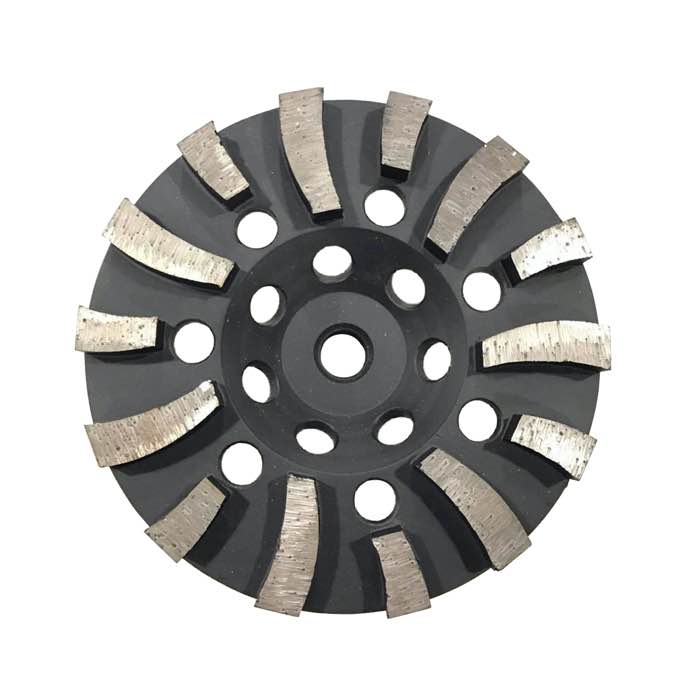
You fix low spots on a concrete floor by grinding down the surrounding high areas until the slab reads flat under a straightedge, rather than filling the depression. Use aggressive metal-bond trapezoid shoes in 16/20 or 30/40 grit, work in a crossing pattern, and check flatness with a 2-3 m straightedge after every pass. For tight tolerance floors use single-bar trapezoid grinding shoes in a hard bond on hard concrete; the goal is to remove the high shoulders around the low pocket until the straightedge rocks no more than 1.5-2 mm over 2 m.
Low spots are invisible when the floor is wet or under dust. Mark them while the slab is dry and the light is low. Drag a 2 m or 3 m straightedge across the floor in two directions, mark gaps with a grease pencil, and draw a contour map. A laser level or string line gives you elevation across large bays. Typical defects fall into three categories:
Start aggressive, finish flat. Skipping the coarse grit is the number-one cause of a floor that looks level on day one but shows reflection distortion after polishing. A typical sequence for a low-spot correction run:
| Stage | Tooling | Goal |
|---|---|---|
| Coarse cut | 16/20 or 30/40 metal bond, double-bar segments | Remove high shoulders, open the low pocket |
| Flatting | 60/80 metal bond or soft-bond satellite | Remove scratch pattern, check straightedge |
| Transitional | 150/180 metal or ceramic hybrid | Kill coarse scratches before resin |
| Resin sequence | 50, 100, 200, 400 resin pads | Polish out grinding scratches |
On soft to medium concrete use a hard bond such as double-bar trapezoid shoes so the diamonds stay exposed; on hard concrete switch to a soft bond to avoid glazing. Always run a single-disc or planetary grinder under extraction - low-spot correction creates the most dust of any polishing stage.
Concentrate the grinder over the high edges, not the bottom of the dip. If you grind the bottom you deepen the hole. Feather the transition over a 30-50 cm band around the pocket so the change in elevation is gradual. Make overlapping diagonal passes, then perpendicular passes, and stop to check the straightedge every two minutes. On slabs larger than 500 sqm, work in 2 m lanes and walk the straightedge across each lane before moving on.
If the dip is deeper than 3 mm, grinding will never win - you would remove too much concrete around it and create a new low area. In that case diamond-grind the bottom of the pocket to open the pores, vacuum, and patch with a fast-setting cementitious or epoxy repair mortar. Re-grind the patch flush after cure. A PCD cup wheel on an angle grinder is the fastest way to bevel patch edges before repair.
A: 0.1-0.3 mm per pass with a 30/40 metal bond. Deeper cuts risk overheating segments and gouging. Make multiple light passes rather than one heavy one.
A: Dry with dust extraction is standard for correction work because you can see the scratch pattern and check flatness immediately. Wet grinding hides low spots until the floor dries.
A: Most retail and warehouse polished slabs target 3 mm over 2 m. Showrooms and galleries ask for 1.5 mm over 2 m - confirm with the mirror test after 400 grit.
A: Yes, but you must diamond-grind the entire surrounding area back to the low spot so the scratch pattern matches, then re-polish the whole bay. Spot repair on a polished floor leaves a visible patch.
Low spots are a grinding problem, not a filling problem - until they get deeper than 3 mm. Mark the slab aggressively, run hard-bond metal shoes in crossing passes, and trust the straightedge over your eyes. JOY TECH stocks the full trapezoid metal-bond range for every machine brand; send us your concrete hardness and we will match the bond for the fastest cut on low-spot correction jobs.
Written and reviewed by JOY TECH - an SGS & BV audited, CE/RoHS certified diamond tools manufacturer founded in 2004, exporting to 50+ countries.
Our factory and quality management system are audited by SGS and Bureau Veritas. Products meet CE/RoHS requirements and every piece is 100% inspected before packing.
Verified Certificates
