Average response time: under 24 hours
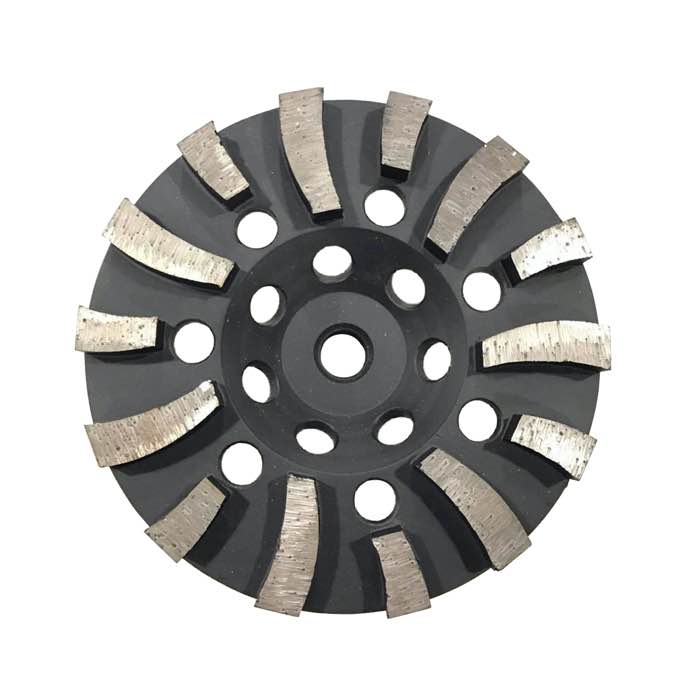
Most of the time, no - you should not grind concrete expansion joints completely flat. Grinding away the joint walls removes the space the slab needs to move, which causes reflective cracking later. You may grind the joint flush to 1-2 mm for a smooth polished look, then re-cut or fill it with a flexible joint sealant. Use narrow metal-bond shoes such as single-round trapezoid segments so you do not widen the gap, and always leave a clean vertical wall at the joint for the sealant to bond to.
Concrete shrinks as it cures. Control joints are saw-cut into the slab within 24 hours of pouring so the shrinkage cracks happen inside the joint instead of randomly across the surface. If you grind the joint flush and never re-cut it, the slab has nowhere to relieve stress, and cracks will wander across your polished floor - usually in the first dry season.
You can grind joints flat on three conditions: the joint will be re-cut or filled with a flexible semi-rigid joint filler, the slab is less than 7 days old and still moving, or the owner accepts the risk of future reflective cracks in exchange for a seamless showroom look. Retail, gallery and museum floors often do this. The grind removes only the 1-2 mm proud edge left by the saw cut, not the whole joint.
Use a grinder with a narrow shoe pattern so the diamond segments straddle the joint without rounding the walls. double-round trapezoid discs work well because the two segments sit on either side of the cut and the gap between them clears the joint. Work slowly across the joint in both directions, and stop as soon as the floor reads flat under a straightedge. Do not follow the joint with an angle grinder - that widens the cut and creates a weak point.
After grinding, vacuum the joint thoroughly. If you are sealing, blow compressed air into the gap, backer-rod it, and fill with a polyurethane or polysulfide joint sealant flush with the polished surface. If you are re-cutting, use a walk-behind saw with a diamond blade along the original line to 1/4 slab depth, then vacuum and seal.
For coating-removal work around joints where old epoxy has bled into the gap, a full-PCD trapezoid disc cleans the sides quickly without damaging the concrete walls.
A: Yes, with a flexible semi-rigid epoxy joint filler, not rigid epoxy. Rigid fillers crack when the slab moves. Grind the joint walls slightly rough first for mechanical bond.
A: Keep it 3-5 mm wide. Anything narrower than 3 mm is hard to sealant; wider than 5 mm looks like a defect on a polished floor.
A: Grind the proud joint edges during the early metal-bond stage, before resin polishing, so the joint walls get the same scratch pattern as the rest of the floor.
A: You will see a recessed line through the polishing pads, and light reflection will show the joint as a dark groove. Most contractors grind the edges down 1 mm for visual continuity, then re-seal.
Grinding expansion joints flush is a visual choice, not a structural one - and it is only safe if you re-cut or flex-fill the joint afterwards. Use narrow, segmented trapezoid shoes to keep the walls vertical, vacuum out the gap, and seal with a flexible product. JOY TECH supplies metal-bond discs sized for every major grinder brand; tell us your joint width and slab age for the right shoe.
Written and reviewed by JOY TECH - an SGS & BV audited, CE/RoHS certified diamond tools manufacturer founded in 2004, exporting to 50+ countries.
Our factory and quality management system are audited by SGS and Bureau Veritas. Products meet CE/RoHS requirements and every piece is 100% inspected before packing.
Verified Certificates
