Average response time: under 24 hours
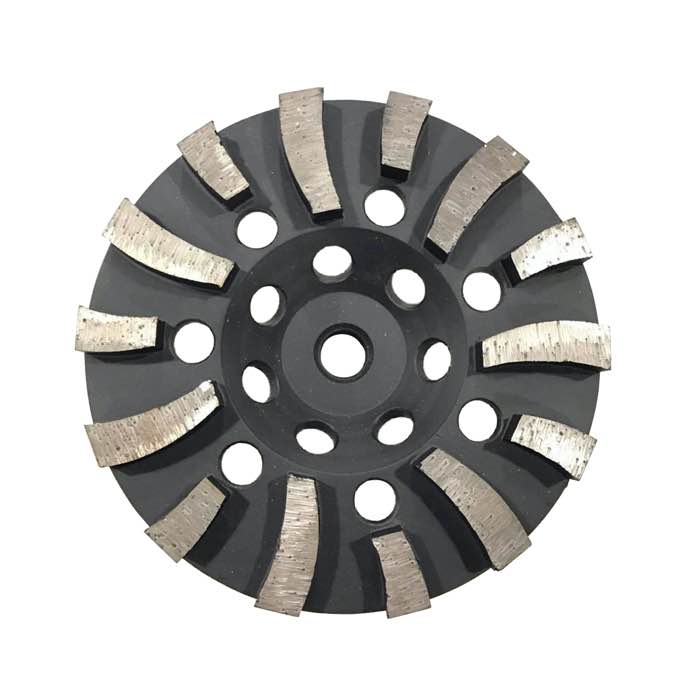
Overlap lines happen when a grinder stops, slows, or presses harder on one pass than the next, leaving a visible ridge or groove. Avoid them by keeping the grinder moving at constant speed, overlapping each pass by only 5-8 cm, and never stopping with the disc spinning on the floor. Use a planetary machine with balanced tooling such as double-round trapezoid discs and run the next grit perpendicular to the last. If lines appear, they are almost always removed at the next finer grit - the trick is catching them before resin polishing.
A floor grinder removes about 0.1 mm per pass. If you stop for 2 seconds at the end of a pass, the spinning disc grinds a 2 mm deep groove. If you press harder at the overlap, the strip removes more concrete. These ridges show as bright or dark lines under angled light after polishing.
Walk the grinder at a steady pace (about 1 m per 2 seconds) in long continuous lanes. Overlap each lane by 5-8 cm - no more, no less. At the end of each lane, lift the disc or kill the spin before you turn around. Cross-hatch: run one grit north-south, the next east-west, so any ridge from one direction is cut by the next.
| Error | Effect | Fix |
|---|---|---|
| Stopping mid-pass | Groove | Lift disc before turning |
| > 15 cm overlap | Ridge at overlap | Keep overlap 5-8 cm |
| Same direction every grit | Consistent lines | Cross-hatch 90 degrees |
| Worn shoes on one head | Arc pattern | Rotate shoes between heads |
Unbalanced tooling is a hidden cause of lines. If one head has a sharper shoe than the others, that head cuts deeper and leaves repeating arcs. Buy shoes in matched sets and rotate them between heads every 500 sqm. For resin stages, use thin, flexible resin floor polishing pads that conform to the slab instead of stiff pucks that ride on high spots.
For stubborn directional lines at the resin stage, a copper-bond transitional pad cuts through the pattern faster than a straight resin pad and bridges the grit jump.
Grinding scratches are invisible to the naked eye, but polished concrete reflects light like a mirror. Any 0.05 mm ridge becomes a bright line under lighting.
Not easily. Single-disc machines leave circular swirl by design. Planetary machines cross-hatch naturally and are the standard for seamless floors.
5-8 cm for a 700 mm grinder. That is roughly one segment width. More overlap over-grinds the strip; less leaves an uncut band.
Yes on entry-level machines. On remote-control planetary machines, slow to a stop and turn before the disc grabs. Never pivot a spinning disc in place.
Seamless floors come from constant speed, small overlaps, matched tooling and cross-hatch grits. Catch lines at the metal stage where they are cheap to fix. JOY TECH supplies matched trapezoid shoe sets and flexible resin pads engineered for seamless grinding; tell us your machine model for a balanced kit.
Written and reviewed by JOY TECH - an SGS & BV audited, CE/RoHS certified diamond tools manufacturer founded in 2004, exporting to 50+ countries.
Our factory and quality management system are audited by SGS and Bureau Veritas. Products meet CE/RoHS requirements and every piece is 100% inspected before packing.
Verified Certificates
