Average response time: under 24 hours
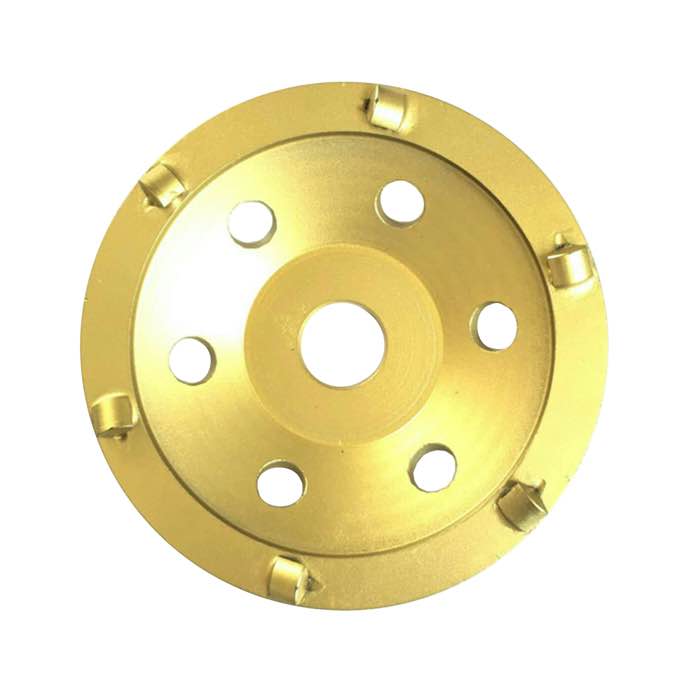
You can grind thin-set tile residue directly off a concrete slab using PCD cup wheels on a hand grinder or PCD trapezoid shoes on a floor grinder, but you cannot grind through intact ceramic or porcelain tile - it is harder than diamond and will glaze your tooling. If tile is still bonded, strip it first; if only thinset, mortar ridges or mastic remain, PCD tooling at 30/40 grit removes it at 5-15 sqm/hour before you continue with standard metal-bond grinding. Plan for 2-3x longer tooling wear than on bare concrete.
Re-grinding over residue is worth it when:
It is not worth it when tile is still fully bonded, when thinset is over 8 mm thick, or when the slab has a waterproof membrane you cannot damage.
| Residue type | Tooling | Grit / shape | Rate (sqm/hour) |
|---|---|---|---|
| Thinset mortar ridges 1-3 mm | PCD trapezoid shoe | 16-30 grit PCD, single segment | 8-15 |
| Thinset 3-8 mm, hard mortar | PCD trapezoid + ballast | 16 grit PCD, double segment | 4-8 |
| Epoxy mortar / waterproof coat | PCD cup wheel (hand) | 6-inch PCD, 6 segment | 3-6 (hand) |
| Mastic / carpet glue / VCT | PCD chip or grinding shoe | 30 grit PCD | 10-20 |
| Intact ceramic / porcelain tile | Jackhammer / demo | Not grindable | - |
Ceramic and porcelain tile fired above 1,200 C reach MOHS 7-8 and a Mohs hardness above standard diamond bond. The diamond grains abrade, the bond polishes smooth, and the shoe glazes in minutes. You will see a shiny disc, no cutting, and a burning smell. Use a demo hammer and a floor scraper first; then switch to PCD for the residue.
Thinset dust is silica plus portland cement - treat it the same as concrete dust with HEPA collection. PCD shoes generate heat; keep moving, do not dwell. Dwell time > 2 seconds on one spot can burn a visible mark into the slab. Wear eye, lung and hearing protection; PCD throws hard shards.
Use a 6-inch PCD cup wheel such as for edge and corner work where the floor grinder cannot reach, then feather into the main pass.
Thinset is portland cement plus sand - it is abrasive, not hard. But it also contains aggregate and often polymer additives that gum up diamond bonds. Expect PCD shoes to last about half of their normal concrete life, and metal-bond shoes to last 30-50% of normal. Carry twice the tooling you would for a bare-concrete job and price accordingly.
For a 100 m² retail floor where tile was removed and 2-3 mm thinset remains, budget: 1 set of PCD trapezoid shoes, 2 sets of 30/40 metal-bond shoes, and 1 set of 80/100 shoes. At current tooling prices that is about USD 80-120 per 100 m² on top of labor.
Always vacuum between PCD and metal-bond stages. Loose thinset grit is like sandpaper between your new metal shoes and the slab - it cuts tool life fast and leaves scratch patterns you will chase at 200 grit.
Grinding over residue is efficient only when residue is thin. Stop and switch to demo when:
On those jobs, use a ride-on floor scraper first, then PCD for the remaining residue. It is faster and cheaper than burning through PCD shoes on a losing battle.
After the final metal-bond pass, run a 100-grit resin pad over the slab to remove PCD scratches before densifier. It is one extra step but saves two resin passes later. PCD scratches are deep and directional; standard resin will not hide them without it.
PCD trapezoid shoes on a floor grinder, paired with HEPA vacuum. Chemical thinset softeners help on thick ridges but leave residue you still must grind off.
Yes - PCD leaves a deep, aggressive scratch pattern. Plan to follow with 30/40 metal-bond to normalize, then 80/100 to begin the polish cycle.
Yes. Wet PCD reduces heat and dust, but slurry cleanup is heavier and tooling life drops about 20% because water cools the bond too fast.
Scrape first with a ride-on scraper or diamond-blade floor planer. PCD shoes on a floor grinder alone will take all day and consume a lot of tooling.
Grinding over tile residue is a viable prep step once the tile itself is gone. Spec PCD trapezoid shoes for the floor grinder, a 6-inch PCD cup wheel for edges, and budget 2-3x normal tool wear. JOY TECH supplies PCD shoes for WerkMaster, Husqvarna, HTC and Scanmaskin machines; send us your slab condition and we will match the segment count and bond.
Written and reviewed by JOY TECH - an SGS & BV audited, CE/RoHS certified diamond tools manufacturer founded in 2004, exporting to 50+ countries.
Our factory and quality management system are audited by SGS and Bureau Veritas. Products meet CE/RoHS requirements and every piece is 100% inspected before packing.
Verified Certificates
