Average response time: under 24 hours
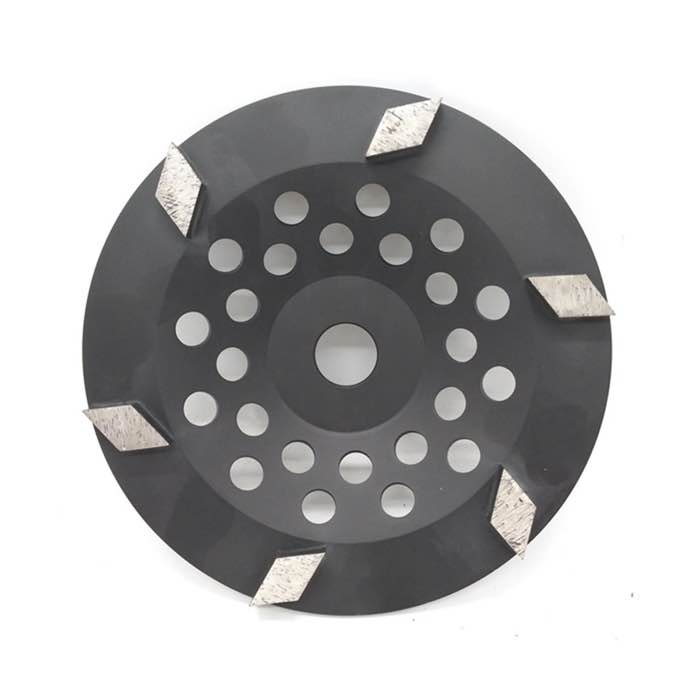
For tight spaces, use a hand grinder with a diamond cup wheel or edge tooling for corners and edges, and a small floor grinder for rooms that a full machine cannot fit. The routine is: grind the edges and corners by hand first, then grind the open area, and blend the two zones so the floor reads flat. Keep the tooling coarse for removal and step down for the finish, exactly as you would on a big floor, just smaller. For the right tooling on this job, see single rhombus edge discs.
Grind the perimeter first: edges, corners and wall lines are where the hand tools work and where the dust settles. Then grind the open area with the biggest machine that fits, working inward so you do not step on ground concrete. Finally, blend the perimeter into the main area with overlapping passes. If you grind the middle first, you will grind over your own footprints and rework the edges. The perimeter-first order also lets you check the wall lines before the big machine comes in. Related tooling is available in our double S segment discs range.
For corners, a hand grinder with a cup wheel reaches where no floor machine can. For edges along walls, use the grinder at a slight angle and work in one direction to avoid chipping. A rubbing block or hand diamond pad finishes the last centimeters and the inside corners. For small rooms, some manufacturers make smaller head floor grinders, 250 to 350mm, that handle the area and still reach into closets. The single rhombus segment disc on a small machine gives good corner-to-edge coverage.
Tight spaces show unevenness fast. Keep the hand grinder flat, overlap passes by a third, and check with a short straightedge or level frequently. Corners get ground by a round wheel, which leaves a radius; finish the exact corner with a hand block so the angle stays clean. In small rooms, use the longest straightedge that fits and check diagonals, because the eye lies in tight spaces.
Small rooms trap dust, so control it hard: a shroud on the hand grinder connected to a HEPA vacuum, a door seal, and a respirator rated for silica. Ventilate with a fan exhausting outside if possible. Because the room is enclosed, the dust concentration builds fast. Wet grinding with a mist or water feed is a strong option in tight spaces where a vacuum struggles, but contain the slurry and clean it before it dries.
A: Yes, with a hand grinder and cup wheel, or a small floor grinder. Grind edges first, keep the tool flat, and control the dust with a vacuum and respirator.
A> Use a hand grinder with a cup wheel, work from both directions into the corner, and finish the exact corner with a hand rubbing block so the angle stays clean.
A: A small hand grinder with a cup wheel, or a rotary tool with a diamond bit for the tightest spots. Low-profile grinder heads also reach under obstacles.
Tight spaces are hand-grinder territory: grind the perimeter first, use a cup wheel for corners and edges, bring in the largest machine that fits for the open area, and blend everything together. Control the dust hard in enclosed rooms and check the level with a straightedge. The same rules as a big floor, applied at small scale, give a flat, clean result.
Written and reviewed by JOY TECH - an SGS & BV audited, CE/RoHS certified diamond tools manufacturer founded in 2004, exporting to 50+ countries.
Our factory and quality management system are audited by SGS and Bureau Veritas. Products meet CE/RoHS requirements and every piece is 100% inspected before packing.
Verified Certificates
