Average response time: under 24 hours
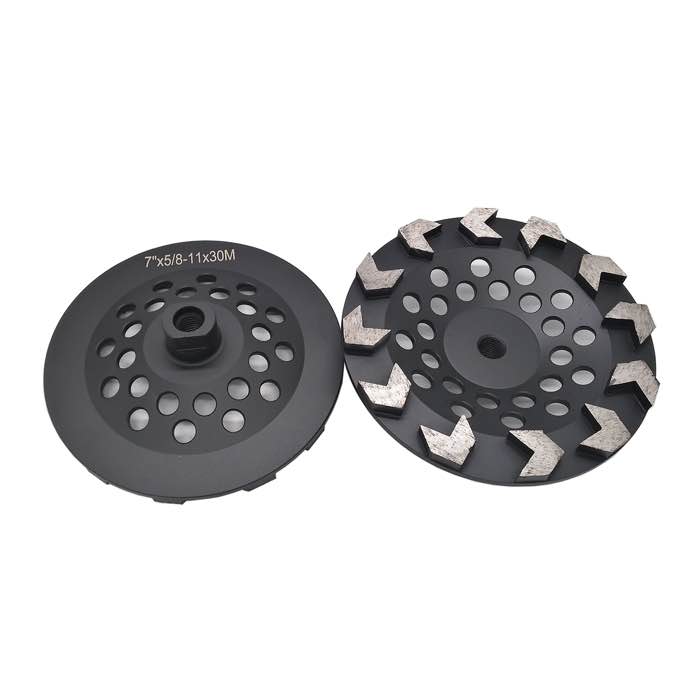
For the first coarse grinding pass, use a metal-bond disc in the 25-40 grit range, grind with overlapping passes at a steady speed, and let the machine weight cut rather than pressing down. The goal of the first pass is to expose flat aggregate and remove laitance, not to remove maximum material. Stop when the surface is uniformly matte and scratch-patterned, check it with a straightedge, and only then move to the next grit — skipping ahead creates a wavy floor that shows up later.
Coarse grinding removes the weak top layer of concrete (laitance), opens the surface, and flattens high spots. It also removes thin coatings, glue residue and surface contamination. The first pass sets the flatness for the entire job, so its purpose is quality, not speed. A well-executed first pass means every later pass just refines the same plane.
Metal-bond segments in 25-40 grit are the standard first-pass tools. On very rough or heavily coated floors you may start at 16-25 grit with a thicker segment; on smooth troweled concrete, 30-40 grit is enough. Match the segment bond to the concrete hardness — soft concrete needs a softer bond so segments stay sharp, hard concrete needs a harder bond. A diamond trapezoid grinding disc in metal bond is a common first-pass choice on floor grinders.
Check that segments are flat and even before you start. New discs may need a few minutes of grinding on scrap to dress the segment faces; worn segments cut one-sided and leave a tilted plane.
Set the machine flat on the floor and start it at full speed. Move in straight lines with 50% overlap between passes. Change direction every pass so the scratch pattern crosses itself instead of lining up. Do not press down — the machine's weight provides the cut; added pressure stalls the disc and leaves deeper marks under the edge.
If you are grinding a room, work in strips and finish the edges with a handheld grinder and a cup wheel. Keep the same overlap logic at the edges so the transition between the edge work and the open floor is invisible. For coated floors, check that the coating is fully removed before moving on — remaining patches will smear under finer grits.
Stop coarse grinding when the entire surface is a uniform matte gray with an even scratch pattern and no shiny patches. Shiny spots mean laitance or coating remains. Use a straightedge across the floor: if it rocks anywhere, mark and re-grind those areas before proceeding. Removing high spots now is cheap; removing them after finer grits is a full re-do.
Clean the floor between passes. Vacuum or sweep the dust so you can see the surface — grinding on your own dust hides low spots and loads the discs. A clean floor also lets the next grit bite evenly.
Run the machine at its rated grinding speed. Slower is not gentler — it just cuts slower and can overheat the segments. Manage dust from the start: hook up collection or grind wet. Silica dust is hazardous and the first pass generates the most of it. Our guide on concrete grinding dust health risks and protection explains the required protection.
Start with a metal-bond double-S segment trapezoid grinding disc for a flat first pass.
Start with a metal-bond disc in the 25-40 grit range. Use 16-25 grit only for very rough or heavily coated floors, and 40 grit for smooth troweled concrete.
The surface should be uniformly matte with a consistent scratch pattern and no shiny patches. Check with a straightedge — any rocking spots need more grinding before you move to the next grit.
No. Let the machine weight cut. Pressing down overloads the segments, leaves deeper marks, and does not make the floor flatter.
You can start at 40 grit on smooth troweled concrete, but still do a full first pass to remove laitance. Skipping the first pass entirely leaves a weak surface that will not hold a densifier or coating well.
The first coarse pass decides the flatness of the whole floor. Use metal-bond tooling matched to the concrete, grind with overlapping passes at steady speed, and check the surface before moving on. Keep the floor clean, control dust, and finish edges with the same overlap logic. A patient first pass turns every later grit into a refinement of a flat, open, ready-to-bond surface.
Written and reviewed by JOY TECH - an SGS & BV audited, CE/RoHS certified diamond tools manufacturer founded in 2004, exporting to 50+ countries.
Our factory and quality management system are audited by SGS and Bureau Veritas. Products meet CE/RoHS requirements and every piece is 100% inspected before packing.
Verified Certificates
