Average response time: under 24 hours
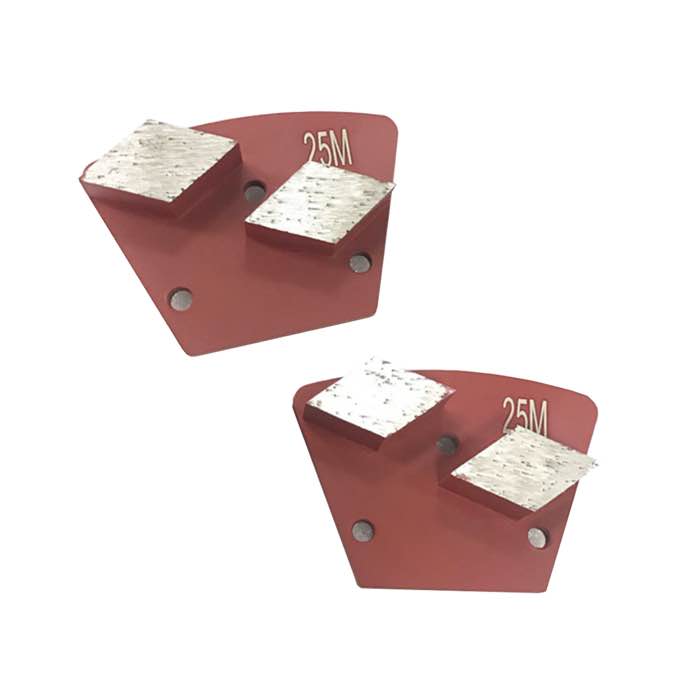
You can polish a post-tension (PT) slab, but you must locate the tendons before you lower the grinder. PT cables sit 40-75 mm below the surface in banded or uniform layouts. A single cut through a strand releases stored tension, springs the slab, and can shut the job down for weeks. Ask the GC for the as-built tendon layout drawings first, scan the slab with a rebar/tendon scanner, mark the tendon paths on the floor, and keep the first grind shallow so you never approach the cover depth. Standard metal-bond and resin pads work fine once the tendon map is in hand.
Post-tension slabs are common in parking structures, retail big-box stores, and office buildings built from the 1990s onward. High-strength steel strands are tensioned after the concrete cures, then anchored at the edges. The slab is thinner than reinforced concrete and cracks less, but the cables are live wires: cut one, and the stored energy blows a pocket out of the floor.
Standard trapezoid metal-bond shoes work on PT concrete; PT slabs are usually normal to slightly hard. Our Double Rhombus Trapezoid Grinding Disc (JOY-TP-RH2) gives even wear and avoids digging in when you cross a tendon band.
For edge work near columns and anchor pockets, hand-grind with a trapezoid disc at reduced pressure rather than a cup wheel that can dig deep.
A: A normal polishing sequence removes 0.5-1.5 mm total, well above the 40 mm cover. The danger is localized deep grinding on curls, joints, or repaired patches where cover is thinner.
A: Stop immediately. Do not keep grinding. Photograph the damage, notify the structural engineer, and let them decide whether to de-tension and repair.
A: Yes. Millions of PT parking decks are polished. The tooling sequence is identical to regular concrete; the only extra step is tendon mapping.
A: No special tooling. PT slabs are usually normal-hard concrete. Use a medium bond; ask JOY TECH for a bond sample if you are unsure.
Post-tension slabs are a polishing-friendly substrate as long as you respect the tendons. Get the drawings, scan the floor, mark the bands, and use round or rhombus segments at moderate pressure. The polishing sequence itself is standard. For PT-safe tooling samples, contact JOY TECH.
Written and reviewed by JOY TECH - an SGS & BV audited, CE/RoHS certified diamond tools manufacturer founded in 2004, exporting to 50+ countries.
Our factory and quality management system are audited by SGS and Bureau Veritas. Products meet CE/RoHS requirements and every piece is 100% inspected before packing.
Verified Certificates
