Average response time: under 24 hours
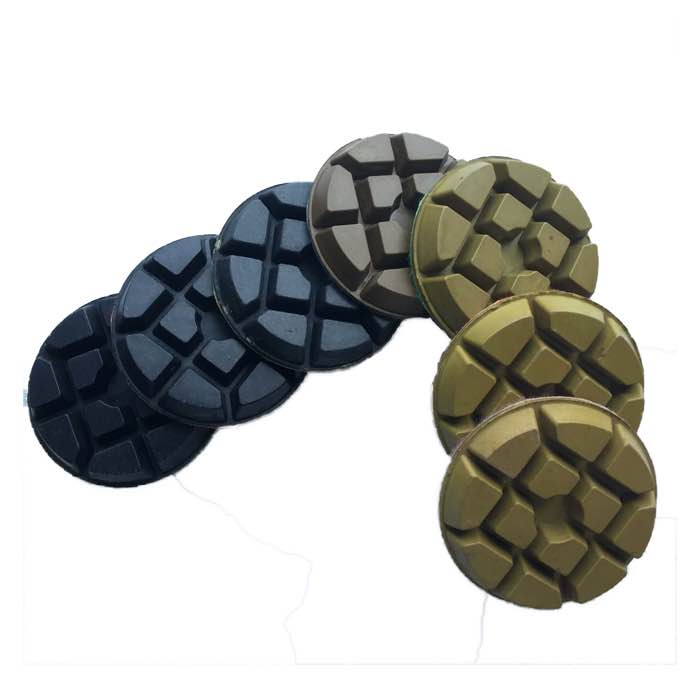
New resin polishing pads cut poorly or scratch on first use because the diamond crystals on the pad face are buried under a thin layer of fresh resin. Break them in by making two or three dry passes on a scrap slab or a low-visibility corner at normal speed and light pressure, until the face dresses flat and a fine even slurry appears. Skipping the break-in is the number one reason contractors think a new pad batch is bad: unbroken pads glaze, throw off deep scratches, and wear 20-30% shorter. A quality resin polishing pad set (JOY-RFP-01) cuts cleanly after a 200 m2 break-in; a transitional copper-bond pad such as the copper bond transitional pad (JOY-RFP-C2) needs even less dressing because the bond wears fast on its own.
Resin pads are manufactured by hot-pressing diamond powder into a resin disk. The outermost skin of every new pad is pure resin with almost no exposed diamond. On the very first pass that smooth skin slides on the concrete instead of cutting, generating heat that softens the resin further. This is the glazed pad effect: the pad burns shiny, leaves swirl marks, and seems dull for the first 100-200 m2. Break-in simply exposes the diamond layer that was always there.
Two extra factors make it worse: pads stored in a cold truck stiffen the resin, and pads from a different supplier behave differently, so a habit of testing each new box saves callbacks.
Follow this sequence:
If a pad still glazes after 200 m2, dress it on an old abrasive brick or a worn metal-bond puck for one pass - this removes the resin skin mechanically. Spiral-faced pads like the spiral resin pads (JOY-RFP-S2) dress faster than flat pads because the grooves open the face immediately.
| Symptom | Cause |
|---|---|
| Swirl marks on first passes | Glazed face sliding on concrete |
| Pad seems dull for days | Resin skin never dressed off |
| Deep random scratches at 800 grit | Uneven pressure during first cuts |
| Pad wears out halfway through expected life | Overheating during the glazed phase |
The fix is the same every time: dress the face, then run the pad at normal pressure from then on.
Pads live in the truck between jobs, and truck weather destroys more pads than the work itself. Keep pads above 10 C in winter - cold resin brittles and chips on the first pass. Keep them dry: damp pads grow mold on the face, which cuts like sandpaper and leaves dark streaks. Stack flat in their original bag, not upright, so the disk does not warp.
A: Every pad. Each disk has its own resin skin; break-in happens per pad, not per box.
A: Dry break-in is recommended because heat helps the skin dress off. Wet break-in works but takes twice as long.
Roughly 100-300 m2 of floor, or 10-20 minutes on a mid-size grinder. Watch the face texture rather than the meter count.
A: No. Break-in is a physical property of the hot-pressing process, not a quality defect. Even premium pads need a dressed face.
Twenty minutes of break-in per pad is the cheapest performance upgrade in polishing: it removes the glazed phase, prevents first-pass scratches, and restores the full rated pad life. Treat a new box as a new tool, not a drop-in replacement. JOY TECH manufactures resin and transitional pads with consistent diamond exposure so the break-in is short and the cut is predictable from the first square meter.
Written and reviewed by JOY TECH - an SGS & BV audited, CE/RoHS certified diamond tools manufacturer founded in 2004, exporting to 50+ countries.
Our factory and quality management system are audited by SGS and Bureau Veritas. Products meet CE/RoHS requirements and every piece is 100% inspected before packing.
Verified Certificates
