Average response time: under 24 hours
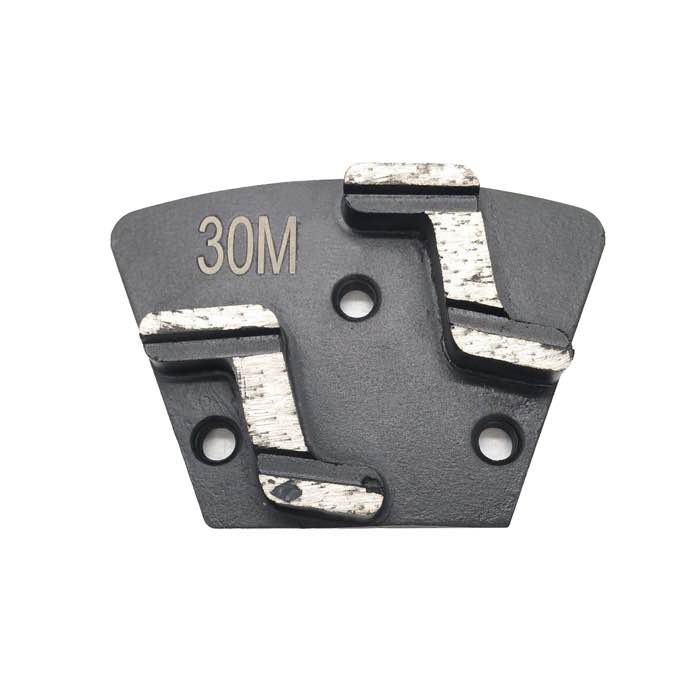
Grinding problems are usually tooling or technique issues rather than defects in the concrete. Move to 120/150 only when the slab is already level, and do not skip grit stages on coarse concrete. Use 30/46 grit stage for heavy leveling and 60/80 for stripping laitance and trowel marks without deep cuts.
For machine-matched tooling, browse our NewGrind Synthetic Sharktooth Metal Bonds Diamond Do... range.What you should know before starting.
A double-S segment disc in 60/80 gives a consistent scratch mark depth that is easy to follow up with the next grit stage.
Contractors who skip this stage usually end up redoing the floor.
The key points in practice.
Once gaps under the straightedge are within the floor's tolerance and the surface texture is uniform across the whole area, stop and move up a grit stage.
This is where most crews get it right - or lose time.
A: In short, Only when the slab is already even and you are refining. On coarse or ground-new concrete, skipping leaves a scratch mark pattern finer pads cannot resolve.
A: The practical answer is, When segments glaze and stop sawing, the bond is too hard; if they wear level in under half a set, it is too soft. Match bond to concrete hardness.
A: For most jobs, Dry abrading with a HEPA industrial vacuum is standard on glossy concrete projects; wet abrading is mostly used for stone and edge work to control fine dust and heat.
A: In short, Change the whole set together once segment height drops by half or the cut rate slows. Mixing new and worn plates causes uneven scratch mark patterns.
Looking for the right tool? Check our Typhoon Type Diamond Copper Bond Hybrid Resin Polish.... Looking for the right tool? Check our Copper Bond Diamond Transitional Polishing Pads.The fix is usually straightforward once the bond and machine are matched to the slab. Selecting the right bond, grit stage and technique for your concrete project saves tooling investment and avoids rework.
Written and reviewed by JOY TECH - an SGS & BV audited, CE/RoHS certified diamond tools manufacturer founded in 2004, exporting to 50+ countries.
Our factory and quality management system are audited by SGS and Bureau Veritas. Products meet CE/RoHS requirements and every piece is 100% inspected before packing.
Verified Certificates
