Average response time: under 24 hours
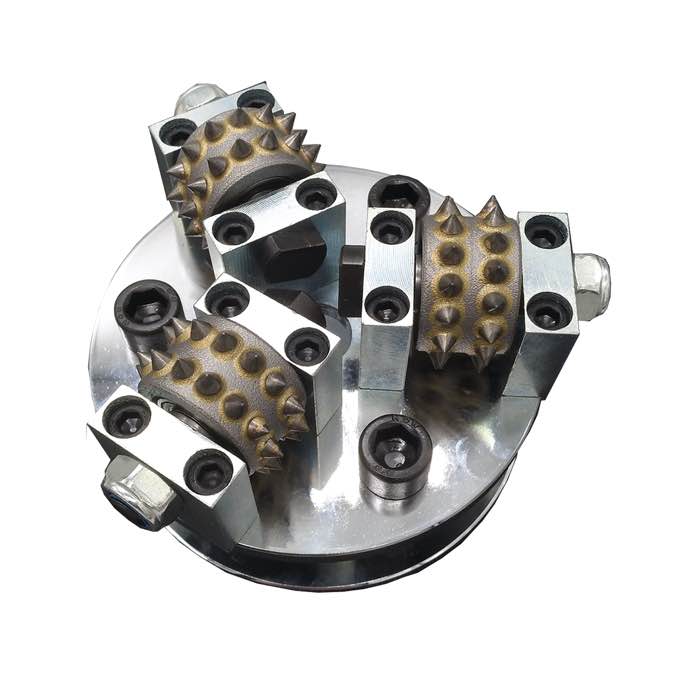
Grind the high spot down with a floor grinder fitted with a coarse metal bond plate, working in overlapping passes and checking constantly with a straightedge and level. Start with the lowest grit you can (16-25 grit), keep the machine moving, and stop when the high area matches the surrounding floor level.
Mark every high area with chalk before you start grinding. Run a long straightedge across the floor and slide it until it rocks on a high point; mark that zone. Use a level and feeler gauge to measure how much the high spot is proud of the surrounding slab. Grinding removes roughly 1-2mm per pass on aggressive settings, so the measurement tells you how many passes to expect.
Leveling needs aggressive stock removal, so use a coarse metal bond segment plate such as the diamond trapezoid grinding disc with a 16-25 grit metal bond. Coarse segments cut fast and stay flat. Do not use resin pads for leveling; they polish instead of removing material and will glaze on a high spot.
Run the machine at full speed over the marked zone in overlapping passes, moving from the center of the high spot outward. Keep the machine flat and even; tilting it carves a valley instead of lowering the whole zone. Check with the straightedge after every two or three passes and continue until the level reads flat across the boundary between the ground area and the surrounding floor.
Once the zone is level, step through 40 and 80 grit metal bond over the same area to blend the grinding pattern with the rest of the floor. Vacuum the dust between grits. If the floor will be coated or polished, continue with the standard grit sequence; if it is a repair patch, a medium pass that matches the surrounding surface is enough.
A: A floor grinder removes 1-3mm comfortably with coarse metal bond. For more than that, the concrete may need a self-leveling compound or a deeper grinding plan.
A> Just the high zone, but blend the edges over a wider area so the transition is invisible and flat.
A: The tooling is not flat against the concrete. Slow the machine, keep it centered on the zone, and use a plate with even segments so it sits flat.
Leveling a high floor is straightforward when you measure, grind with coarse metal bond, and check constantly with a straightedge. Blend the edges with a couple of finishing passes and the repair disappears into the floor.
Written and reviewed by JOY TECH - an SGS & BV audited, CE/RoHS certified diamond tools manufacturer founded in 2004, exporting to 50+ countries.
Our factory and quality management system are audited by SGS and Bureau Veritas. Products meet CE/RoHS requirements and every piece is 100% inspected before packing.
Verified Certificates
