Average response time: under 24 hours
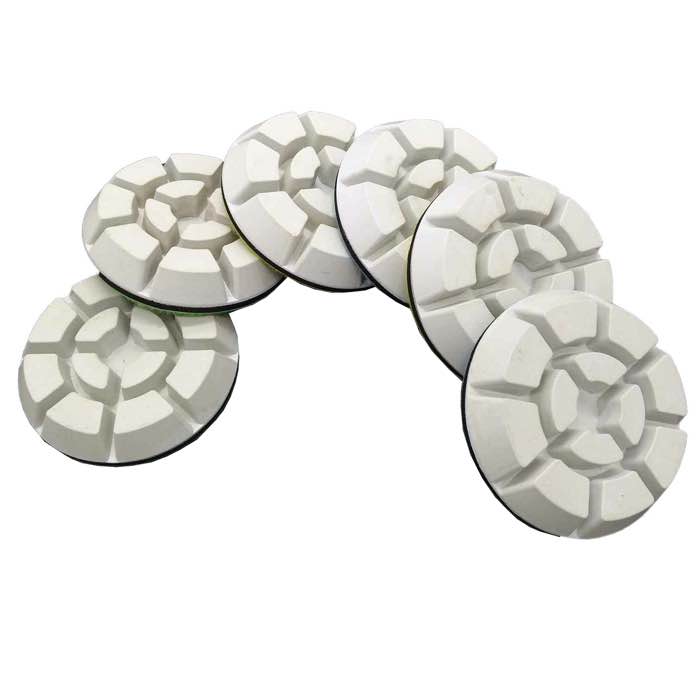
To get a matte or satin finish, simply stop the grit sequence at 400 or 800 grit—do not run 1500 or 3000 grit, and do not burnish. Matte is roughly 400 grit, satin is 800 grit, and anything above starts moving toward high gloss. Use a penetrating (not topical) sealer so you do not add a film that turns the surface glossy. The Diamond White Resin Floor Polishing Pads (JOY-RFP-04) gives a clean, even scratch pattern at low grit without over-polishing.
For final burnishing without going glossy, use the Dry Polishing Sponge Polishing Pads (JOY-RFP-SP) or skip burnishing entirely; avoid the Burnishing Pads for Concrete Floor Polishing (JOY-RFP-BP2) range if a true matte look is the goal.
Gloss on polished concrete is a function of two things: the density of the scratch pattern left by the last grit, and whether a topical film (sealer or burnishing powder) adds a reflective layer. Each finer grit removes the scratches of the one before it; once scratches are below about 10 microns, light reflects coherently and the floor looks glossy. Stop the process above that threshold and you get matte or satin.
| Final grit | Look | Sheen (60° gloss meter, typical) |
|---|---|---|
| 50 / 100 | Exposed-aggregate / salt-and-pepper | 5–15 GU |
| 200 | Honet / matte | 10–25 GU |
| 400 | Matte / low sheen | 20–35 GU |
| 800 | Satin / soft sheen | 35–55 GU |
| 1500 | Semi-gloss | 55–75 GU |
| 3000 + burnish | High gloss | 75–95+ GU |
These numbers vary with concrete hardness and densifier; treat them as a planning guide, not a guarantee.
A matte floor still needs protection—concrete is porous. Use:
Avoid acrylic waxes on matte floors—they build a shine that is hard to remove.
Matte hides scratches better than gloss, but it shows soap buildup. Dust-mop daily, wet-mop with a neutral pH cleaner, and do not use floor finishes or polish restorers. If the floor starts looking patchy, it is almost always cleaner residue, not a worn finish—strip with a neutral cleaner and re-damp-mop.
A: Yes—grind back with 400 grit resin pads and stop there. It adds one day of work but is fully reversible.
A: At 200–400 grit, trowel marks are still faintly visible as a cloudy pattern. If you want them gone, you need to grind deeper (exposed aggregate) or accept them as part of the look.
A: Satin (800 grit) is the sweet spot—it is reflective enough to light the space, hides tire marks, and is easy to maintain. True matte (400) shows oil stains more clearly.
A: Avoid them on a true matte floor. If you want a quick refresh, use a damp microfiber pad at low speed, not a 1500 RPM burnisher.
A matte or satin concrete floor is not a "failed polish"—it is a deliberate finish that looks modern, hides scratches, and requires less maintenance than a mirror gloss. The whole secret is stopping at the right grit and choosing a film-free sealer. If you are not sure which grit matches your design intent, email photos of the mock-up to [email protected]—JOY TECH can recommend the exact JOY-RFP grit set for your project.
Written and reviewed by JOY TECH - an SGS & BV audited, CE/RoHS certified diamond tools manufacturer founded in 2004, exporting to 50+ countries.
Our factory and quality management system are audited by SGS and Bureau Veritas. Products meet CE/RoHS requirements and every piece is 100% inspected before packing.
Verified Certificates
