Average response time: under 24 hours
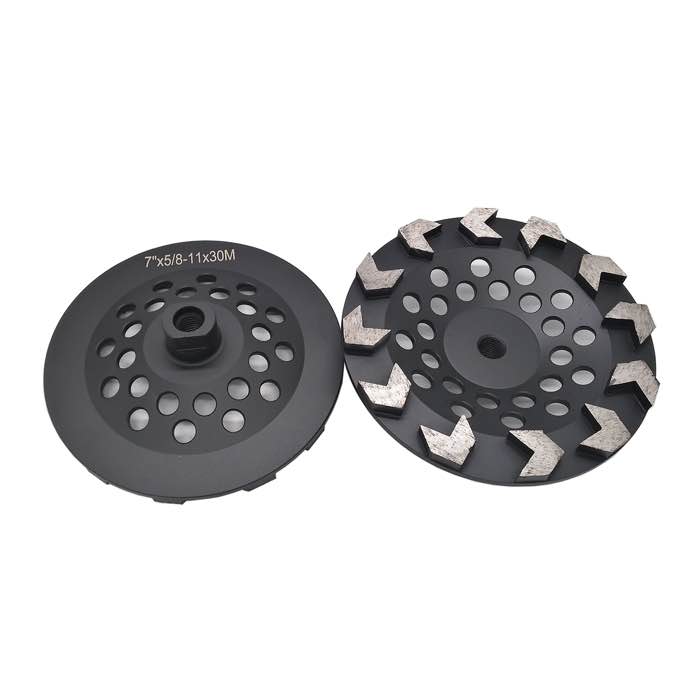
Quick Answer: A 4-inch cup wheel on a small angle grinder grinds concrete edges cleanly when you work the edge flat, overlap the open floor, and keep the disc perpendicular to the wall line. Match the edge to the floor's grit sequence so the perimeter blends instead of showing a band.
The edge zone where the floor machine cannot reach is typically 10 to 30 cm wide, and a 125 mm cup wheel fits that band comfortably with better control than a large machine. A 4-inch wheel is light, maneuvers into corners, and lets you see the line you are grinding. It also matches the small grinder's power: a 125 mm L-segment cup wheel removes material fast at full RPM without stalling the motor.
Hold the grinder so the disc runs flat along the wall line, with the leading edge reaching the corner and the trailing edge overlapping the floor. Move in slow passes along the edge, letting the wheel skim, then step back half the disc diameter and overlap. Keep the disc perpendicular to the wall so you do not cut a bevel, and check the corner with a straightedge. If the edge has glue or coating, use a PCD cup wheel for the strip pass first, then the standard cup wheel to flatten.
Grind the edge at the same grit stage as the floor machine: coarse metal bond for removal, medium for flattening, then fine resin for polishing. If the floor machine has already passed a grit, run the edge at that same grit so the scratch patterns match. After the edge catches up, run the machine slightly over the edge zone to feather the seam, and finish with a hand polisher or the machine's edge tooling for the final gloss.
Fit the side handle and use two hands even on the small grinder, plant your feet, and never reach across the spinning disc. Watch your fingers against the wall and floor in corners. single-row cup wheel, and keep the cord clear of the disc path. Wear a respirator and eye protection; edge dust is concentrated where the wall meets the floor, and a HEPA vacuum attachment keeps it out of the air.
Close to them. The disc grinds the edge band and most of the corner; a small triangle sander or a hand scraper finishes the last few centimetres where the round guard cannot sit.
Only if the grits do not match. Run the edge at every grit the floor uses, blend with an overlap pass, and finish with the same densifier and burnishing, and the perimeter will read the same as the open floor.
Grind edges with a 4-inch cup wheel in flat, overlapping passes, match the edge to every floor grit, and blend with an overlap pass before finishing. Correct technique and a matching sequence make the edge zone invisible in the finished floor.
Written and reviewed by JOY TECH - an SGS & BV audited, CE/RoHS certified diamond tools manufacturer founded in 2004, exporting to 50+ countries.
Our factory and quality management system are audited by SGS and Bureau Veritas. Products meet CE/RoHS requirements and every piece is 100% inspected before packing.
Verified Certificates
