Average response time: under 24 hours
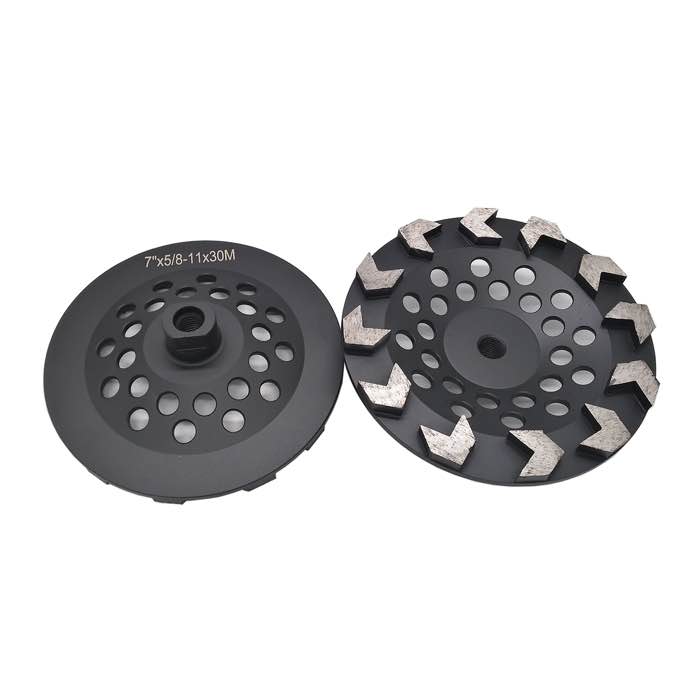
Quick Answer: A side handle gives you a second gripping point so the grinder stays flat and balanced when you work against the drag of a cup wheel. Fit the handle to the side that matches your grip, plant your feet, and let the handle absorb the torque while you control the angle of the disc.
Grinding concrete is not like cutting steel: a cup wheel drags and bucks as it bites, and one-handed grinding lets the machine tilt, scallop the surface, and walk across the work. The side handle turns the grinder into a two-hand tool, so the disc pressure stays even and the pattern stays flat. single-row cup wheel. Most angle grinders ship with a removable side handle that screws into either side of the gearbox, and choosing the right side for the job is half the control.
Screw the handle into the side opposite your lead hand. A right-handed operator usually holds the main body with the right hand and the side handle with the left, which balances the torque of a clockwise-spinning disc. For edge work along a wall, switch the handle to the side that keeps your fingers clear of the work surface. Tighten the handle firmly; a loose handle rotates in your grip exactly when the disc catches a high spot.
Plant both feet, keep the grinder body low, and work in overlapping passes at a steady pace. Use the rear handle to set the angle and the side handle to keep the disc flat, applying even pressure through both arms. Let the 180 mm arrow-segment cup wheel cut at its own pace and guide it with the handles rather than pushing it. For long runs, alternate your stance so you do not grind one side of the pattern deeper.
For edges and corners, use the side handle to hold the grinder at a slight angle so the leading segments reach the wall line. Keep the disc overlapping the open-floor pattern so the edge blends, and switch to a smaller 125 mm cup wheel for tight corners. Never remove the side handle to squeeze into a gap; a controlled two-hand pass is always safer than a one-hand reach.
Only for very light touch-up work. For any real material removal, one-handed grinding lets the machine tilt and scallop, and the kickback risk is higher. Always fit the side handle and use both hands.
Put it on the side opposite your lead hand so the torque pulls against your stronger grip. Swap it for edge work when your fingers would otherwise sit over the spinning disc.
A side handle turns a grinder into a controllable two-hand tool: flat disc, even passes, safe edges. Fit it firmly, choose the right side, and let the handle balance the torque while the cup wheel does the cutting.
Written and reviewed by JOY TECH - an SGS & BV audited, CE/RoHS certified diamond tools manufacturer founded in 2004, exporting to 50+ countries.
Our factory and quality management system are audited by SGS and Bureau Veritas. Products meet CE/RoHS requirements and every piece is 100% inspected before packing.
Verified Certificates
