Average response time: under 24 hours
Quick Answer: Wet grinding feeds water to the cutting face to cool the tooling and control dust, using wet-rated diamond discs, a water supply or mist system, and a slurry recovery setup. It suits outdoor slabs, dust-sensitive jobs, and deep removal passes where dry grinding would burn the tooling.
Wet grinding wins when dust control is critical, the slab is outside or near drains, or the tooling is burning dry. Concrete grinding dust is heavy silica, so interior jobs without HEPA vacuum often go wet just for the dust control. Deep removal passes also run cooler wet, letting coarse tooling cut longer between dressing. The trade-off is slurry: water turns grinding dust into mud that must be collected, filtered, or allowed to run to a safe drain.
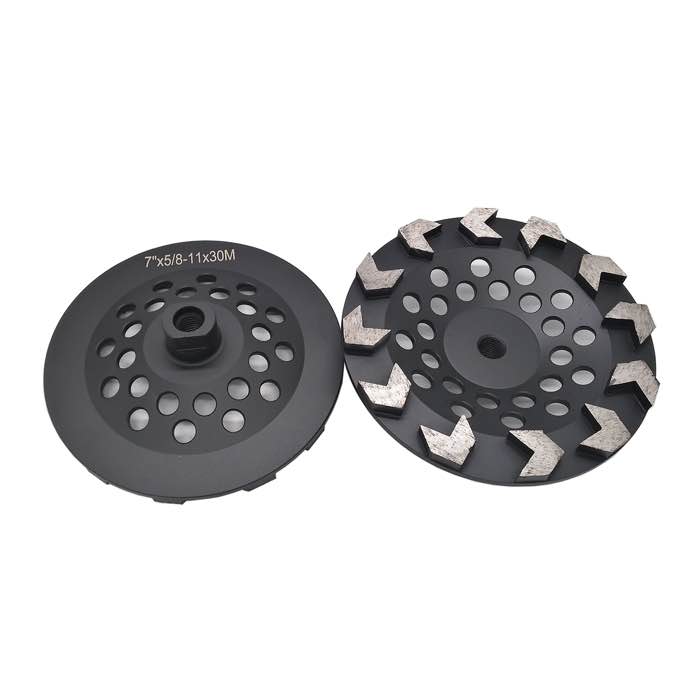
For an angle grinder, use a wet-rated cup wheel and a water feed system: a small hose with a shut-off valve aimed at the leading edge of the disc, or a misting ring that mounts behind the guard. A 180 mm cup wheel rated for wet use handles the water flow without losing segments. For floor machines, a hose adapter and a slurry ring or vacuum skirt control the mess. single-row cup wheel, and a machine adapter keeps the water on the head instead of flooding the room.
Collect the slurry before it dries, because dried grinding mud re-bonds to the floor and dulls the next pass. Use a wet vacuum to pull the slurry as you go, or direct it to a drain that accepts sediment. On outdoor slabs, a catch basin or a simple dam lets the water settle so the fines do not wash into storm drains. Rinse the floor with clean water after grinding and let it dry before any coating or polishing step.
Feed at a steady pace, keep the water flow even, and check that the slurry is actually reaching the cutting face; a dry spot on the disc still burns. Wet grinding softens the surface slightly, so expect a smoother paste and a denser look on polished floors. For polishing stages, most resin pads run dry, so switch back to dry for the fine passes and only grind wet for the coarse removal work.
No, use a wet-rated or universal wheel. Standard dry cup wheels can lose segments or shed the bond when soaked and spinning. Check the packaging for wet or dry ratings before fitting.
Not always. Wet grinding controls dust and heat but creates slurry, slows fine polishing, and can be messy indoors. Dry grinding with a HEPA vacuum is cleaner for finishing stages; many jobs combine wet coarse passes with dry fine passes.
Set up wet grinding with wet-rated tooling, a steady water feed, and slurry recovery, and use it for dusty or heavy coarse work. Collect the mud before it dries, switch to dry for fine passes, and the floor comes out clean, dust-free, and ready for the next step.
Written and reviewed by JOY TECH - an SGS & BV audited, CE/RoHS certified diamond tools manufacturer founded in 2004, exporting to 50+ countries.
Our factory and quality management system are audited by SGS and Bureau Veritas. Products meet CE/RoHS requirements and every piece is 100% inspected before packing.
Verified Certificates
