Average response time: under 24 hours
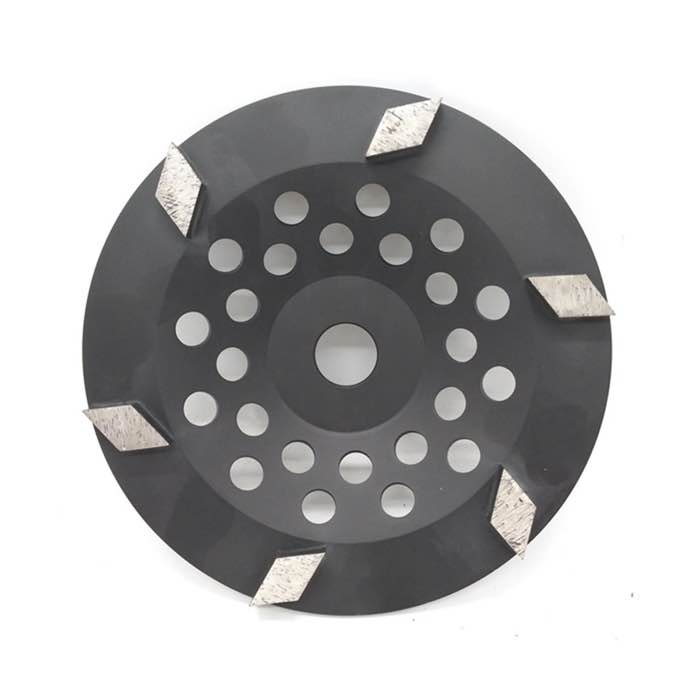
To grind high spots on a concrete driveway, mark the high areas with chalk, grind them with a diamond cup wheel on a hand grinder (or a floor grinder for large spots), check with a long straightedge, and blend the edges into the surrounding surface. Work in light passes so you do not grind a dip, and finish with a finer disc to smooth the marks. This removes trip hazards and standing water without re-pouring the driveway. For the right tooling on this job, see cup wheel tooling for small spots.
Walk the driveway and feel for raised edges, humps and lips. A long straightedge or a 2 to 3 meter level board shows exactly where the surface is high: slide it around and mark the areas where it rocks or lifts. Chalk the high zones generously, because they are easy to lose once dust covers them. Check the spots that collect water or catch the car; those are the ones that need grinding. Related tooling is available in our double rhombus segment discs range.
For small high spots and edges, a hand grinder with a diamond cup wheel is the right tool; for a large hump or a whole section, rent a walk-behind floor grinder. A cup wheel removes material precisely, and a floor machine keeps the surface flat over large areas. For blending, use a medium disc after the coarse work. A trapezoid grinding disc on a floor machine handles bigger patches, while a cup wheel covers small areas and edges.
The hard part is making the ground spot look like part of the driveway, not a patch. Blend the edges by feathering the passes outward, and finish with a fine disc in the same direction as the surface texture. If the driveway is broom-finished, match the finish lightly; if it is exposed aggregate, stop before grinding into the aggregate. Clean the dust, wet the area to check the color match, and apply a sealer if the original surface was sealed.
A: Mark the lip, grind it with a hand grinder and cup wheel in light passes, check with a straightedge across the transition, and feather the edges so the car rolls over smoothly.
A: It can, if the surface texture differs. Blend the edges, match the finish direction, and wet-check the color. A sealer helps unify the look.
A: A few millimeters is safe. If a spot is more than 10mm high, grind it in stages and check the slab thickness; grinding too deep exposes aggregate or weakens the slab.
Grinding high spots on a driveway is a straightforward job: mark the highs, grind them flat with a cup wheel or floor grinder, check with a straightedge, and blend the edges. Work in light passes and match the finish, and you remove the trip hazard and the puddle without tearing up the concrete.
Written and reviewed by JOY TECH - an SGS & BV audited, CE/RoHS certified diamond tools manufacturer founded in 2004, exporting to 50+ countries.
Our factory and quality management system are audited by SGS and Bureau Veritas. Products meet CE/RoHS requirements and every piece is 100% inspected before packing.
Verified Certificates
