Average response time: under 24 hours
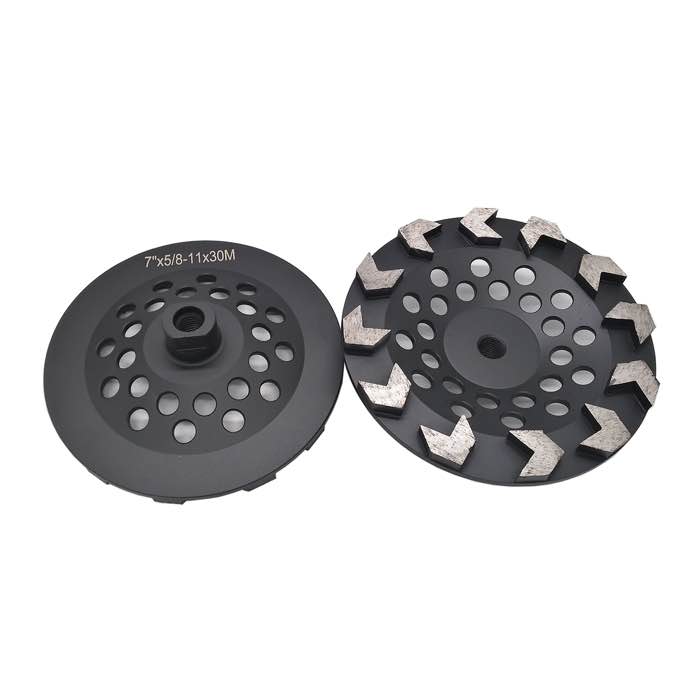
Quick Answer: Remove chalk and thin paint lines with a light pass of a medium metal bond disc or cup wheel, working in the direction of the line, then blend the area with a fine pass so no groove shows. Chalk lines lift in seconds; old paint lines may need a slightly coarser tool and a second pass.
Chalk lines are pigment dust sitting on the surface, so a light grind lifts them with almost no material removal. Paint lines are a film that bonds into the pores, needing enough contact to break the film without cutting a groove into the paste. Test the line with a scraper first; if the chalk flakes off by hand, use the lightest tooling and skip the aggressive PCD. For paint, a medium metal bond pass is usually enough.
Use a double-row cup wheel on an angle grinder for small areas, or the same grit metal bond tooling as the floor machine on large ones. Work along the line with the disc flat and light pressure, letting the segments skim the surface rather than dig in. Move in the direction of the line first, then a short cross pass to catch the edges. single-row cup wheel. Check with a wet wipe; if pigment remains, repeat with slightly more contact.
The ground patch will look different until you blend it into the surrounding floor. Follow the removal pass with the next finer grit over the whole area, extending slightly beyond the patch, then continue the floor's normal sequence. On polished floors, the blend matters most: match the grit, densifier, and resin steps so the repaired zone reads exactly like the rest. If the floor is to be coated, one even metal bond pass over the whole slab covers the difference.
Do not dwell on the line, or you cut a visible trough. Do not use coarse PCD tooling for a chalk line; it removes a millimetre where a skim would do. And never grind a wet or damp line first, since the pigment can smear into the pores. For stubborn solvent-based paint, strip it with a PCD tooling pass, then flatten with metal bond before blending.
Yes, if you use the lightest effective tooling, follow with a fine pass, and blend beyond the patch. The key is removing the pigment film, not cutting into the paste.
For fresh chalk, a dry wipe or a soft scraper works. For paint, a chemical stripper can soften the film, but grinding is faster, cleaner, and leaves a better profile for coating or polishing.
Match the tool to the line: a light metal bond skim for chalk and thin paint, PCD only for heavy films, then a fine blending pass. Remove the film without digging a groove, and the surface stays flat and uniform.
Written and reviewed by JOY TECH - an SGS & BV audited, CE/RoHS certified diamond tools manufacturer founded in 2004, exporting to 50+ countries.
Our factory and quality management system are audited by SGS and Bureau Veritas. Products meet CE/RoHS requirements and every piece is 100% inspected before packing.
Verified Certificates
