Average response time: under 24 hours
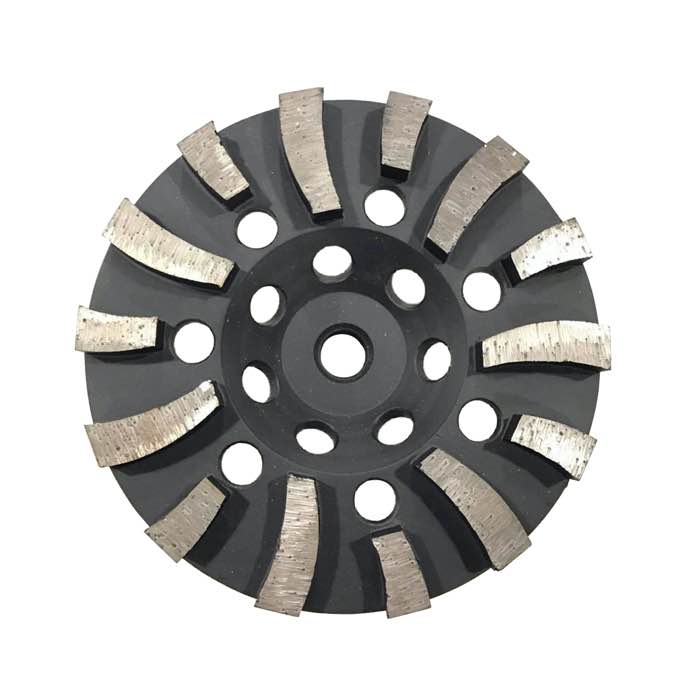
Grind the high edge of a settled slab joint with a 125 mm diamond cup wheel on an angle grinder, or a 250-500 mm walk-behind grinder for trip hazards over 10 mm. Most US municipalities follow the ADA threshold: any vertical offset of 13 mm (1/2 in) or more is a code violation, and the repaired transition must slope at no steeper than 1:12. A diamond cup wheel removes roughly 1-2 mm per pass; work wet or with a HEPA vacuum because OSHA silica rules apply in every public job.
Settlement, freeze-thaw and tree-root uplift lift one slab edge relative to the next. Property owners get sued when pedestrians trip on them, so cities and commercial property managers grind offsets proactively. The rule of thumb used by most contractors:
| Vertical offset | Action | Typical tool |
|---|---|---|
| Under 5 mm | Leave — normal joint variation | None |
| 5-13 mm | Grind transition to 1:12 slope | Angle grinder + cup wheel |
| 13-25 mm | Grind + backfill low side if needed | Walk-behind grinder |
| Over 25 mm | Slab replacement or mudjacking | Grinder only for cleanup |
Do not try to grind 25 mm down in one pass — you will glaze the wheel and burn the motor. Several light passes build a safe slope without heat damage.
For isolated 5-13 mm trip hazards along sidewalk joints, a 1500 W angle grinder with a 125 mm Diamond Hurricane Cup Wheels (JOY-CW-H) is enough and cheap to transport. The open segment design cuts fast and clears slurry. For parking lots and stretches with 20+ joints, a 250 mm single-disc walk-behind grinder with a Diamond Trapezoid Grinding Disc (JOY-TP-R3) trapezoid disc is 4-6x faster and leaves a flatter, more uniform transition.
Edge work around tree pits and manholes is where a 125 mm cup wheel earns its keep; use a Diamond Grinding Cup Wheels with 6 Round Segments (JOY-CW-R6) round-segment wheel for a smoother finish on the final feather pass.
A: Up to about 25 mm total in staged passes over several days. Beyond that you weaken the slab too much — most sidewalks are only 100-125 mm thick, and removing more than 25 mm of surface invites spalling.
A: Usually no for grinding-only repair on private property, but public sidewalks in most US cities require a right-of-way permit and a dust control plan. Check with the local public works office before starting.
A: Old sidewalks often have laitance and carbonated surface paste that loads the diamond bond. Use a soft-bond cup wheel and keep water running; dress the glazed wheel against a concrete curb once or twice a day.
A: No. The round disc cannot reach the joint line precisely. Use the walk-behind for the slab face and finish the joint transition with an angle grinder cup wheel.
Trip-hazard grinding is a low-margin, repeatable municipal and commercial service that pays for the tooling quickly. Keep a soft-bond cup wheel for hand work and a set of trapezoid metal-bond discs for the walk-behind, follow the 1:12 slope rule, and never skip dust control. JOY TECH stocks cup wheels and trapezoid discs sized for every common angle grinder and walk-behind model so you can bid sidewalk repair with confidence.
Written and reviewed by JOY TECH - an SGS & BV audited, CE/RoHS certified diamond tools manufacturer founded in 2004, exporting to 50+ countries.
Our factory and quality management system are audited by SGS and Bureau Veritas. Products meet CE/RoHS requirements and every piece is 100% inspected before packing.
Verified Certificates
