Average response time: under 24 hours
Quick Answer: Polish concrete in wet areas with a satin or lower-gloss finish, add a slip-resistant sealer, and seal thoroughly so water and detergents cannot stain the surface. Plan the fall to the drain during the grind, and maintain the sealer yearly to keep the floor safe and clean.
Wet areas need function before gloss. A mirror burnish in a bathroom holds water in a film and tests slippery; a satin finish around 200 to 400 grit keeps more micro-profile and reads safer. You can still add a high-gloss zone on dry walls or vanity areas, but keep the traffic floor at a lower grit. Discuss the finish with the client, because a glossy bathroom floor that fails a slip test has to be re-ground.
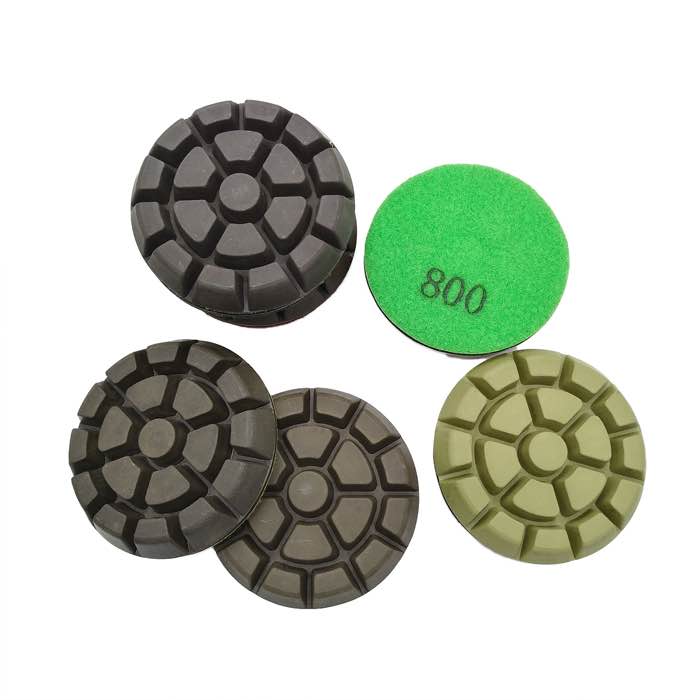
Apply a slip-resistant penetrating sealer after the polish. resin floor polishing pads, and verify the wet slip rating in place before the room is used. Combine a lower gloss with an anti-slip additive for the best margin on the traffic path. Seal the floor with a high-quality sealer made for wet areas, re-coating annually, because laundry detergents and shampoo residues etch unprotected concrete. A sealed floor also makes the inevitable soap film wipe off instead of soaking in.
If the floor must fall to a drain, establish the slope during the grinding stage: grind the high side first and let the low side run to the drain, checking with a level as you go. Puddling is a failure of flatness and drainage both, so grind out any bird baths before polishing. In bathrooms without a drain, the floor should still slope slightly away from walls and fixtures so water runs to a low point you can squeegee.
Maintain a wet-area polished floor with daily squeegeeing, weekly pH-neutral cleaning, and an annual sealer check. Do not use strong acids or bleach products on the polish; they etch the surface and strip the sealer. A resin pad set and burnishing pads let you refresh the gloss when the sealer wears, and a routine burnishing pass restores the sheen. white resin polishing pads without re-grinding.
Yes, with care: a low-gloss finish, a strong slip treatment, and a fall to the drain. Even then, add a shower mat or textured tile zone in the standing area for the highest safety margin.
Annually for most bathrooms and laundries, or sooner if water stops beading. Sealers wear fastest where water and detergent sit, so check the standing areas twice a year.
Polish wet-area concrete at a satin finish, verify the wet slip rating, seal with a slip-resistant sealer, and keep the fall to the drain. Regular maintenance and an annual reseal keep the bathroom and laundry floor safe, stain-free, and glossy for years.
Written and reviewed by JOY TECH - an SGS & BV audited, CE/RoHS certified diamond tools manufacturer founded in 2004, exporting to 50+ countries.
Our factory and quality management system are audited by SGS and Bureau Veritas. Products meet CE/RoHS requirements and every piece is 100% inspected before packing.
Verified Certificates
