Average response time: under 24 hours
Quick Answer: A 12-inch orbital floor machine polishes concrete well for small and medium areas, running resin pads through the full grit sequence with a water or dust attachment. It cannot match a planetary machine's speed or flatness on large floors, but for garages, offices, and residential slabs it is a practical, controllable polisher.
An orbital machine moves the pad head in a small circular orbit, which spreads the pad pressure evenly and avoids the heavy lines a rotary can leave. That orbital action suits resin polishing: it refines the scratch pattern, blends passes, and is easy to control in rooms and corners. With a variable speed motor, you can run coarse metal bond slowly and fine resin pads faster, covering the standard grit progression on pads up to about 300 mm wide.
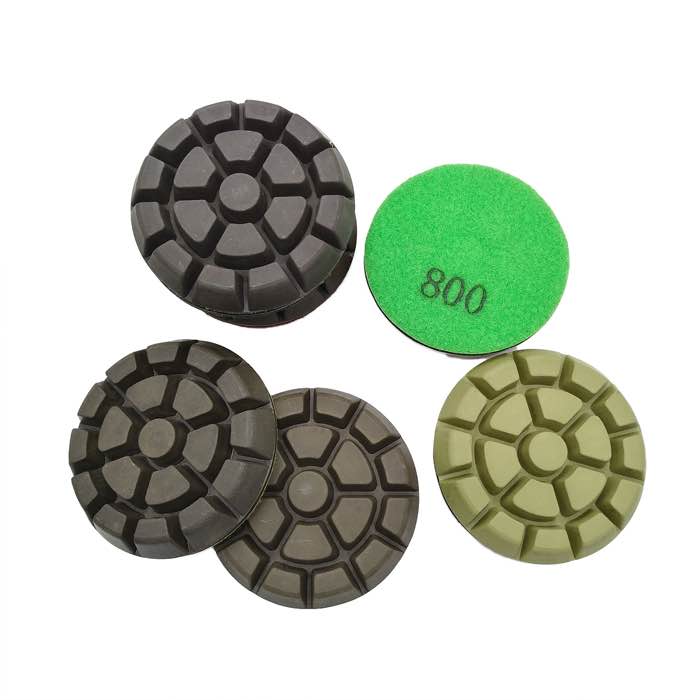
Fit the machine with a backing pad matched to your tooling, using either magnetic or Velcro adapters. For coarse work, use metal bond discs on the same machine; for the polish stages, switch to a resin polishing pad set from 100 grit through the fine steps. Keep spare pads of each grit on hand. white resin polishing pads, because orbital machines wear pads evenly and you will need fresh pads to finish the last zones. A backer pad adapter lets you swap discs without tools.
Run the same grit sequence the floor needs, starting with the coarsest metal bond that removes the existing surface, then stepping through medium and fine. Work in overlapping passes with the machine's own pace, about half the pad width per pass, and turn 90 degrees between grits. Apply densifier between the metal and resin stages so the concrete hardens before the fine polish. On corners and tight areas, finish with a hand polisher using the same grit so the whole floor stays consistent.
A 12-inch orbital is slower than a 700 mm planetary machine and cannot flatten a badly uneven slab as aggressively. Use it for floors that are already reasonably flat, and keep coarse metal bond passes light so the light machine does not bounce on high spots. For large commercial floors, hire or buy a planetary machine; for small and medium spaces, the orbital is often the most cost-effective polish option there is.
With PCD tooling or coarse metal bond, yes, for light coatings and glue. Heavy epoxy needs a heavier machine or an angle grinder with PCD cup wheels first, then the orbital finishes and polishes.
Yes, for dry polishing. A shroud with a vacuum connection collects the dust at the pad, keeps the floor clean, and protects the motor from grinding dust.
A 12-inch orbital floor machine polishes small and medium concrete floors through the full grit sequence with good control and even pad wear. Match the pads to the job, run the sequence with overlap, and finish the edges by hand, and the floor will polish up clean and consistent.
Written and reviewed by JOY TECH - an SGS & BV audited, CE/RoHS certified diamond tools manufacturer founded in 2004, exporting to 50+ countries.
Our factory and quality management system are audited by SGS and Bureau Veritas. Products meet CE/RoHS requirements and every piece is 100% inspected before packing.
Verified Certificates
