Average response time: under 24 hours
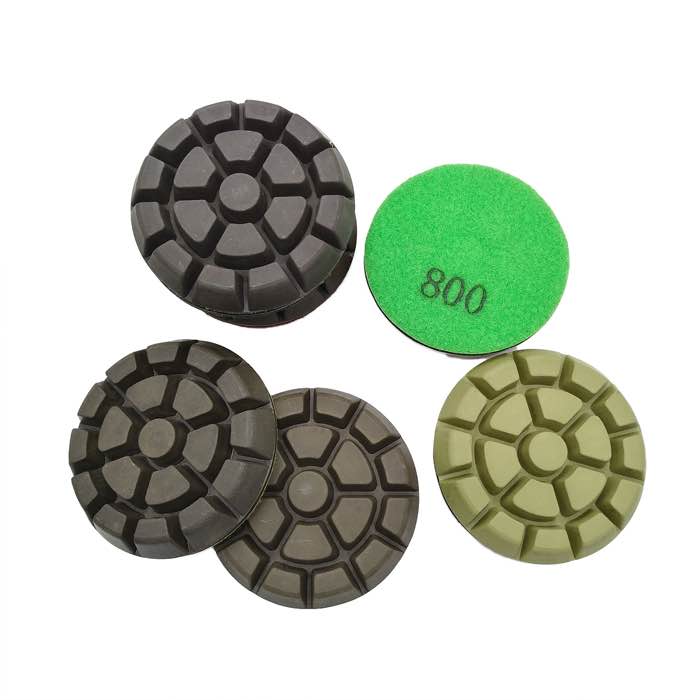
Quick Answer: Use a diamond cup wheel for the coarse removal and flattening stages, then switch to resin pads for the polishing stages, following one continuous grit sequence. The cup wheel cuts fast and levels the floor; the pads refine the scratch pattern to a gloss.
The cup wheel is the workhorse for material removal: stripping coatings, taking down high spots, and removing heavy scratches. On an angle grinder, a 12-segment 180 mm cup wheel covers edges and small floors, while a single-row cup wheel suits lighter skimming. Use it until the surface is flat and the coarse scratch pattern is even, then stop: pushing the cup wheel finer only removes material you do not need to lose.
Hand off when the floor is flat and you want to refine the surface rather than remove more. Resin pads step the scratch pattern down from around 200 grit through 3000 and burnishing, turning the matte grind into a polish. The handoff point is the key: change to pads before the surface is over-removed, and run the first pad grit to blend the cup wheel's deepest scratches. On a floor machine, the equivalent is switching from metal bond discs to resin pads at the same point.
Start with the cup wheel at 50 to 120 grit equivalent for removal, then a medium metal bond pass for flattening, then step into resin pads: 200, 400, 800, 1500, 3000. Apply densifier after the metal stages so the concrete hardens before the fine pads. For the edges, use the cup wheel at the same stage as the floor, then finish them with hand pads. A resin pad set matched to the machine's backing system keeps the swap clean.
Do not skip grits between the cup wheel and the pads; the first pad grit must match the scratch depth the wheel left. Do not burnish a floor that is still wavy, and do not use the cup wheel for the final stages or you grind away the gloss you just made. Check the surface under raking light at each handoff, and only move to the next stage when the current scratch pattern is uniform.
You can grind it smooth, but the cup wheel leaves a coarse scratch pattern that reads as dull matte. Pads are needed to step the scratches down and produce a gloss, so a full polish needs both tools.
Around 200 grit resin, or a medium metal bond if the cup wheel left deep scratches. Match the first pad to the visible scratch depth and step down without skipping.
Grind with the cup wheel until flat, hand off to resin pads at the right grit, and run the full sequence from 200 to burnishing with densifier in between. The cup-plus-pads combo balances speed with finish, giving a flat, glossy floor in the least time.
Written and reviewed by JOY TECH - an SGS & BV audited, CE/RoHS certified diamond tools manufacturer founded in 2004, exporting to 50+ countries.
Our factory and quality management system are audited by SGS and Bureau Veritas. Products meet CE/RoHS requirements and every piece is 100% inspected before packing.
Verified Certificates
