Average response time: under 24 hours
Quick Answer: Remove efflorescence from polished concrete by dry-brushing or vacuuming the white powder, cleaning the residue with a pH-neutral or mildly acidic cleaner, rinsing well, and resealing the floor. Stopping the moisture that carries salts to the surface is what keeps the stains from coming back.
Efflorescence is a white, powdery deposit of soluble salts that migrate to the surface with moisture and crystallize as the water evaporates. It appears on polished concrete when moisture moves through the slab from below, or when cleaning water carries salts and leaves them behind. The powder itself is harmless but ugly, and it dulls the gloss where it sits. Grinding it off alone never fixes the cause: if the moisture path remains, the salts return.
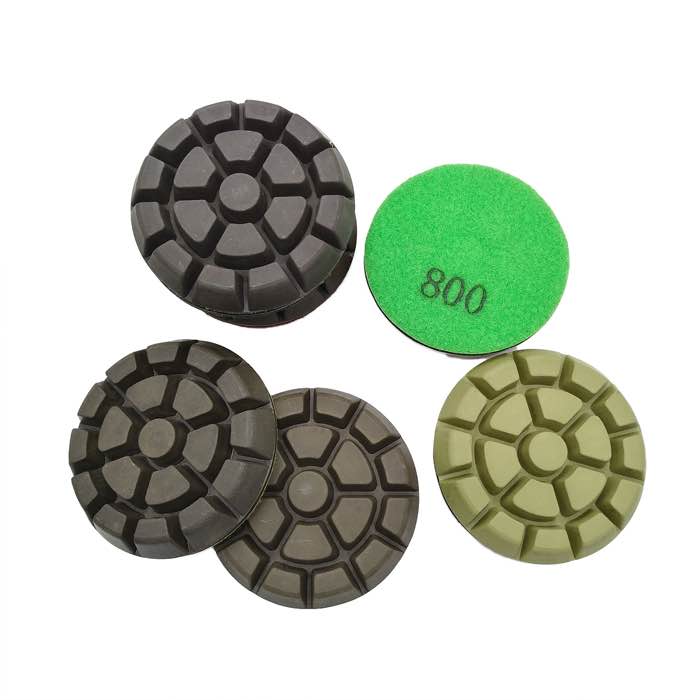
Start dry: vacuum or sweep the powder so you do not smear it into the pores. Then clean the affected zone with a pH-neutral cleaner, or a diluted acidic cleaner for stubborn deposits, scrubbing gently with a soft pad. Rinse thoroughly with clean water and dry the floor completely. A fine resin pad pass over the cleaned area restores the gloss, and a light burnishing brings the shine back without removing the surface.
After cleaning and drying, reapply densifier and sealer to the zone so salts cannot re-deposit as easily. Fix the moisture source: improve drainage around the slab, install a vapor barrier, or seal cracks and joints at the perimeter. In high-humidity spaces, ventilation and dehumidification slow the salt migration. If the slab sits on wet ground with no barrier, expect efflorescence to return no matter how well you clean it.
For new floors, densify early and seal the surface, control the concrete's water content, and keep the slab dry before polishing. Use clean water for grinding and polishing stages and avoid over-wetting. A white resin pad finish over a well-densified floor leaves fewer pores for salts to reach. Spot-check new floors after the first wet season. resin floor polishing pads so deposits are caught before they etch the finish.
You can, but it returns unless the moisture stops. Clean and seal first, then re-polish the zone lightly; grinding removes the gloss along with the salt and leaves the floor duller.
Not by itself, but the moisture that carries it can weaken coatings and corrode steel over time. Treat the moisture source and the deposit, not just the white powder.
Brush, clean, rinse, and reseal to remove efflorescence, then stop the moisture path to keep it away. Address the slab's water problem rather than grinding the salts, and the polished floor stays white-free and glossy.
Written and reviewed by JOY TECH - an SGS & BV audited, CE/RoHS certified diamond tools manufacturer founded in 2004, exporting to 50+ countries.
Our factory and quality management system are audited by SGS and Bureau Veritas. Products meet CE/RoHS requirements and every piece is 100% inspected before packing.
Verified Certificates
