Average response time: under 24 hours
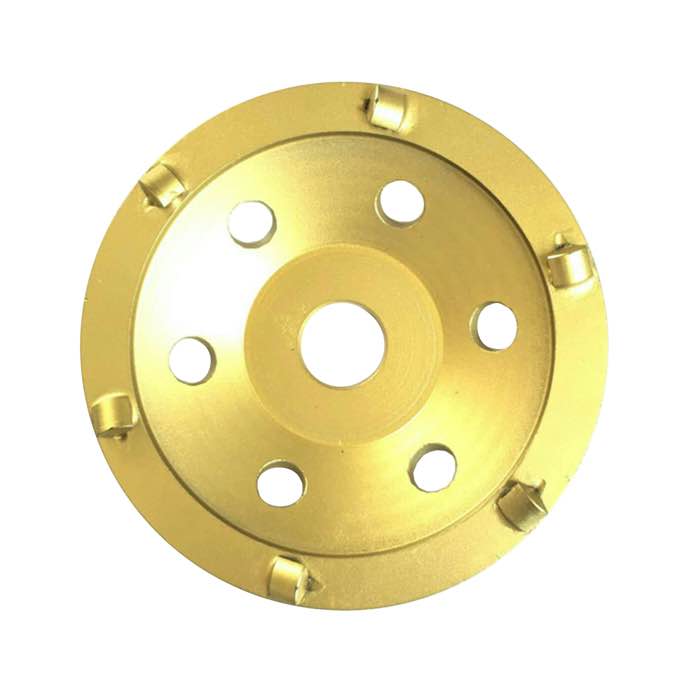
The fastest way to remove old thinset and tile adhesive from a concrete slab is a PCD (polycrystalline diamond) scraper or cup wheel on a walk-behind grinder for the bulk adhesive, followed by a metal-bond diamond grinding disc to flatten the slab, and then a fine pass to condition it for new flooring. Hand-chipping with a hammer and chisel works on small patches but is slow, back-breaking and dusty across full rooms.
Thinset mortar is a cement-based tile adhesive mixed with polymers that grab the porous concrete surface as it cures. Old thinset left on a slab is uneven, rock-hard in spots, and covered in bonded tile glue or epoxy remnants. Bonding a new floor directly over it fails: new adhesive cannot grip a variable, dusty surface. You need the slab flat, clean and open before new tile, LVT, epoxy or polish can bond.
PCD tooling — polycrystalline diamond tips brazed onto a steel segment — shears through thinset, epoxy and rubberized glue instead of grinding it. On an angle grinder, fit a shrouded Diamond PCD Cup Wheels with 6 PCD for Floor Preparation (JOY-CW-PCD6) along edges and around pipes. On a walk-behind machine, fit Double PCD Diamond Trapezoid Grinding Disc with Single Bar (JOY-TP-PCD2B1) for the open floor. PCD removes the bulk of thinset at a fraction of the time needed with plain diamond segments.
After PCD scraping, the slab has low thinset patches and scratch marks. Switch to aggressive metal-bond diamond segments to plane the slab flat and blend the patches flush. A quick-change system such as the Fast Change System PCD Diamond Trapezoid Disc (JOY-TPF-PCD2B1) lets you swap between PCD and metal-bond shoes without tools, so you keep the machine turning instead of stopping to bolt on discs.
For new thinset or LVT adhesive, a light grinding pass with medium metal-bond shoes is enough — the surface must be open, clean and flat to a few points over two meters. For epoxy or polished concrete, continue through the grinding and resin-bond polishing sequence. Vacuum thoroughly after each step; any remaining dust ruins the bond of the new floor system.
Hand chipping still has a place around drains, cabinets and tiny pockets. But across a 50 m² room, chiseling thinset costs more in labor than the machine saves, and the operator breathes uncontrolled silica dust. The PCD-and-grind workflow is faster, flatter and far safer.
Thinset removal generates enormous amounts of fine cement dust. Run the walk-behind grinder with its factory dust shroud and a HEPA extractor, and wear a P100 half-face respirator for any touch-up grinding by hand. Wet methods are rarely practical here because slurry traps glue residue that re-hardens when it dries.
A: Yes, but slowly. Plain diamond segments grind thinset away layer by layer and glaze quickly on organic glue. PCD tooling shears adhesive off in sheets and is several times faster for this job.
A: Flattening flush to the slab is the standard preparation for new adhesive. Fully removing every trace is unnecessary if the surface is flat, sound and clean; bonding failures come from height variation, not a faint shadow of old mortar.
A: With a PCD-equipped walk-behind grinder, a typical 40-60 m² room takes one to two hours for scraping plus a grinding pass. Hand chipping the same area can take a full day.
A: It leaves aggressive scratch marks by design, which the following metal-bond grinding pass removes. On soft or stained decorative concrete, test a hidden corner first to judge scratch depth.
Removing thinset is a three-step machine job: PCD scraping, metal-bond grinding flat, and a conditioning pass — never hand chiseling full rooms. For PCD cup wheels, trapezoid PCD discs and fast-change tooling matched to your grinder, contact JOY TECH at [email protected] with your machine model and slab condition.
Written and reviewed by JOY TECH - an SGS & BV audited, CE/RoHS certified diamond tools manufacturer founded in 2004, exporting to 50+ countries.
Our factory and quality management system are audited by SGS and Bureau Veritas. Products meet CE/RoHS requirements and every piece is 100% inspected before packing.
Verified Certificates
