Average response time: under 24 hours
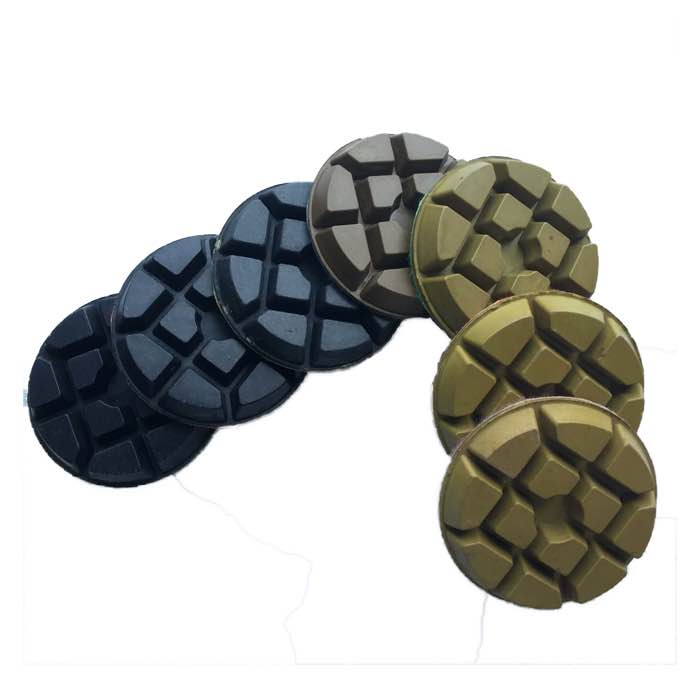
Use a densifier to harden the concrete during the polishing process, and use a sealer only when the floor needs extra stain protection or a specific sheen. Many polished floors use a densifier alone and never need a sealer; others add a sealer for kitchens, retail or food areas. The sequence is: densify during polishing, polish to the final grit, then apply a sealer if the specification calls for one. Densifier and sealer do different jobs, and most floors benefit most from the densifier. For the right tooling on this job, see resin polishing pads for the sequence, 8-triangle pads.
A densifier is a silicate or siliconate liquid that penetrates the concrete and reacts with it to form a harder, denser surface. It reduces dusting, strengthens the floor against wear, and is part of the polishing process, usually applied after the mid grits. A densified floor is harder and shinier when polished, and it resists abrasion. The densifier is not a coating; it becomes part of the concrete. Every polished floor should be densified, whether or not it is sealed. Related tooling is available in our white resin finishing pads range.
A sealer is a coating that sits on the surface and adds what densifying cannot: strong stain resistance, moisture protection and a chosen sheen. Penetrating sealers add protection with little visual change; topical acrylics add a film and gloss. Sealers are not required for all polished floors. They matter where spills, oils and food are likely: kitchens, bars, retail, bathrooms. The trade-off is maintenance: topical sealers wear and must be stripped and re-applied, while a densified floor is maintained with neutral cleaners.
Use densifier only for warehouse, showroom and residential floors where the goal is durability, low maintenance and a natural polished look. A properly densified and polished floor resists stains reasonably and never needs wax or a coating. This is the lowest-maintenance option and the most common spec for polished concrete. Skip the sealer, keep the matte-to-satin look, and maintain with neutral pH cleaner.
Use both for floors that face heavy staining or food service: densify for hardness, then apply a penetrating sealer for stain resistance, or a topical sealer for gloss. The densifier goes on first, during polishing; the sealer goes on last, after the final grit and a clean, dry floor. Test the sealer on a sample area because some sealers change the color and sheen. Re-apply topical sealers on a maintenance schedule; penetrating sealers last years.
A> Not always. Densified polished concrete is durable and stain-resistant enough for many floors. Add a sealer for heavy spill areas, food service or when a glossy film is wanted.
A: Yes, on a ground or polished floor. The sealer adds protection on top, but the floor will not be as hard or durable as a densified one. Densify for the best result.
A: Penetrating sealers last for years; topical sealers usually need re-coating every 1 to 3 years depending on traffic. Follow the product's maintenance schedule.
Densifier hardens the floor from within; sealer protects it on top. Densify every polished floor, and add a sealer only where staining or gloss demands it. Sequence it right: densify during polishing, seal at the end. That combination gives you a floor that is hard, easy to maintain and protected exactly where it needs it.
Written and reviewed by JOY TECH - an SGS & BV audited, CE/RoHS certified diamond tools manufacturer founded in 2004, exporting to 50+ countries.
Our factory and quality management system are audited by SGS and Bureau Veritas. Products meet CE/RoHS requirements and every piece is 100% inspected before packing.
Verified Certificates
