Average response time: under 24 hours
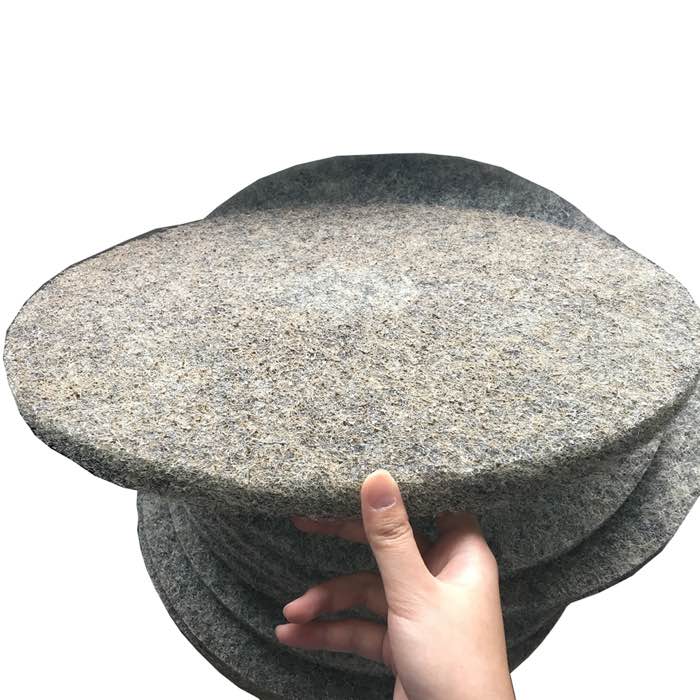
Polished concrete is far more tolerant of slab moisture than epoxy or VCT, but it is not moisture-proof. Test for in-situ relative humidity (RH < 75% at 40% slab depth per ASTM F2170) before polishing. Above 85% RH you will see densifier bloom, resin pad haze, and eventual efflorescence through the polished surface. The fix is not to stop polishing - it is to ventilate, dehumidify, and switch to a lithium densifier that tolerates higher moisture. Most warehouses can be polished at RH up to 80% without long-term failure.
Polished concrete is not a coating - it is the slab itself, densified and burnished. That means it does not peel or bubble like epoxy when vapor rises through the slab. But moisture carries dissolved salts (calcium, potassium, sodium) to the surface, where they crystallize as white efflorescence. It also interferes with densifier reaction, leaving the surface under-dense and dusty.
| Test | Standard | Target for polishing | When to use |
|---|---|---|---|
| In-situ RH probe | ASTM F2170 | < 75% RH | Best - measures at 40% slab depth |
| Plastic sheet test | ASTM D4263 | No condensation under film | Quick field check |
| Calcium chloride MVER | ASTM F1869 | < 3 lb / 1,000 sqft / 24 hr | Legacy test; less accurate than RH |
| Surface Dampness (card test) | - | No darkening on kit | Fast on-site read |
White patches appearing months after polishing = salt carried to the surface by rising moisture. Diagnosis: check RH again. If RH is above 80%, the slab is still wet underneath. Fix: burnish off the efflorescence, ventilate, and accept a matte finish. Re-densifying will not solve it if moisture is still rising.
Aggressive burnishing with burnishing pads with resin pucks can hide surface efflorescence temporarily but does not stop the source.
A new slab is wetter than most contractors assume. Water-cement ratio of 0.55 means roughly 150 liters of water per cubic meter of concrete. Most of that water is chemically bound, but free water in the pores drives RH above 90% for the first 30 days and takes 60-180 days to drop below 80% in a ventilated interior.
Rule of thumb: wait 28 days minimum cure, then test RH. Most interior slabs in heated, ventilated buildings reach 75% RH in 90-120 days. Slabs over 200 mm thick, or slabs in unventilated basements, take 6-12 months.
Polishing a slab too early is the #1 cause of post-handover efflorescence. The floor looks great at handover, then white patches appear 3-6 months later as moisture rises and carries salts to the surface. There is no fix - you have to wait it out or accept the matte, effloresced finish.
Slabs poured directly on grade without a 6 mil polyethylene vapor barrier are always wet underneath - RH at 40% depth never drops below 85%, no matter how long you wait. For those slabs, polished concrete is still viable but the floor will effloresce at high spots. Plan for annual burnishing to remove surface salts, and choose a densifier with a breathable topical sealer that can be reapplied.
If you suspect a missing vapor barrier, test at 40% depth. If RH is over 90% after 12 months of ventilation, there is no fix - you can only manage the surface. Do not sell a high-gloss mirror floor on that slab; sell a matte, burnished finish.
For basement slabs, always test before quoting. A high-RH basement that is sold as a mirror-gloss job will fail. Sell it as matte, dehumidified, with annual burnish maintenance - and quote accordingly.
No. New slab moisture is high (over 90% RH for the first 30 days). Wait a minimum of 28 days cure, then test RH. Most interior slabs reach 75% RH in 60-90 days.
Densifier tightens pores but does not form a waterproof membrane. Vapor still rises; polished concrete is vapor-permeable.
No - epoxy vapor barriers block the slab and can trap moisture. Polished concrete is vapor-permeable by design; use a topical breathable densifier only.
Depends on slab thickness, temperature and ventilation. A 150 mm slab in a ventilated space drops about 1-2% RH per week. Plan weeks, not days.
Polished concrete is the most moisture-tolerant floor finish available, but it still has limits. Test RH before you commit to a gloss level, use lithium densifier on borderline slabs, and ventilate. JOY TECH's dry resin and burnishing pad lineups are built for high-RH interior jobs; tell us your slab RH and target gloss for a matched process.
Written and reviewed by JOY TECH - an SGS & BV audited, CE/RoHS certified diamond tools manufacturer founded in 2004, exporting to 50+ countries.
Our factory and quality management system are audited by SGS and Bureau Veritas. Products meet CE/RoHS requirements and every piece is 100% inspected before packing.
Verified Certificates
