Average response time: under 24 hours
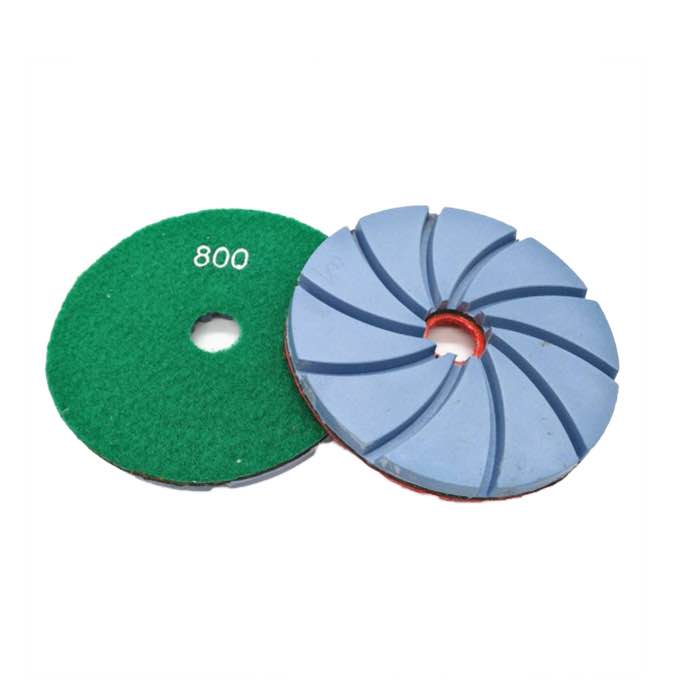
Floors with variable hardness zones (old repair patches, different pours, trowel bands) need softer resin bonds on the hard zones and harder bonds on the soft zones. Use transitional pads such as copper-bond resin pads that cut across a wide hardness range, and apply densifier longer on the soft zones. The goal is uniform scratch pattern - not uniform pressure. Measure hardness with a Mohs pick before you start and mark zones on the floor plan.
A floor poured from one truck should be uniform, but real sites are not. Hardness changes come from: a patch repair that used stronger mix, a different pour on the extension, over-troweling on one side, or a wetter mix near a hose. The result: one area polishes to mirror, the next stays dull.
Walk the floor with a Mohs pick. Mark soft (Mohs 3-4), medium (4-5), hard (5-6+) zones on a plan. Adjust tooling and densifier per zone. If you skip this step, you will discover the problem at 800 grit when the gloss mismatch appears - expensive to fix.
| Zone hardness | Metal bond | Densifier |
|---|---|---|
| Soft (Mohs 3-4) | Hard bond shoes | Double application |
| Medium (4-5) | Medium bond | Standard rate |
| Hard (5-6+) | Soft bond shoes | Single application |
Soft concrete loads resin pads; hard concrete glazes them. Transitional pads bridge both. A ceramic-bond transitional pad at 200 grit cuts both hard and soft zones evenly. At 400 and 800, use flexible resin pads that conform to both surfaces. At 1500/3000, use fresh pads - worn pads show the hardness difference.
For extreme hardness jumps (old repair patch in new slab), a Fenix polishing pad at 800 grit cuts the hard patch without scratching the soft host.
A: No. The patch has different hardness and will polish to a different gloss. Grind the patch back to 150 and blend it with the host before resin.
Run a Mohs pick every 5 meters across the floor. If readings differ by more than 1.5 points, you have variable zones.
Use transitional pads that cut across both. You cannot change pads mid-floor without leaving a line. Match the tooling to the hardest zone, and densify the soft zones more.
No. Hard zones stay glossy; soft zones dull faster. You must even it at the polishing stage, not hope it fixes itself.
Variable hardness floors need planning: map the zones, match bonds, densify soft areas more, and use transitional pads. JOY TECH stocks ceramic and copper-bond transitionals that cut across mixed hardness; send us your Mohs readings for a zone-by-zone pad plan.
Written and reviewed by JOY TECH - an SGS & BV audited, CE/RoHS certified diamond tools manufacturer founded in 2004, exporting to 50+ countries.
Our factory and quality management system are audited by SGS and Bureau Veritas. Products meet CE/RoHS requirements and every piece is 100% inspected before packing.
Verified Certificates
