Average response time: under 24 hours
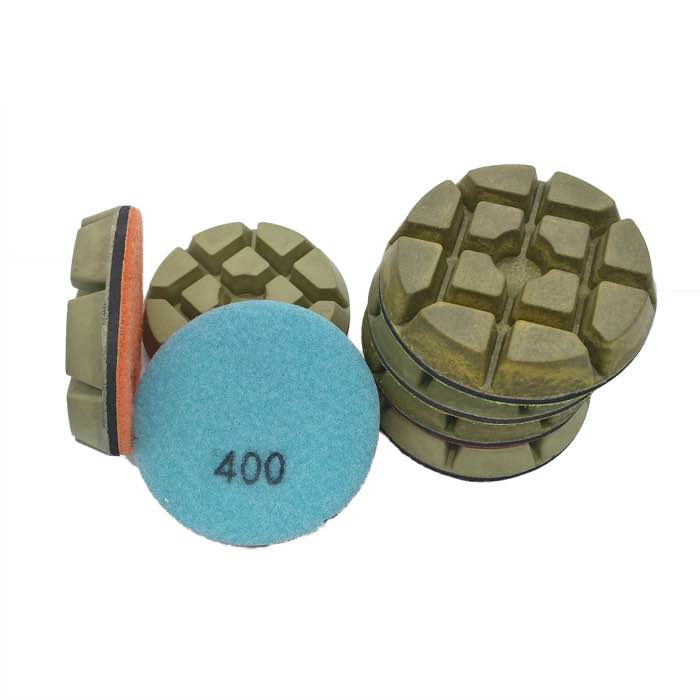
A two-head rotary polisher works two counter-rotating plates side by side. Run each pass in straight, overlapping rows at 15 to 20 m per minute, overlap rows by 30 percent, and keep the floor just damp with water. Start at 400 grit resin after metal-bond flattening, climb 800, 1500, and 3000, and densify between 200 and 400. Engage the heads only while moving, lift them before you turn, and expect 20 to 30 m² per hour through the 800-grit step on a standard 680 mm machine.
Two-head planetary machines, often called single-phase 680 or 700 mm machines, are the workhorse of small to mid-size polishing jobs. They balance weight, power, and maneuverability, and they fit through standard doorways. The two counter-rotating heads cancel torque, so the operator does not fight the handle. They cover 150 to 250 m² per day through the full grit ladder.
Compared with a single-disc machine, the two-head design leaves a flatter scratch pattern because both plates share the load. Compared with a ride-on, it costs one third and fits into tight rooms. For contractors doing garage, basement, and retail work, it is the default machine on the truck.
Clip or bolt the resin pads to each plate in the correct order. A loose pad flies off at 1,000 rpm and can crack the slab. The JOY-RFP-01 resin polishing pads are the standard choice for 800 and 1500 steps on medium-density concrete. Check that every pad seats flush with the plate; a curled edge leaves a scratch line.
Open the water valve to a dribble, not a flood. The floor should look wet but not carry standing puddles. Too much water washes the slurry away; too little glazes the pads. On a 680 mm machine, a 5 to 10 litre per minute flow is about right for resin steps.
Work the floor in parallel rows. Start at the far corner and walk backward so you do not step on the wet zone. Each row overlaps the previous by 30 percent of the plate width. At the end of a row, lift the heads, back up 2 m, and enter parallel to the last row. Do not pivot in place; that carves a crescent scratch into the slab. After finishing all rows in one direction, run a second pass perpendicular to cross out the scratch pattern.
The cross-pass is what removes directional swirls. On the first grit, run two passes at 90 degrees. On finer grits, one cross pass is enough. On a 680 mm machine, plan one row every 0.5 m so overlap stays even.
On a two-head machine, weight is fixed. You cannot push harder to cut faster. If a pad is dull, change it; do not lean on the handle. Travel speed controls cut rate: 10 to 15 m per minute for metal-bond steps, 15 to 20 m per minute for resin steps. If you see swirl marks, slow down. If you see uncut ridges between rows, you are going too fast.
On hard, troweled slabs, the jump from metal bond to resin can leave a haze. Copper-bond transitional pads like JOY-RFP-C2 bridge the gap and save a full pass. Use them as a 200-grit replacement on hard slabs.
Fresh pads cut fast and leave a clear scratch pattern. Worn pads glaze and smear. Swap pads at the first sign of a dulling cut, usually every 200 to 300 m² per resin grit. Keep a spare set clipped to the machine frame so the swap takes under a minute.
Another common error is mixing pad wear across the floor. If three pads are fresh and one is half-worn, the half-worn one leaves a lighter cut that shows as a tone patch. Replace all four pads on a plate together. At shift end, lift the heads, rinse the plates, and pull the machine onto plywood; pads left wet on the plate warp overnight.
On floors over 800 m², a ride-on machine pays for itself. On floors under 20 m², a single-disc edger is more maneuverable. The two-head machine lives in the middle: garages, basements, retail bays, restaurants, and small warehouse zones. Treat it as a precision tool, run the pass pattern religiously, and the finish will match any big-machine result on the right slab.
Written and reviewed by JOY TECH - an SGS & BV audited, CE/RoHS certified diamond tools manufacturer founded in 2004, exporting to 50+ countries.
Our factory and quality management system are audited by SGS and Bureau Veritas. Products meet CE/RoHS requirements and every piece is 100% inspected before packing.
Verified Certificates
