Average response time: under 24 hours
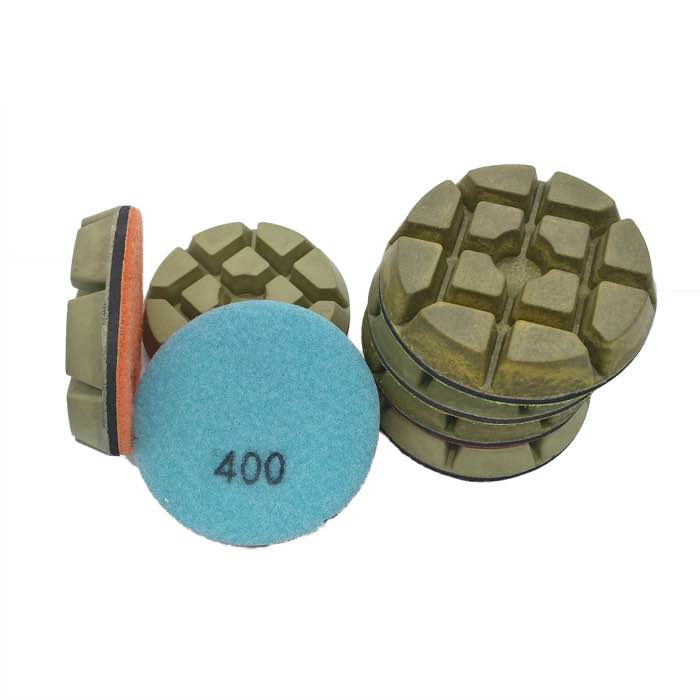
Apply a chemical densifier after the initial metal-bond grinding passes (typically 200 to 400 grit) and before the first resin-bond polishing pass, once the slab is fully cured and the pores are open. Most installers spray densifier after the 400-grit step, let it dwell 20 to 40 minutes, keep the surface wet, scrub it in, then allow a minimum 2 to 4 hour reaction window (often overnight) before continuing with 800-grit resin pads. Applying it too early wastes product on a dusty, uneven surface; too late and the finish will not harden properly and will haze.
A densifier is a water-based chemical that reacts with free lime (calcium hydroxide) in cured concrete to form calcium silicate hydrate crystals. Those crystals fill the capillary pores, making the surface harder, denser, and less absorbent. A properly densified slab resists dusting, abrasion, and staining, and it holds a higher gloss because the resin polish sits on a tighter, flatter surface rather than being soaked into open pores.
Three chemistries are common today: lithium-based, sodium or potassium-based, and colloidal silica. Lithium products penetrate faster, leave less residue, and do not require as much rinsing. Sodium and potassium are cheaper but can leave a white efflorescence haze if not buffed thoroughly. Colloidal silica is often used as a follow-up coat on older or very porous floors.
The polishing process follows a fixed grit ladder: metal-bond diamonds open and level the floor, then resin-bond diamonds refine the scratch pattern. The densifier sits between those two stages.
New concrete needs a minimum of 28 days to cure before densification and polishing. Polishing too early traps bleed water and unhydrated cement, which later effloresces and ruins the shine. Slabs poured in cold weather may need longer.
Run a planetary grinder with metal-bond diamonds through the early grits (usually 30/40, 80, and 150/200 grit, sometimes up to 300). By the 400-grit resin pass the floor should look uniformly honed, with no visible aggregate exposure variation. This is the window when the surface pores are open but the floor is already flat enough that the densifier will spread evenly rather than pool in low spots.
Pick up all slurry and dust with a HEPA vacuum. Walk the floor under side light. If you see pinholes, bugholes, or open cement paste, that is normal and exactly why densifier is being applied. If you see trowel marks, ghosting, or uneven scratch patterns, correct them with the next metal grit before densifying.
Spray the densifier on at the manufacturer's coverage rate, commonly 15 to 30 m² per litre, using a low-pressure pump sprayer. Keep the surface wet for 20 to 40 minutes; do not let it dry on the surface. Agitate with a soft broom or a floor buffer with a white pad, especially in corners and along walls where spray tends to puddle. Once the surface starts to turn cloudy, it has absorbed what it can. Mop up any standing puddles so they do not dry into a film.
Allow the chemical reaction to complete. Most products need 2 to 4 hours; overnight is safer on large jobs. After the wait, buff the floor with a black or white pad on a low-speed burnisher to remove any residual film, then continue with the 800, 1500, and 3000-grit resin pads.
After the reaction window, spray a small patch of water on the floor. Properly densified concrete beads water or absorbs it slowly over several minutes. If the water soaks in within seconds, the densifier did not take, usually because the floor was still too wet from grinding or because the product was old. Re-clean the area, re-apply at the correct coverage rate, and wait longer. On large commercial jobs, ask the installer for a Mohs hardness test result: a densified slab should scratch to at least Mohs 6 before the final resin passes.
Older polished concrete that is starting to dust, show wear in traffic lanes, or absorb water spots can be re-densified. Clean the floor thoroughly, open the surface with a 100- or 200-grit resin pad, apply densifier as above, let it react, and then re-polish through the grit ladder to restore the sheen. Re-densification is far cheaper than removing and replacing the floor.
Written and reviewed by JOY TECH - an SGS & BV audited, CE/RoHS certified diamond tools manufacturer founded in 2004, exporting to 50+ countries.
Our factory and quality management system are audited by SGS and Bureau Veritas. Products meet CE/RoHS requirements and every piece is 100% inspected before packing.
Verified Certificates
