Average response time: under 24 hours
Polished concrete is an excellent warehouse floor: it is hard-wearing under forklift traffic, low maintenance, dust-free, and reflects light to brighten the space. Seal it with a densifier and, for heavy-duty areas, a topical sealer or burnishing routine to handle wheel and equipment traffic. Sweep or ride on a scrubber daily, mop spills, and re-apply densifier or burnish periodically. The floor's life is long, and maintenance cost is far below coatings that need periodic stripping.
Polished concrete handles the heaviest warehouse traffic: forklifts, pallets, and racks do not scratch or dent it the way coatings can. It reduces dust, which matters for products and for clean-room zones, because the densified surface sheds dust instead of generating it. Its light reflectivity lowers lighting costs, and its seamless surface is easy to keep clean. Compared with epoxy or painted floors, polished concrete rarely needs a full strip and re-coat, which is the biggest long-term cost saving.
Polished concrete costs more to install than a simple coating but less over the life of the floor. Coatings need stripping and re-coating every few years, closing the warehouse; polished concrete needs only cleaning and periodic burnishing or densifier refresh, which happens without downtime. Factor in reduced lighting bills, less dust in the facility, and no re-coating cycle. For existing floors that are already sealed or coated, grinding to a polished finish converts a worn floor in one project instead of repeated maintenance.
| Factor | Polished concrete | Epoxy / coating |
|---|---|---|
| Traffic durability | Excellent | Good, wears |
| Dust | Very low | Low |
| Maintenance | Clean + burnish | Strip + re-coat |
| Downtime for renewal | Minimal | Days |
| Light reflection | High | Depends |
Forklift tyres leave black scuff marks on any hard floor, including polished concrete. Most scuffs are rubber transfer and come off with a pad scrubber or a burnishing pass; they are not damage. Chain drags and heavy metal contact can leave light scratches, which are more visible on high-gloss finishes, so many warehouses choose a satin finish that hides wear. The densified surface resists oils and greases that would stain a coating, and spills can be mopped immediately without permanent marking.
Sweep or ride on a scrubber daily to remove grit and dust, which are the real abrasive that dulls the finish. Use a neutral pH cleaner with the scrubber, and mop up spills promptly. For high-traffic aisles, schedule a weekly or monthly burnish with a resin polishing pad or a white pad on a floor machine to restore sheen. Re-apply densifier to high-wear areas annually or when the surface starts to dust. Keep the cleaning routine simple so it actually happens.
If an existing warehouse floor is worn, coated, or dusty, it can be converted: grind with coarse metal bond to level and open the surface, patch cracks and joints, densify, and polish to a satin or semi-gloss. The work is done in sections to keep the warehouse operating, and the floor is usable almost immediately after each section because densifiers have short cure times. For heavily oil-soaked areas, grind deeper or use a degreaser first. A converted floor usually performs better and costs less over time than another coating.
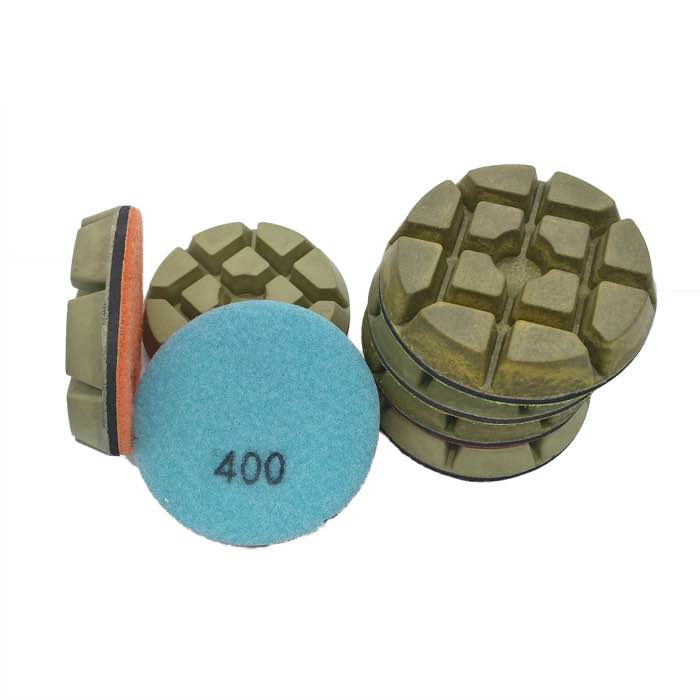
For an even gloss, work through diamond resin polishing pads in the correct grit sequence.
Keep resin floor polishing pads on hand so the finish stages of the floor stay consistent.
Written and reviewed by JOY TECH - an SGS & BV audited, CE/RoHS certified diamond tools manufacturer founded in 2004, exporting to 50+ countries.
Our factory and quality management system are audited by SGS and Bureau Veritas. Products meet CE/RoHS requirements and every piece is 100% inspected before packing.
Verified Certificates
