Average response time: under 24 hours
Build a mockup panel on the actual slab, or on a matching pour if the slab is not ready, sized at 1.2 by 1.2 meters. Run the full grit sequence the project will use, expose the same aggregate level, and apply the same densifier and dye. Let it cure 7 days, then walk the client, architect, and general contractor over it in daylight and under the building actual lighting. Get written sign-off before polishing the full floor. A signed mockup prevents 90 percent of finish disputes on polished concrete projects.
Polished concrete looks nothing like the wet grind videos on the supplier website. The final color depends on the aggregate in the slab, the cement batch, the trowel finish, and the humidity during curing. Two pours from the same plant can polish to different shades. A mockup is the only way to show the client what they are actually buying before you polish 2,000 m².
A signed mockup also shifts the conversation from opinion to evidence. When the client says the floor looks too dark, you walk back to the panel they approved and compare. Without that panel, every walk becomes a negotiation and every change order comes out of your margin.
If the floor is poured and cured, build the mockup in a low-visibility corner that will be covered by shelving or equipment. Mark the boundaries with tape and make sure the test patch will be re-polished to match later.
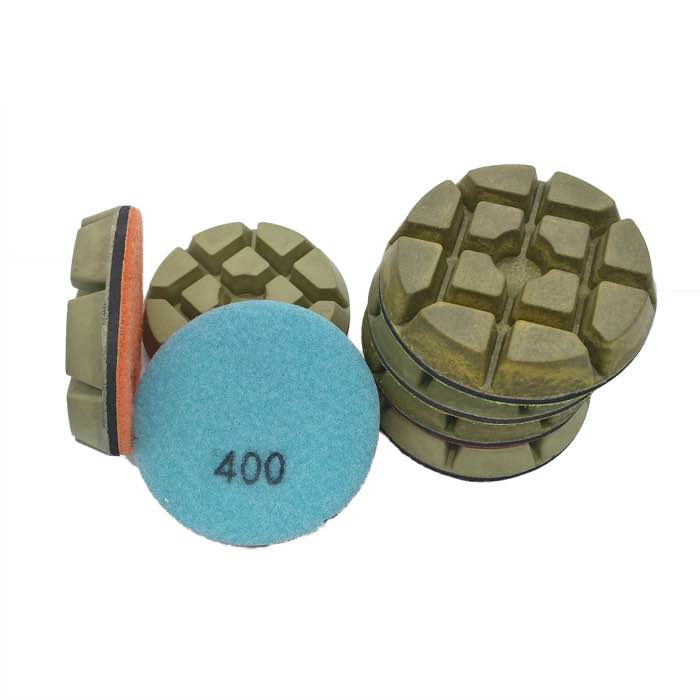
If the building is not poured, cast a 1.2 by 1.2 meter slab on site with the exact mix design, the same slump, and the same trowel finish. Cure it the same way. Bring the sample inside for the approval meeting so the client sees it under indoor light, not outside glare. The JOY-RFP-01 resin pads used on the mockup should be the same pads planned for the main floor.
If any of these differ, the mockup is decoration, not specification. A mockup built on a different slab mix will not match the real floor and will cause an argument at final walk. Photograph the panel after each grit step so you can prove which step the client signed off on. Keep the cured panel stored on site for the duration of the project; if a dispute arises six months later, you can walk back to the physical evidence rather than arguing over a phone photo.
Take the client to the mockup around noon. Polished concrete looks lighter in direct sun and darker under fluorescent light. Walk it from both angles; color variation that looks fine straight on can band under grazing light.
Re-create the building actual fixture layout over the panel. Retail uses high-CRI LED; warehouses use 5,000 K high-bay. The same slab reads completely different under each. White resin pads like the JOY-RFP-04 white resin pads leave the cleanest final cut, so the mockup shows the brightest possible version of the floor.
Bring a one-page sign-off sheet with: grit sequence, densifier product, dye color and load, sheen level, and aggregate exposure. Every stakeholder signs. Take a photo of the panel under approved lighting and attach it to the sign-off. Give the client a printed copy; keep the original in the project file.
Building the mockup on a demo slab from a different supplier is the classic error. The client approves a darker, denser slab, then the real floor comes out lighter and blotchy. Another mistake is polishing the mockup too perfectly. The main floor will have subtle color variation across 2,000 m²; if the mockup shows zero variation, the client expects zero variation and will reject normal results. Leave natural variation visible in the panel. For a mockup kit or a field sample program, reach contact us with the slab mix details.
Build and approve the mockup at least 14 days before starting the main floor. If the slab weather changes, the mix batch changes, or the architect swaps the dye, re-approve. A mockup signed six months ago is not valid for a floor poured today.
A polished concrete mockup is not a sales prop. It is a contractual specification built on real materials. Spend one extra day and 200 USD on a proper panel, and you avoid re-polishing a 500 m² zone because the client expected a different gray. Document everything, photograph everything, and get every signature before the first machine starts.
Written and reviewed by JOY TECH - an SGS & BV audited, CE/RoHS certified diamond tools manufacturer founded in 2004, exporting to 50+ countries.
Our factory and quality management system are audited by SGS and Bureau Veritas. Products meet CE/RoHS requirements and every piece is 100% inspected before packing.
Verified Certificates
