Average response time: under 24 hours
A polished retail floor needs a documented slip plan and a written maintenance program before opening. Specify a 36+ PTV wet slip resistance measured per ASTM C1028 or pendulum test, and choose a 400 or 800 grit finish rather than mirror 3000 grit for entrances and aisles. Plan daily dry dust-mopping, weekly neutral-pH wet scrubbing, and quarterly burnishing. Keep spill kits at every entrance and re-test slip resistance annually. A polished concrete floor in retail is safe when it is dry, but it becomes a slip hazard when wet or filmed with shoe wax and oil.
Polished concrete is hard, reflective, and easy to clean, which is why it works in grocery, clothing, and big-box stores. But shoppers carry wet umbrellas, push carts, and track water from the parking lot. The same smooth surface that looks premium also gets slippery when wet. Retailers who skip the slip plan and maintenance program face trip-and-fall claims that dwarf the cost of the floor.
Wet slip resistance is measured in Pendulum Test Values (PTV). A dry polished slab reads 70+ PTV; wet, it can drop to 25 to 30 on a 3000-grit mirror finish. Most retailers and health codes require 36 PTV or higher in walking areas. Choosing a 400 or 800 grit finish instead of 3000 keeps the PTV above 36 even when wet, with only a small loss of gloss.
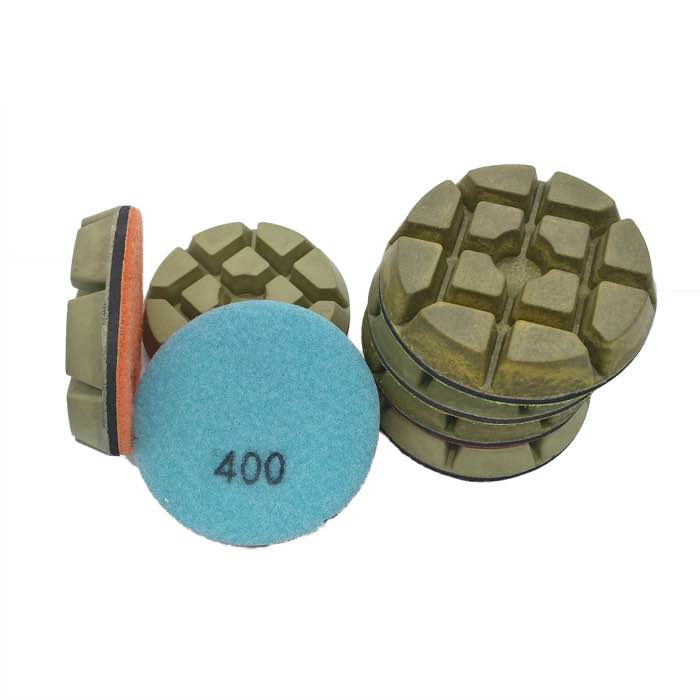
Have an independent slip test done at delivery, then re-test once a year and after any re-polish. Keep the report on file. Most lease agreements now require this paperwork. The JOY-RFP-01 resin polishing pads let you control the final grit precisely, so you can hit the target finish rather than over-polishing.
Dust-mop or walk-behind burnish high-traffic lanes. Pick up litter, wipe spills immediately, and inspect entrance mats. Use JOY-RFP-02 pads only on scheduled touch-up shifts, not on the daily walk.
Wet-scrub the whole sales floor with a 17-inch auto-scrubber using neutral pH cleaner. Pick up the waste water; do not let it evaporate on the floor.
Every quarter, burnish the whole store with a high-speed burnisher. Every 12 to 18 months, re-hone lightly through 800 grit and re-apply densifier where water sinks in. Re-test slip after each re-hone.
Water, coffee, produce juice, and food oil are the four big slip triggers. Put spill kits (wet floor signs, mop, absorbent pads) every 15 m along aisles. Train staff to flag a spill within 30 seconds. Use 10 mm rubber-backed entrance mats that scrape boots; mats catch grit before it becomes abrasive, and water before it becomes a slip risk. For edge touch-ups around displays, copper-bond transitional pads like JOY-RFP-C2 open scuffed spots before a quick resin burnish.
Another frequent mistake is cleaning with a high-speed burnisher on a wet floor. Burnishing is a dry process. Running it over damp concrete smears water across the surface and leaves swirl marks that take a resin pass to remove. Train the cleaning crew on the difference between the auto-scrubber (wet, weekly) and the burnisher (dry, quarterly), and label the equipment accordingly.
Plan the floor around store fixtures as well. Under heavy display racks, the floor rarely gets walked on and can be finished at a higher sheen. In the checkout line and the main aisle, drop one grit level. The subtle difference is not visible to shoppers, but the slip resistance in the high-traffic lane is measurably safer.
Polished concrete is one of the safest and lowest-maintenance retail floors when it is specified at the right grit, tested for wet slip, and cleaned on a fixed schedule. Build the slip test, the maintenance contract, and the entrance mat system into the project budget before opening day, and the floor will pay back in cleaner appearance, longer life, and fewer incident claims, lower insurance premiums, and a cleaner long-term appearance and lower total cost.
Written and reviewed by JOY TECH - an SGS & BV audited, CE/RoHS certified diamond tools manufacturer founded in 2004, exporting to 50+ countries.
Our factory and quality management system are audited by SGS and Bureau Veritas. Products meet CE/RoHS requirements and every piece is 100% inspected before packing.
Verified Certificates
