Average response time: under 24 hours
Reapply penetrating densifier every 2 to 5 years depending on traffic, and refresh a topical acrylic or polyurethane sealer every 1 to 2 years in high-traffic retail and 3 to 5 years in low-traffic offices. The trigger is not a calendar date but a visible change: when water stops beading, when dull patches spread in walkways, or when the shine looks streaky after a wash. If the sealer is peeling or yellowing, strip it and start fresh rather than adding another coat on top.
Lithium or sodium silicate densifiers soak into the paste and harden it chemically. They do not form a film, so they do not yellow or peel, and they last a long time. On a residential or light commercial floor, a densifier may never need a second coat. On a busy warehouse, expect a top-up every 3 to 5 years as surface wear slowly exposes un-densified paste. Lithium densifiers react faster and leave a shallower profile, while sodium and potassium densifiers penetrate deeper but take longer to cure; the recoat interval is similar either way. In practice most specifiers call for a re-application test every 3 years on a 1 m² test patch near the entrance, and only extend the interval if the beading is still strong. A densifier applied over a dirty floor does not cure properly, so always buff and vacuum before any top-up coat. Apply the densifier with a microfibre mop, not a sprayer, so the product sits evenly rather than beading on itself. Let it penetrate for 20 minutes, then buff away any excess. A second coat is rarely needed unless the slab is unusually porous.
Acrylic, polyurethane and epoxy sealers sit on top of the floor as a thin film. They add shine and stain resistance but wear under foot and forklift traffic. Acrylic lasts 1 to 2 years in a shop front, polyurethane 2 to 4 years, and epoxy is usually a re-coat rather than a maintainable polish. Burnish film sealers monthly to extend their life between recoats.
A recoat is only as good as the prep underneath:
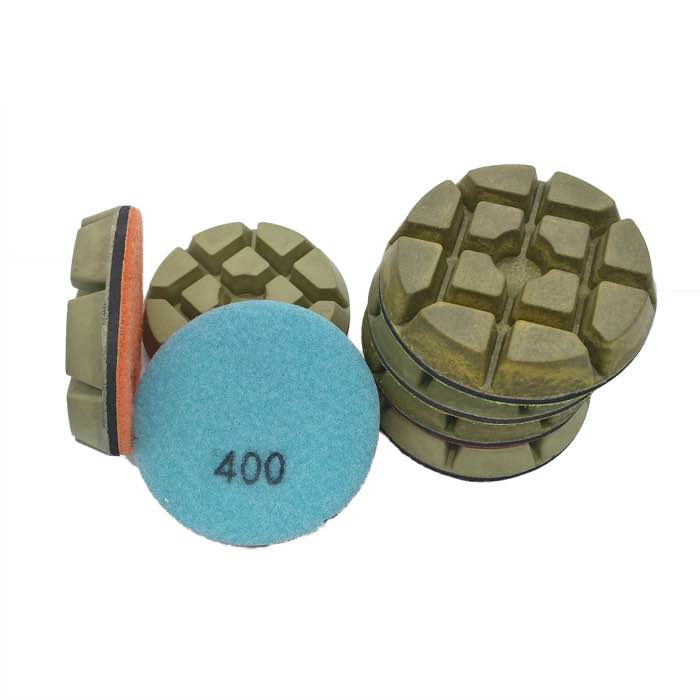
Do not wait for a problem. Watch for these four signs: water no longer beads and soaks in within 30 seconds; dull streaks appear along the main walkway even after burnishing; spots appear where coffee or oil leaves a stain; or the floor looks two-tone where foot traffic has worn the film thin. A white resin pad like JOY-RFP-04 burnish will temporarily hide these, but it will not fix them. The sealer itself needs renewal.
Adding a third or fourth coat over an old film does not restore the shine; it builds a thick, soft layer that scuffs and yellows faster. Once the film is older than its rated life, strip it with a suitable remover, lightly buff with JOY-RFP-02 resin pads, and start again. A clean single coat beats a dirty stack every time.
The middle of an open-plan office may be fine, but the 600 mm strip from the door to the desk cluster wears the sealer out twice as fast. Treat the main walkways as a separate zone and re-coat them on a shorter cycle rather than waiting to do the whole floor. This keeps the look consistent and avoids a patchy timeline.
Weekly dust mopping and monthly burnishing with a high-speed floor pad stretches recoat intervals by 30 to 50 percent. Use pH-neutral cleaners; acidic or alkaline products strip film sealers faster than traffic does. For touch-ups around scuff marks and trolley paths, JOY-RFP-01 resin pads on a low-speed machine bring back the gloss without a full re-seal. Set a calendar reminder every 12 months to inspect the beading on a small test patch near the busiest door, because that is where wear starts and where a tiny dull patch first shows. Walk-off mats at every external entrance cut grit loading and double the life of any film sealer.
There is no magic interval, but a practical rule is: densifier every 3 to 5 years, film sealer every 1 to 2 years in traffic, and always strip before you stack. Watch the water beading and the walkway shine, not the calendar. A polished floor that is sealed on a visible-need schedule looks better and costs less than one sealed on a fixed date whether it needs it or not.
Written and reviewed by JOY TECH - an SGS & BV audited, CE/RoHS certified diamond tools manufacturer founded in 2004, exporting to 50+ countries.
Our factory and quality management system are audited by SGS and Bureau Veritas. Products meet CE/RoHS requirements and every piece is 100% inspected before packing.
Verified Certificates
