Average response time: under 24 hours
Polished concrete slip resistance is measured with a pendulum tester (BS 7976 / ASTM E303) for BPN values, a ramp test (DIN 51130) for R9 to R13 ratings, or an English XL tribometer for coefficient of friction. A floor passes in most commercial settings when the wet pendulum reads at least 36 BPN, the ramp test reaches R10, and the wet CoF stays above 0.5. The wet reading is the number that matters, because polished concrete looks its most dangerous after rain, cleaning or condensation. Test after the final sealer has cured, not on bare honed paste.
A highly polished slab is smooth by design, and a thin film of water turns that smooth surface into a lubricating layer. On a 3000-grit mirror finish, the contact area between shoe and paste is so large that water cannot escape, and the coefficient of friction collapses. This is why a floor that feels perfectly grippy on a dry Tuesday can read dangerously low on a wet Monday after window cleaning. Specifiers who only ask for a high-gloss finish without a slip clause are taking on that risk themselves.
Most failed readings come from three setup errors: the tester was calibrated on a different surface, the pad was worn past its service life, or the operator flooded the test spot with too much water. A pendulum slider that has done more than 500 readings must be replaced, and the rubber slider must be kept at the specified temperature. A good contractor re-tests the same spot three times and reports the median, not the best single swing.
Choose the method to match the spec your client already uses. Do not mix numbers from different methods on the same drawing.
The pendulum is the most common field test. A weighted rubber slider swings across a wet patch of floor and loses energy proportional to grip. Readings above 36 BPN wet are broadly acceptable for walkways, while entrances, ramps and pool surrounds should target 45 BPN or higher. Dry readings are usually 10 to 15 points higher and are useful for comparison but are not the pass mark.
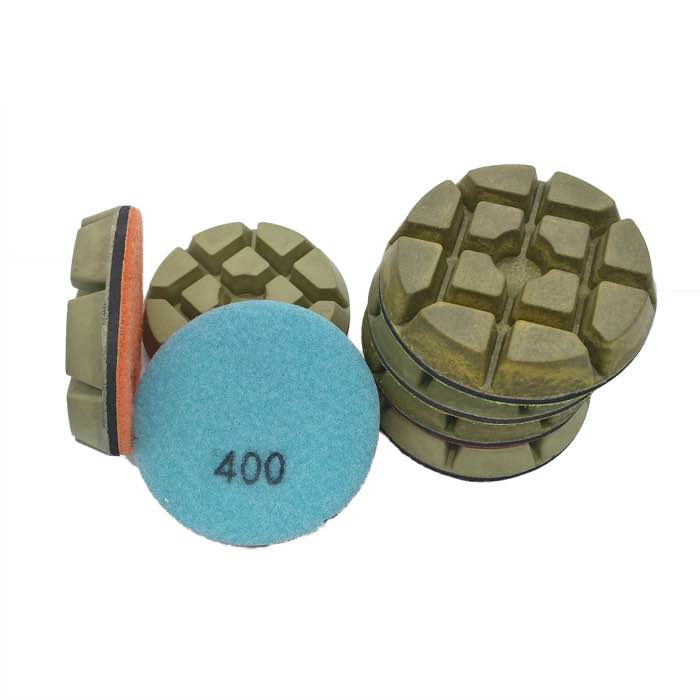
The ramp test puts a suited operator on a tilted, oil-wetted ramp and finds the steepest angle they can stand. The result is an R rating from R9 (very low risk) to R13 (very high). For polished concrete in retail entrances, corridors and factory walkways, R10 is the normal minimum; ramps, kitchens and wash-down areas typically call for R11 or R12. Resin polishing pads like the JOY-RFP-01 let you tune the final grit to meet the target R rating without resealing the whole floor.
Follow this order so the report is defensible in front of a client or insurer:
There is no single global pass mark, but these ranges cover most commercial contracts: interior corridors 36-45 BPN wet / R10; exterior walkways and entrances 45 BPN wet / R11; ramps and wash-down zones 55 BPN wet / R12 or R13. If a reading sits 5 points below the threshold, do not sign off. Re-open with a light 400-grit honing pass, re-densify and re-test, because the extra micro-texture usually recovers 6 to 10 BPN without ruining the gloss.
Testing on bare honed concrete, before sealer and before dust has settled, gives artificially high numbers. The sealer is what changes the wet friction behaviour, so the test must happen on the finished, cured floor. A contractor who reports pre-sealer numbers is selling you a lie.
The middle of an open-plan showroom almost always passes. The failure spots are the transition from outside to inside, the base of a ramp, and the path from a washing machine. Test those specifically, and add anti-slip tape or a broom-finish strip where the geometry collects water.
If the floor is already in place and reads low, the fix is usually a light re-hone with diamond resin floor polishing pads from the JOY-RFP-02 range at 400 or 800 grit, followed by a thin penetrating sealer rather than a thick film sealer. Thick film sealers reduce wet grip, while penetrating densifiers leave the micro-texture exposed. For maintenance between tests, copper-bond transitional pads such as JOY-RFP-C2 clean and re-open the texture without stripping the floor.
Specify the test method in the tender, test after the sealer cures, and treat the wet pendulum number as the one that counts. A polished floor can be both glossy and safe if the grit progression is stopped at the point where the wet BPN meets the contract, and the failure spots are re-textured rather than coated with more sealer.
Written and reviewed by JOY TECH - an SGS & BV audited, CE/RoHS certified diamond tools manufacturer founded in 2004, exporting to 50+ countries.
Our factory and quality management system are audited by SGS and Bureau Veritas. Products meet CE/RoHS requirements and every piece is 100% inspected before packing.
Verified Certificates
