Average response time: under 24 hours
Polishing concrete in cold weather works, but the chemicals are the constraint: densifiers and sealers have minimum application temperatures (usually 40-55°F / 5-13°C, check the label), water-based products freeze below 32°F / 0°C, and cold slows the curing of everything. Grind and polish freely in the cold — the mechanical work is unaffected — but heat the space or time the chemical steps for the warmest part of the day. If the floor is below the product minimum, the densifier and sealer will not cure properly and will need to be stripped and redone.
Cold weather changes three things on a polishing job:
The grinding and polishing passes are mechanical — they work at any temperature. It is the step where you put chemistry on the floor that has a temperature window.
Before the chemical steps, read the label: most densifiers specify 40-55°F (5-13°C) minimum surface temperature; most water-based sealers similar; solvent-based products often tolerate colder but still slow down. The number that matters is the concrete surface temperature, not the air temperature — a slab can be 10-20°F colder than the air overnight. Use an infrared thermometer on the slab before applying any product.
If the floor is below the minimum, do not apply. Options: heat the space with portable heaters to raise the slab temperature above the minimum and keep it there through curing; time the chemical application for the warmest part of the day and close the space to trap heat; or postpone the chemical steps. Applying below minimum is the expensive mistake — the densifier soaks in but never reacts, and the sealer blushes or peels, forcing a grind-back.
The mechanical passes run normally in the cold, with two adjustments. Wet polishing in freezing conditions: keep the water from freezing on the floor — work in smaller areas and wipe up slurry fast, or switch to dry polishing with dust collection if the space is unheated. Cold resin pads are stiffer and can chatter; let the machine warm up and run a few passes on scrap before the finish passes. For very cold slabs, ease the coarse passes — hard, cold concrete can spall at the surface if you attack it with maximum-pressure metal bond.
Cold also affects scheduling: polish the open floor while the heat is on or the sun is up, and do the chemical steps in the same warm window. The grit sequence itself is unchanged — see concrete polishing grit progression for the steps.
After application, densifier and sealer need several days of above-minimum temperature to cure fully — not just the hour of application. If the space cools below minimum overnight, the cure stalls and can restart imperfectly. Keep the space heated, or accept a longer cure time and verify adhesion before letting traffic on the floor. Sealer that is not fully cured picks up marks and peels under traffic; densifier that has not reacted shows up as patchy gloss when you polish.
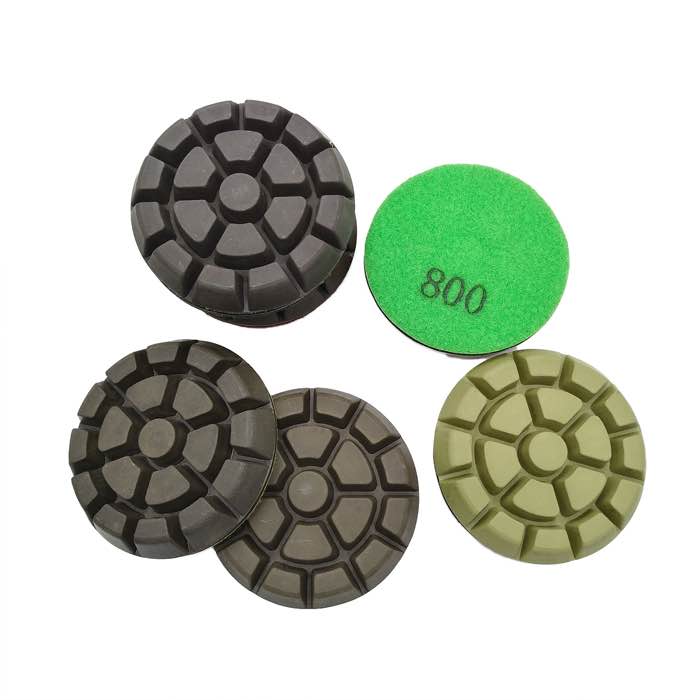
Plan the chemical steps around temperature, and keep resin polishing pads and trapezoid discs ready for the warm window.
Yes — grinding and polishing work at any temperature. The constraint is the chemical steps: densifier and sealer have minimum application temperatures and will not cure correctly below them.
Typically 40-55°F (5-13°C) surface temperature — check the product label. Measure the slab with an infrared thermometer, not the air temperature, before applying.
Yes. Water can freeze on the slab, leaving a haze, and slurry freezes if left. Work in small areas, wipe up fast, or switch to dry polishing with dust collection in unheated spaces.
Below the minimum, the sealer cures slowly or not at all, leaving it tacky, milky, or peeling. It must be stripped and reapplied in proper conditions — heat the space or wait for warmer weather.
Cold weather polishing is a schedule problem, not a technique problem: grind and polish freely, but heat the space or time the densifier, dye, and sealer steps for surface temperatures above the product minimums, and keep them warm through curing. Measure the slab, not the air; protect wet passes from freezing; and never apply chemistry to a cold floor. Handle the temperature and the polish comes out identical to a summer job.
Written and reviewed by JOY TECH - an SGS & BV audited, CE/RoHS certified diamond tools manufacturer founded in 2004, exporting to 50+ countries.
Our factory and quality management system are audited by SGS and Bureau Veritas. Products meet CE/RoHS requirements and every piece is 100% inspected before packing.
Verified Certificates
