Average response time: under 24 hours
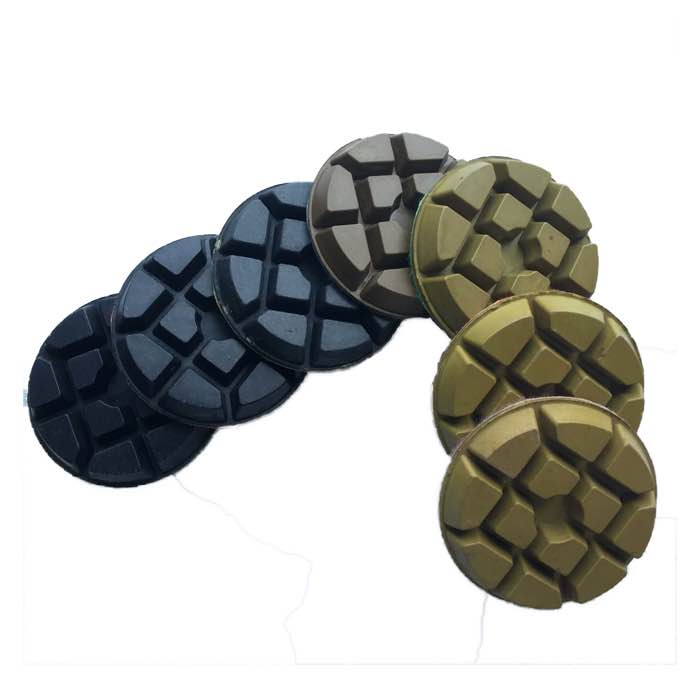
Dry polishing is the standard for most indoor polished concrete because it controls dust with a vacuum and produces consistent results without slurry cleanup. Wet polishing cools the pads, produces a deeper color in some floors and eliminates airborne dust, but it creates slurry that must be contained and cleaned. Many crews polish coarse stages dry and switch to wet only for the final grits when a deeper, wetter color is wanted. Follow the pad system's rating: pads are built for wet, dry, or both. For the right tooling on this job, see resin polishing pads rated wet and dry, 8-triangle polishing pads.
Dry polishing with vacuum-attached tooling is fast, clean and the default for commercial floors. The pads run cooler in short bursts and the dust is captured at the source, so the floor stays visible and walkable. The downsides: pads run hotter and wear faster if pushed, dry dust loads the vacuum filters, and very hard concrete can burn pads dry. Dry polishing suits the full sequence from 100 grit to the final gloss. Related tooling is available in our white resin finishing pads range.
Wet polishing keeps the pads cool, extends pad life and brings out a deeper, richer color in many slabs. It eliminates airborne silica dust, which is a health win. The downsides are the slurry: it must be contained with a water ring and vacuum, cleaned between stages, and disposed of carefully because it is alkaline. Wet polishing is slower and messier, which is why it is usually reserved for the fine grits or for color-critical jobs. Some pads are rated wet only and must never run dry.
You can switch between wet and dry within a job as long as the pads are rated for both. Clean the floor and let it dry before switching to dry, so dust does not clog the wet pad. When switching to wet, keep the water feed light and consistent, and always collect the slurry. Test a small area to see whether wet final passes change the color the way you want; on some slabs the difference is barely visible, and dry is then the better choice.
A> There is no universal answer. Dry is faster and cleaner for production; wet gives cooler pads, longer pad life and deeper color. Use dry for most stages and wet for the final color-critical passes.
A: Only if the pads are rated for both. Check the label; using a dry-rated pad wet, or vice versa, ruins the pad.
A: Often yes. Water fills the micro-pores and deepens the color during the fine passes. The effect depends on the slab and usually fades slightly as the floor dries.
Wet and dry polishing each have a place: dry for speed, cleanliness and production grits, wet for cool pads, deep color and the final passes. Match the method to the pad rating, control the dust and slurry either way, and test before committing. Run the right method at each stage and you get a consistent, rich finish with efficient pad life.
Written and reviewed by JOY TECH - an SGS & BV audited, CE/RoHS certified diamond tools manufacturer founded in 2004, exporting to 50+ countries.
Our factory and quality management system are audited by SGS and Bureau Veritas. Products meet CE/RoHS requirements and every piece is 100% inspected before packing.
Verified Certificates
