Average response time: under 24 hours
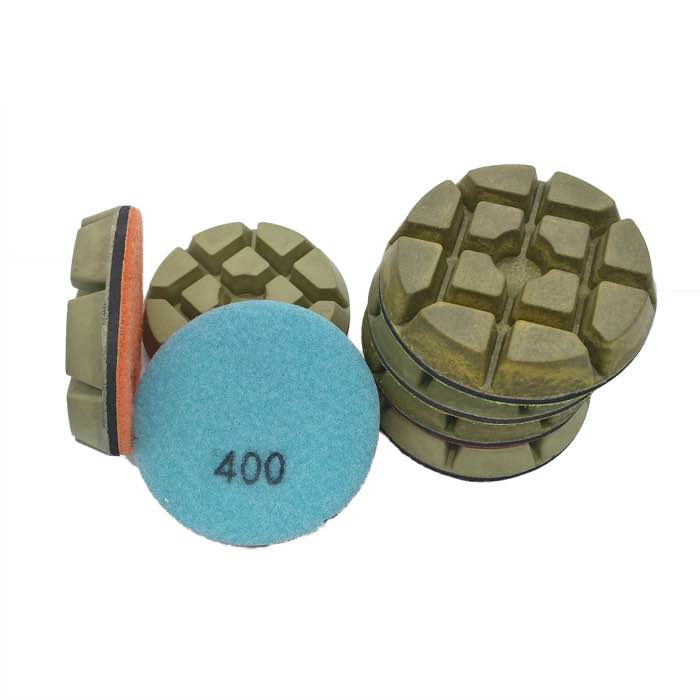
To expose aggregate by polishing, start with a 30 or 40 grit metal-bond diamond and remove roughly 1 to 3 mm of paste, stopping when the largest aggregate particles sit about two-thirds proud of the surface. Do not grind more than 5 mm in one pass, and stop the moment you see the tops of the stones; going deeper strips the paste out from between the stones, leaves them loose, and can expose rebar. After the reveal, step through 80, 150 and 300 grit resin before moving to the resin polish sequence.
Fresh concrete has a thin, smooth skin of cement paste on top, typically a few millimetres thick. Under that skin the mix holds sand and, depending on the design, larger gravel or river stone. The goal of an exposed-aggregate polish is to grind through the paste skin just far enough to let the top of those stones show, while leaving enough paste in the joints between stones to hold them firm. A mix designed for a dense polished finish hides most of the aggregate, so do not expect a dramatic reveal on a trowelled showroom slab.
Too shallow, and you see only paste and a few flecks of sand. Too deep, and the stones stand on their lower half with empty holes around them. Those stones loosen, chip out under traffic, and leave pits that are almost impossible to patch invisibly. The sweet spot is when the aggregate is visibly open but still bedded in paste on the sides.
Work in small test patches first; every slab behaves differently.
Roughly 0.5 to 1 mm per metal-bond step on a standard slab. A first 30 grit pass may remove 0.5 to 1 mm; a second pass on the same area reaches 1.5 to 2.5 mm. Once you can see the top of every stone in the aggregate mix, do not go coarser again. Switch immediately to 80 grit metal, then 150 and 300, to smooth the scratches left by the coarse pass. Skipping a grit leaves swirl marks that show up in the final shine.
Some operators think "more exposure = better look" and keep grinding until the slab looks like a gravel driveway. That is not a polished concrete finish; it is an exposed-aggregate wash with no paste matrix. Stones fall out, and the floor collects dirt in the voids. Stop when the stones are half proud, not fully freed.
On older slabs, rebar or mesh may sit only 20 to 30 mm below the surface. Once you cut through to steel, the grinder sparks and the wire pulls out, leaving a groove. Check a core sample or scan before you start, and back off the depth near edges and around penetrations. Copper-bond transitional pads like JOY-RFP-C2 are the right tool to bridge from coarse metal grinding to fine resin polishing without leaving a scratch pattern.
After the reveal, the floor moves into the standard resin sequence. Resin polishing pads like JOY-RFP-01 refine the paste between stones, and JOY-RFP-02 pads bring up the final clarity. Do not rush from 30 grit straight to resin: the scratch depth from coarse metal cannot be removed by a fine resin pad, and you will be left with a floor that looks hazy no matter how long you burnish.
Exposing aggregate is a controlled 1 to 3 mm grind, not a deep cut. Test one patch, measure the removal, and stop when the stones are two-thirds proud. The hardest part of the job is restraint: knowing when to switch from cutting to refining, and trusting the test panel rather than chasing a deeper look. If the test patch looks too quiet, raise the grinder pressure slightly before taking another pass, because pressure changes the cut faster than grit choice. Keep the grinder moving in straight overlapping passes of about 50 mm; standing still digs a groove that shows up as a dark patch. Keep water off the slab at this stage; dry grinding shows the aggregate colour truer than wet, so you can judge the reveal accurately. Sweep the test patch clean between passes so the stones are not hidden by swarf. Done right, the aggregate reads as a natural decorative element without compromising the floor structure or loosening stones under traffic.
Written and reviewed by JOY TECH - an SGS & BV audited, CE/RoHS certified diamond tools manufacturer founded in 2004, exporting to 50+ countries.
Our factory and quality management system are audited by SGS and Bureau Veritas. Products meet CE/RoHS requirements and every piece is 100% inspected before packing.
Verified Certificates
