Average response time: under 24 hours
Protect a polished slab by sealing it with a sacrificial finish, then covering it with at least 3 mm of closed-cell foam over ram board or masonite, taped at every seam and lifted at doorways. Keep sharp metal on padded dollies, never drag ladders or steel studs across the floor, and walk off tools on a mat. Budget 2 to 4 percent of the slab value for protection materials; one scratch repair costs more than the whole cover-up. Remove protection only after the last trade is out and the air is clean.
A polished floor is hard but not scratch-proof. Steel, tile shards, weld spatter, and boot grit will mark it, and once a scratch cuts through the densified paste it has to be re-honed out. Construction sites are full of all four. The goal is never to let a hard object touch the finished surface directly.
Build protection in layers from the floor up. Each layer has a job: the first seals, the second cushions, the third distributes point loads. Skimp on one layer and a ladder leg punches through everything.
Apply a thin, strippable protective film or a light coat of sacrificial finish after final polishing. It adds a washable layer that trades can wipe without touching the concrete. It also makes dust and paint splashes visible so you clean them early.
Roll out 3 mm closed-cell foam over the whole area. It stops boot grit from grinding into the polish and cushions light point loads. Seam it with tape so dirt does not fall through.
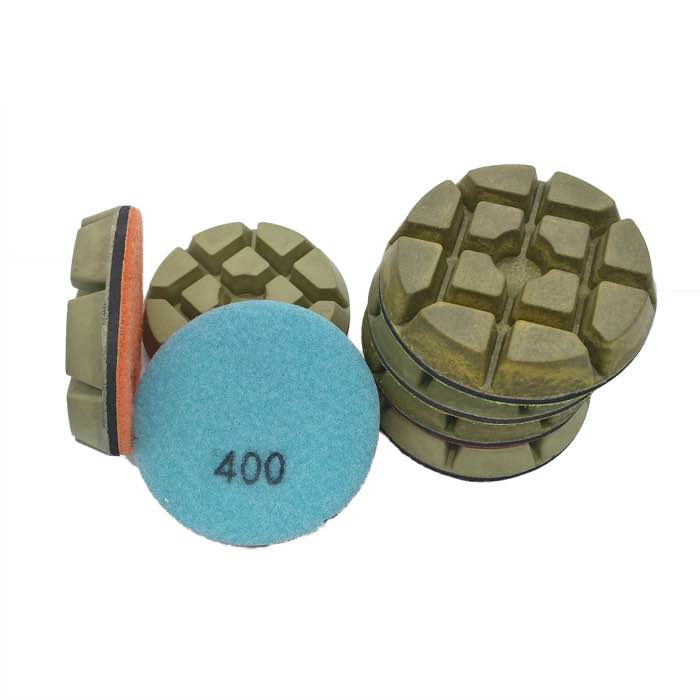
Lay 1.2 m wide ram board sheets over the foam, taped at every joint. This is the layer that takes furniture legs, scaffold feet, and cart traffic. Use JOY-RFP-01 polishing pads only on the final reveal, not during protection removal.
Never slide a fridge, cabinet, or ladder leg across protection. Use padded dollies, and put 10 mm plywood plates under each dolly wheel. For pallet jacks, lay 18 mm plywood runners along the travel path. A standard pallet jack puts 500 kg on a 75 mm wheel; that pressure punches straight through foam and ram board.
High-traffic zones — doorways, elevator lobbies, paths between work areas — get a second layer of ram board. Turnaround spaces for scissor lifts and material drops get two layers of 18 mm plywood. The cost of that extra sheet is trivial compared with re-honing a 200 m² patch after the lift tracks metal marks across it.
Pull sheets on a calm day and bag debris as you go. Do not let taped edges scrape the floor when you peel. After the cover is out, sweep with a soft-bristle broom, then mop with neutral pH cleaner. Inspect in raking light; any fresh marks should be addressed immediately with fine resin pads before they get walked in.
Keep a written protection log taped at the doorway: which trades are allowed on the uncovered section, what day the cover goes down, and who signs off on removal. That single sheet prevents arguments about who scratched the floor and speeds up the punch-list walk. Inspect the cover weekly; ram board shifts, foam tears at doorways, and tape loses grip after two weeks of foot traffic.
Duct tape and gaffer tape leave adhesive residue that dulls the sheen. Tape only to the ram board or to low-tack painter's tape on the concrete, and remove within the job.
Walls get taped with 50 mm painter's tape and a foam rail; trade ladders lean against walls and their feet scuff the floor along the base.
Cardboard absorbs water, tears, and turns to pulp under wet boots. It is not protection. Use closed-cell foam or a purpose-built floor guard. If a scratch does appear during construction, copper-bond transitional pads are the fastest way to open the scratch before re-polishing.
After protection is removed, walk the slab in low light with a bright torch. Mark any spots that need attention. A well-protected slab should look the same the day trades leave as the day polishing finished. If it does not, the missing layer is usually at a doorway or under a piece of furniture.
Written and reviewed by JOY TECH - an SGS & BV audited, CE/RoHS certified diamond tools manufacturer founded in 2004, exporting to 50+ countries.
Our factory and quality management system are audited by SGS and Bureau Veritas. Products meet CE/RoHS requirements and every piece is 100% inspected before packing.
Verified Certificates
