Average response time: under 24 hours
You remove tire marks from concrete first with a degreaser and hot-water extraction, then light diamond grinding at 100-200 grit if the stains are bonded. On polished floors, a 200-grit resin pad such as resin polishing pads on a low-speed planetary grinder removes the black rubber deposit without scratching the gloss. On raw warehouse floors, use a 30/40 metal-bond disc if the marks have baked in. The long-term fix is a topical coating or densifier that keeps rubber from bonding to the porous concrete.
Black tire marks are vulcanized rubber transferred from hot tires onto hot concrete. On a summer day, a black tire on a 50 C garage floor softens slightly and leaves a film. The film sits on the surface of raw concrete but sinks into the pores. Sealed or polished concrete marks less because the pores are closed.
Start dry: sweep, then use a floor scrubber with a black pad and alkaline degreaser. Let the dwell 10 minutes, extract with hot water at 80 C, and repeat. If the mark is still visible, move to mechanical removal. On a polished floor, use resin pads dry on the affected area with extraction. On raw concrete, a metal-bond disc at 30/40 removes the rubber and the top layer in one pass.
| Surface | First step | Grinding step |
|---|---|---|
| Polished concrete | Degreaser + hot water | Resin 200, 400, 800 blend |
| Sealed concrete | Degreaser + pad scrub | Touch-up seal, no grind |
| Raw concrete | Scrubber + degreaser | Metal 30/40, then densify |
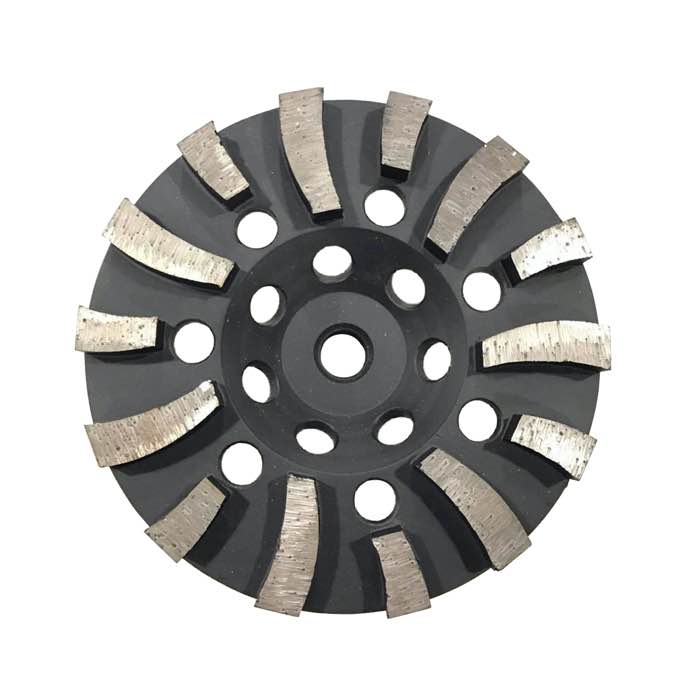
On polished floors, do not jump to metal bond - it will leave scratches that require a full re-polish. Start with a 100 or 200 resin pad and work up. For large garage bays, a 17-inch low-speed floor machine with a spiral resin pad handles the job in minutes. For raw warehouse floors where tires drag pallets and forklifts, a 6-segment cup wheel on an angle grinder cleans wheel-wash areas fast.
For severe forklift lanes in warehouses, strip baked-on rubber with a PCD-plus-bar trapezoid disc before the standard metal-bond grind; the PCD removes rubber faster than any resin pad.
A: Brake cleaner softens fresh rubber but also strips wax and sealers. Alkaline degreaser is safer on polished concrete.
A: Only if you start at metal bond. Start at 200 resin, and blend through 400, 800. The gloss returns with a burnishing pass.
A: Densify at 30 days, polish to 800 grit, and apply a few coats of penetrating sealer. The densified surface lets tires slide instead of bond.
A: Fresh marks, yes. Baked marks need mechanical action - pressure washing alone spreads the rubber film around.
Tire marks are rubber, not dirt - remove them with degreaser first, then light resin grinding on polished floors and metal bond on raw slabs. Close the pores with densifier and sealer and the marks stop bonding in the first place. JOY TECH resin pads and metal-bond discs cover both removal and re-finishing; tell us your surface type and we will send the right grit sequence.
Written and reviewed by JOY TECH - an SGS & BV audited, CE/RoHS certified diamond tools manufacturer founded in 2004, exporting to 50+ countries.
Our factory and quality management system are audited by SGS and Bureau Veritas. Products meet CE/RoHS requirements and every piece is 100% inspected before packing.
Verified Certificates
